
The “Black Widow” trope—the glamorous woman who plots her husband’s demise for money, freedom, or spite—is a chilling narrative deeply rooted in popular culture. Still, the reality is far more complex and often tragic. Historically, the circumstances that lead a woman to turn against her spouse involve a cocktail of desperation, abuse, and intense psychological pressure. These cases often reveal that the violence was not a sudden, random snap, but a response to years of untenable marital horror.
From queens who feared for their lives to modern-day wives pushed past their breaking point, these 13 famous women captured global attention for ending their marriages with an act of ultimate finality.
1. Catherine the Great

The German-born princess, later Empress of Russia, is one of the most famous examples of a wife eliminating her husband to secure her own power. Her husband, Peter III, was a mentally unstable ruler obsessed with war games and prone to public abuse of her. She spent years cultivating allies within the Imperial Guard.
In 1762, Catherine orchestrated a successful coup, overthrowing Peter just six months into his reign. While she claimed to have merely imprisoned him, he was quietly murdered soon after by one of her co-conspirators. A 2017 historical analysis by the History Channel noted that the public viewed her act as saving Russia from an erratic and despised ruler, securing her own path to greatness.
2. Helen Naslund

Helen Naslund, an Alberta, Canada woman, endured 26 years of horrific, alcohol-fueled abuse and death threats from her husband, Miles. In 2011, fearing for her life and the lives of her children, she retrieved a revolver from a cabinet and shot Miles as he slept, before burying him on the farm. Her story drew national sympathy in Canada.
She initially claimed her husband left the family, but confessed years later, resulting in an 18-year sentence for manslaughter. Her case became a flashpoint for legal debates about battered woman syndrome and self-defense, highlighting the systemic failure to protect domestic violence victims.
3. Lizzie Borden

Lizzie Borden, a name forever synonymous with an axe and a nursery rhyme, was accused of the brutal 1892 axe murders of her father and stepmother in Fall River, Massachusetts. Though acquitted by a jury, she remains the quintessential figure of the Victorian woman driven to a dark, inexplicable act of domestic violence. The shocking nature of the crime—that a respectable woman would commit such a gruesome double murder—is what cemented her legend.
The prosecution struggled to paint her as a killer, and the case’s lack of physical evidence ultimately led to her acquittal. To this day, the question of whether she actually committed the crime is one of America’s most enduring true-crime mysteries, proving that sometimes, the only way out of a stifling life is through a nightmare.
4. Mary Ann Cotton

Often cited as Britain’s first female serial killer, Cotton was a 19th-century “Black Widow” who used arsenic to eliminate people who stood in the way of her financial gain. She was known to move frequently, marrying and collecting life insurance payouts across the north of England. The exact number of her victims is debated, but it included several of her four husbands.
She was finally caught and convicted after the death of her stepson, Charles, whose doctor grew suspicious of the rapid succession of illnesses in her household. Her trial and execution brought national attention to the ease with which women could use common household poisons to commit murder, forever cementing her place in dark history.
5. Betty Lou Beets

Betty Lou Beets was a Texas woman who went through five marriages, with the last two ending with her husbands—Jimmy Don Beets and Doyle Wayne Barker—buried in her front yard. She was convicted of murder after police discovered the bodies while investigating a missing person report in 1983. A 2024 criminological review by Dr. Jane Carver, focusing on female mariticide, concluded that many such crimes stem from a desperate desire for financial solvency or control after years of physical and economic abuse.
Beets claimed she acted in self-defense, but prosecutors successfully argued her motive was to collect life insurance money. She was ultimately sentenced to death and executed by lethal injection in 2000, becoming a modern cautionary tale about marriage, money, and murder in the American South.
6. Pamela Smart

Pamela Smart, a New Hampshire high school media coordinator, became infamous in 1990 for manipulating her 15-year-old student lover, Billy Flynn, into murdering her husband, Gregory Smart. Her case was one of the first major true-crime stories to be covered wall-to-wall by cable news. She was a chilling figure who used her charm and position of authority to orchestrate a murder.
The prosecution argued that she wanted Gregory dead so she could avoid a divorce that would ruin her financial standing and allow her to continue her affair. Smart was convicted of conspiracy to commit murder and sentenced to life without parole, serving as the basis for the movie To Die For, starring Nicole Kidman.
7. Clytemnestra

Although a figure in classical Greek tragedy, Clytemnestra, who murdered her husband Agamemnon, has profound cultural resonance and is often cited in discussions of revenge. In Aeschylus’s Oresteia, she murders her husband upon his triumphant return from the Trojan War. Her motive was twofold: revenge for his sacrifice of their daughter Iphigenia and resentment over his wartime infidelity. The 2020 literary journal Classical Antiquity Review noted that Clytemnestra’s motivation—killing a husband who abused his patriarchal power—has been reinterpreted as an act of resistance by modern feminist scholars.
She is perhaps the ultimate archetype of the betrayed wife driven to a bloody, fatal reckoning. The myth underscores the ancient belief that the most dangerous enemy a powerful man could face was the one he shared a bed with.
8. Clara Green Carl

In 1916, Clara Green Carl achieved a grim form of notoriety for the murder of her husband, the wealthy businessman Henry C. Carl, in New York City. The case captivated the public with its elements of high-society drama, illicit affairs, and a carefully planned execution. The story had all the elements of a sensational penny dreadful.
Clara, who was known for her lavish lifestyle, conspired with her lover, a doctor, to poison Henry with a lethal dose of medication. Her trial was a spectacle, and she was ultimately convicted and executed, demonstrating that wealth offered no immunity from justice in the pursuit of selfish desires.
9. Angelina Napolitano

Angelina Napolitano was a young Italian immigrant living in Sault Ste. Marie, Canada, who, in 1911, killed her husband Pietro with an axe as he slept. Her case drew international attention and sparked an early feminist movement for judicial reform. She had been subjected to horrific physical abuse for years.
Her conviction and death sentence led to massive public outcry, as she had endured years of severe domestic violence that the legal system had ignored. Her sentence was ultimately commuted to life imprisonment, making her case a watershed moment in the recognition of self-defense for abused women.
10. Omaima Nelson
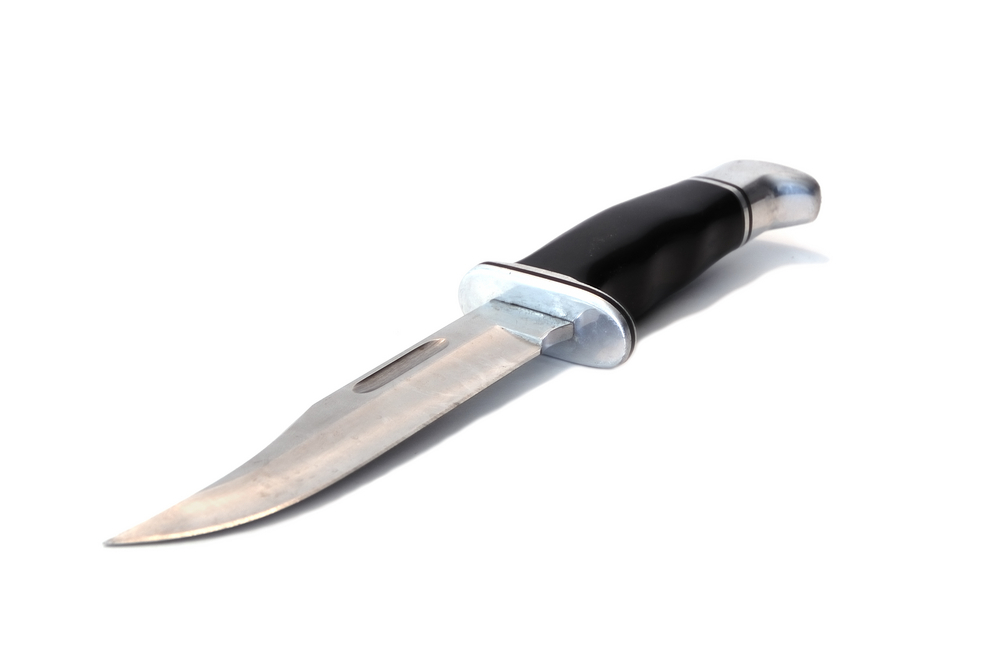
Omaima Nelson became infamous in 1991 for the gruesome murder of her husband, William Nelson, in Orange County, California. The former model and au pair confessed to the murder and admitted to dismembering his body. Her trial was shocking due to the sheer brutality of the act.
Nelson claimed her husband had raped her and abused her, pushing her into a violent, psychotic episode. The details of the case were so shocking that they became a permanent fixture in true crime lore, an extreme example of the dark side of a seemingly perfect marriage.
11. Stacey Castor

Stacey Castor, known as the “Black Widow of Weedsport,” New York, was convicted in 2009 of poisoning her second husband, David Castor, with antifreeze. Her initial attempt to stage his death as a suicide failed, and investigators later linked her to the death of her first husband as well. Castor’s ultimate motive was financial.
Her desperation led to a bizarre attempt to frame her own daughter for both murders by writing a suicide note in the daughter’s name. This shocking act of betrayal and calculated malice sealed her reputation as one of the most coldly calculating murderers of her generation.
12. Lizzie Halliday

Lizzie Halliday was an Irish-American serial killer in the late 19th century who was convicted of murdering her fifth husband, Paul Halliday, in 1893. She had a history of violence and alleged mental instability, having previously been institutionalized multiple times. Her crimes took place in rural upstate New York.
She murdered Paul and his wife, burying their bodies in her barn, and was ultimately tried and convicted for her crimes. She became the first woman sentenced to die by electric chair in New York, a gruesome footnote in the state’s criminal history, though the sentence was later commuted.
13. Susan Polk
Susan Polk, a wealthy California socialite, was convicted of murdering her estranged husband, Dr. Frank Polk, in 2002. She claimed she stabbed him in self-defense during a violent dispute at their home. Her case became a media circus due to her unusual and often erratic courtroom behavior.
Her defense hinged on her claims of emotional and psychological abuse during their decades-long, tumultuous marriage. However, the jury ultimately rejected her self-defense argument, finding her guilty of second-degree murder after a highly publicized trial filled with strange personal testimonies.


