

When you think about weather, you probably imagine sunny days, rainy afternoons, or maybe a light dusting of snow. But every so often, the weather decides to take things up a notch, leaving scientists scratching their heads in confusion. From snow in the desert to mysterious fogs, the world has seen its fair share of bizarre weather events that defy explanation. Here are 13 freak weather phenomena that continue to baffle even the experts.
1. The Mystery Of Ball Lightning
Imagine seeing a glowing, floating sphere of light gliding through the air during a thunderstorm. This weird weather phenomenon, known as ball lightning, has puzzled scientists for centuries. Unlike regular lightning, ball lightning can last for several seconds and has been reported to enter buildings before disappearing. According to Dr. John Abraham from the University of St. Thomas, ball lightning could be caused by vaporized silicon, but the true cause remains elusive.
It’s been documented around the world, yet remains one of the least understood weather phenomena. Some people have even reported ball lightning as UFO sightings, adding an extra layer of mystery to an already strange occurrence. The phenomenon continues to intrigue scientists and laypeople alike due to its unpredictable nature and rare occurrence. Despite numerous eyewitness accounts and some scientific studies, the true nature of ball lightning remains unsolved, keeping it one of the weather’s most intriguing puzzles.
2. Snow In The Sahara Desert

Snow and the Sahara Desert don’t usually go hand-in-hand, do they? Well, that’s exactly what happened in 1979 and then again in 2018, when snow inexplicably covered parts of the Saharan sands. For a place known for its scorching heat, this was a big surprise for both locals and experts alike. Normally, the Sahara receives less than an inch of rain per year, let alone snow. The unlikely snowfall left meteorologists scratching their heads, wondering if this was an anomaly or a sign of changing weather patterns.
The local communities were just as baffled, waking up to find their usual golden sands transformed into a winter wonderland. People took advantage of the rare event, creating snowmen and taking photographs as proof that it really happened. The snow didn’t last long, though, melting under the strong desert sun. But for a short time, the Sahara looked more like the Swiss Alps than the rolling dunes it’s famous for. Scientists are still debating what specific atmospheric conditions made this snowy spectacle possible.
3. The Tunguska Event

Imagine waking up to the sound of an explosion so powerful it could be heard thousands of miles away. That’s what happened in 1908 when a massive explosion rocked the remote Tunguska region in Siberia. Even today, scientists are still unsure about what exactly caused this event, although many believe it was a meteor or comet. According to Dr. Natalia Artemieva from the Planetary Science Institute, a small asteroid disintegrating in the atmosphere is the leading theory, but evidence remains inconclusive.
The blast flattened some 800 square miles of forest, yet left no crater, adding to the mystery. Witnesses described seeing a bright flash of light and feeling a heat wave, but because the area was so remote, it took years for researchers to investigate. The lack of solid evidence means that the Tunguska Event remains one of the most debated topics in meteorological and astronomical circles. It serves as a giant question mark in the sky, reminding us that sometimes nature keeps its secrets well-guarded.
4. The Dancing Plague Of 1518
Yes, you’re reading that correctly—a dancing plague. In July 1518, residents of Strasbourg (then part of the Holy Roman Empire) inexplicably began to dance uncontrollably. The phenomenon started with a woman named Frau Troffea, who danced for days without stopping. Soon, dozens of others joined in, all seemingly unable to control their movements. Scientists and historians still have no definitive explanation for why this happened.
Theories range from mass hysteria to ergot poisoning, which comes from a mold that grows on damp rye and can cause hallucinations and convulsions. Whatever the cause, the event is an example of how weather and environmental conditions can sometimes lead to bizarre human behavior. The Dancing Plague ended as mysteriously as it began, leaving behind records of days filled with frenzied movement and confusion. Even today, experts continue to be fascinated by this strange chapter in history.
5. The Year Without A Summer

Imagine living in a world where summer never arrives. That’s what happened in 1816, known as the “Year Without a Summer,” when widespread climate anomalies led to severe temperature drops. Crops failed, leading to food shortages and widespread famine. According to climatologist Dr. Jonathan Overpeck, the cold weather was largely due to the eruption of Mount Tambora in Indonesia the previous year, which spewed ash into the atmosphere and blocked sunlight.
The impact was felt worldwide, with snow falling in June in New England and crop failures across Europe. People were left to wonder if the sun would ever shine again as they dealt with unusually cold and wet conditions. The event is often cited as a turning point in climate science, highlighting the interconnectedness of global weather systems. It serves as a historical footnote on how volatile our planet can be, even in what should be the warmest months of the year.
6. The Great Blue Hole

You’ve probably seen pictures of the Great Blue Hole in Belize—a massive sinkhole that’s a diver’s paradise. But what you might not know is how it came to be, and why it continues to intrigue geologists and meteorologists alike. The Great Blue Hole was formed thousands of years ago during the last ice age when sea levels were much lower. The area was once a limestone cave system, which eventually collapsed to form the sinkhole.
The mystery lies in the ongoing changes in the hole’s structure, which scientists are still trying to understand. These changes could be due to climate influences, water chemistry, or even unknown geological processes. The Great Blue Hole serves as a natural laboratory for researchers worldwide, offering a glimpse into Earth’s complex history. It also serves as a reminder of how Earth’s surface can change dramatically, often leaving more questions than answers.
7. The Great Smog Of London

Picture this: it’s December 1952 in London, and a thick, yellowish fog rolls in. But this isn’t your average fog—it’s so dense that people can hardly see their own feet. Over the course of just five days, this “great smog” would claim the lives of thousands. Scientists have since learned that a mix of coal smoke, sulfur dioxide, and stagnant weather conditions caused it, but even today, the extent of its impact is still being studied. According to a study by Richard Mills at the University of Birmingham, the full range of health effects is still not fully understood.
You might wonder how something like this could go unnoticed until it was too late. At the time, air pollution was common in London, and people were accustomed to foggy days. However, this particular smog was a lethal cocktail that caught everyone off guard. The event led to significant changes in air quality legislation, but it remains a haunting reminder of nature’s unpredictability. Even today, scientists are still trying to wrap their heads around the exact combination of factors that led to such a deadly event.
8. The Red Rain Of Kerala

Imagine waking up to find that it’s raining, but instead of clear water, a red liquid is falling from the sky. That’s exactly what happened in Kerala, India, in 2001, when a strange red rain shocked residents and baffled scientists. Initially, locals thought it might be a bad omen or some form of pollution. However, further investigations revealed that the red color was due to spores from a type of algae.
The phenomenon lasted for several weeks, raising many questions about how such a high concentration of spores could end up in the atmosphere. Some researchers suggested that strong winds carried the spores from distant locations, but the exact process is still not fully understood. The red rain event has become a topic of fascination for both meteorologists and biologists, as it challenges conventional understanding of weather systems. While it hasn’t happened again on such a scale, it’s a reminder that sometimes the sky can truly surprise us.
9. The South Atlantic Anomaly

Picture a place on Earth where the planet’s magnetic field is mysteriously weaker than anywhere else. This area, known as the South Atlantic Anomaly (SAA), is located over parts of South America and the southern Atlantic Ocean. It’s a region where Earth’s magnetic field dips dramatically, causing issues for satellites and spacecraft. Scientists don’t fully understand why this happens, but it’s believed to be related to the movement of molten iron in Earth’s outer core.
Due to the weaker magnetic field, satellites passing through this region are bombarded with higher levels of radiation. This has led to technical malfunctions and presents a significant challenge for space exploration. Researchers continue to study the anomaly, hoping to unravel its mysteries and mitigate its effects on technology. It’s a reminder that even the most stable forces of nature, like Earth’s magnetic field, can have unexpected quirks.
10. Catatumbo Lightning
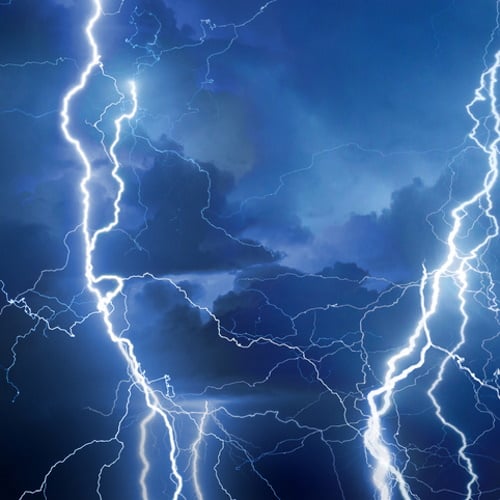
Imagine a place where lightning strikes nearly every night of the year, creating a natural light show that can be seen for miles. Welcome to the Catatumbo River in Venezuela, where almost 300 days of lightning occur each year. This continuous lightning storm has puzzled scientists, who are still trying to understand the exact conditions that make it possible. The phenomenon is so consistent that it’s earned a place in the Guinness World Records for the most lightning strikes per square kilometer.
Researchers believe that the unique geography of the area plays a crucial role, with the river, mountains, and atmospheric conditions all contributing to this spectacular display. However, some aspects of Catatumbo Lightning remain unexplained, such as why it sometimes ceases for weeks or even months. This ever-changing natural wonder reminds us of the complexity and unpredictability of weather patterns. It also draws tourists and scientists alike, all eager to witness one of nature’s most captivating performances.
11. The Black Blizzard Of 1934

During the 1930s, the American Midwest was plagued by a series of devastating dust storms that came to be known as “black blizzards.” One of the worst occurred in May 1934, when a massive storm carried millions of tons of topsoil all the way to the East Coast. The sky turned dark, and visibility dropped to near zero, leaving people feeling like they were in the middle of a sandstorm. It was a wake-up call about the dangers of soil erosion and poor agricultural practices.
The phenomenon was exacerbated by a severe drought, turning the once fertile Great Plains into a barren wasteland. Farmers were hit hard, losing their crops and livelihoods as the dust storms became a regular occurrence. The Black Blizzard of 1934 sparked changes in farming techniques and led to the establishment of soil conservation programs. Today, it stands as a stark reminder of the fragile balance between human activity and the environment.
12. Heat Bursts

Imagine sitting outside on a warm evening when suddenly, the temperature skyrockets in a matter of minutes. This rare weather phenomenon, known as a heat burst, can cause temperatures to rise dramatically in a short period of time. Heat bursts usually occur during the night and are associated with decaying thunderstorms. Scientists believe they happen when rain evaporates in the air, causing a rapid increase in temperature as it descends.
While heat bursts are fascinating, they can also be dangerous, posing risks to both people and crops. The sudden temperature spike can cause dehydration and heat exhaustion, making it crucial to seek shelter if you find yourself in the midst of one. Despite their rarity, heat bursts serve as a reminder that weather can change in the blink of an eye. Ongoing research aims to better understand the conditions that lead to heat bursts, helping to predict and mitigate their effects.
13. The Silent Tornado

Tornadoes are often accompanied by a roar described as sounding like a freight train. But would you believe that some tornadoes are nearly silent? These elusive “silent tornadoes” defy conventional understanding of how tornadoes work. They occur without the usual loud winds, making them even more dangerous as they strike without warning.
Meteorologists have found that silent tornadoes often form in areas with unique atmospheric conditions, but they still don’t fully grasp how or why the sound is diminished. Silent tornadoes highlight the complexity of severe weather and the challenges in predicting it. While they are rare, their existence is a stark reminder of the ever-present unpredictability of nature. Understanding these silent storms could provide valuable insights into tornado formation and improve early warning systems.


