
I woke up before everyone else in the house most Saturdays. Not because I had to. Because there was TV to watch, cereal to eat, and a full day to be explored and enjoyed.
Nobody scheduled that morning. Nobody supervised it. It just happened—the same way, every week, like a ritual nobody had to organize because every kid in America was doing the exact same thing at the exact same time.
Even if you haven’t done any of these things in decades, the memories never fade.
1. Waking up early to catch the first cartoon
There was no streaming. No DVR. No watching it later.
If you weren’t parked in front of the TV by 7 a.m., you missed it—and there was no second chance. That urgency made Saturday mornings feel like an event. You didn’t just watch cartoons. You showed up for them, half-asleep, still in your pajamas, with a sense of purpose most adults can’t find on a Monday.
The lineup mattered, too. You had your shows ranked in your head, and you knew exactly when each one aired. Bugs Bunny at seven. Scooby-Doo at seven-thirty. The schedule was sacred, and you followed it like a religion nobody had to teach you.
2. Eating cereal that was basically dessert
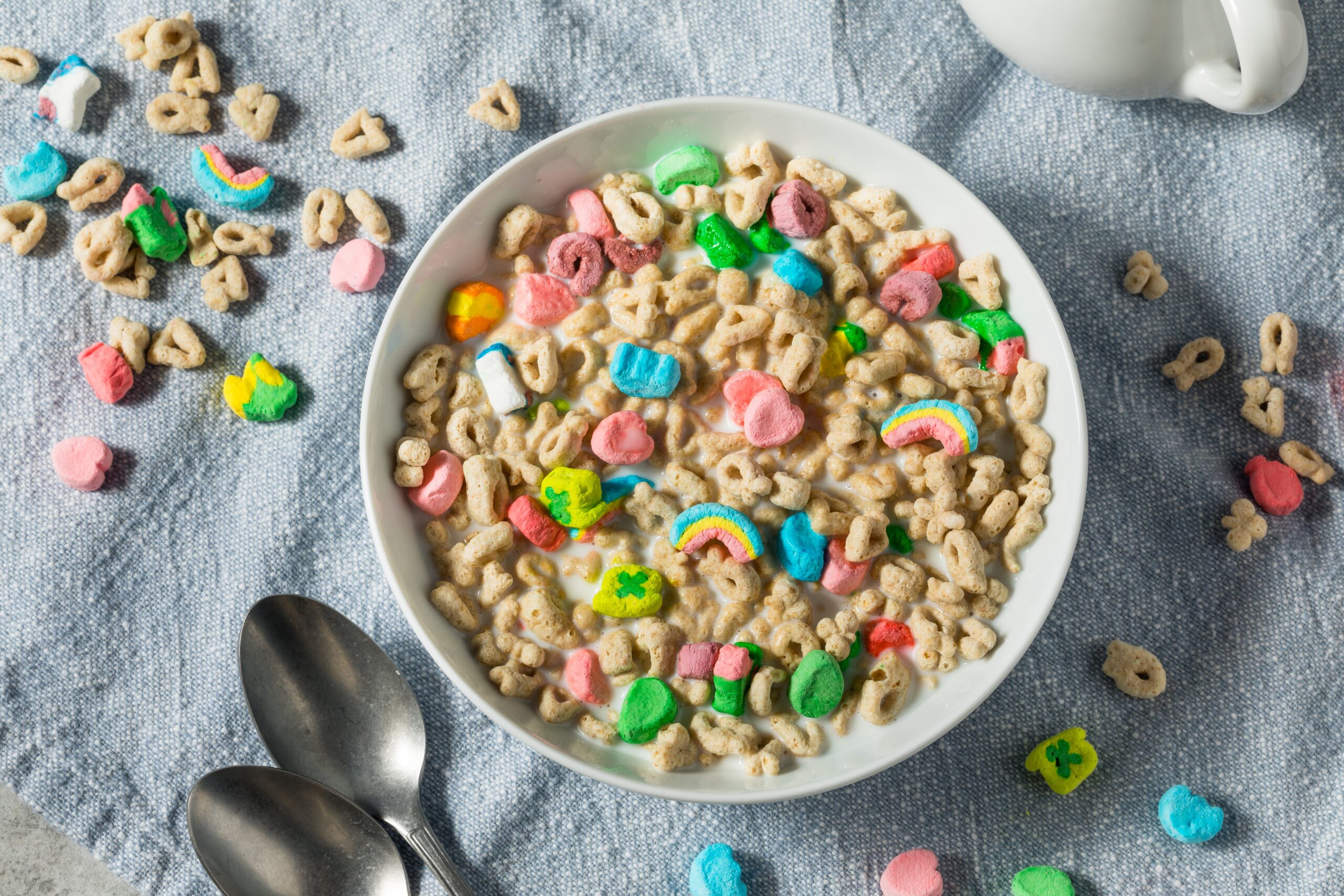
Cookie Crisp. Froot Loops. Count Chocula. Lucky Charms with the marshmallows picked out first.
Saturday morning cereal wasn’t breakfast. It was candy in a bowl with milk poured over it, and your parents either didn’t know or didn’t care because it bought them an extra hour of sleep.
I used to mix two cereals together like I was inventing something. Half Cocoa Puffs, half Cap’n Crunch. Nothing better.
3. Sitting on the floor two feet from the television
“You’ll ruin your eyes” was said in every house in America and ignored in every house in America.
The floor in front of the TV was the best seat because it was closest.
No cushion. No blanket. Just carpet and commitment.
Sometimes you’d lean against the couch, but mostly you sat cross-legged, neck craned up, completely locked in.
4. Singing along to the same commercials you saw every week
You knew every jingle. Every toy. Every cereal mascot’s personality. The commercials were part of the show—not something you skipped, because you couldn’t skip them. They just played, and you absorbed them like background music until you could recite them word for word without trying.
Kids in the 70s and 80s were exposed to a much smaller set of advertisements repeated over and over, which is why those jingles and slogans are still lodged in the brains of people who can’t remember what they had for lunch yesterday. That’s how it got burned into people’s memories.
5. Shifting from cartoons to live-action shows mid-morning
Around 11 a.m., the cartoons would start fading out and shows like “Land of the Lost” or “Saved by the Bell” would creep in.
That was the signal.
Saturday morning—the real Saturday morning—was over. The TV was no longer yours.
The shift felt like a betrayal every single time, even though it happened the exact same way every week.
6. Going outside and not coming back until someone yelled your name
Once the cartoons ended, you were out. No itinerary. No supervision. No phone. You grabbed your bike or your skateboard or just walked out the front door with no plan and didn’t come home until you heard your mom’s voice carrying across the neighborhood or the streetlights flicked on.
Turns out that kind of unstructured, unsupervised outdoor play was one of the most developmentally beneficial things a kid could do—building independence, creativity, and risk assessment in ways that organized activities never quite replicate.
Nobody called it “free-range parenting” back then. It was just Saturday.
7. Calling a friend’s house and having their parent answer
You wanted to see if your friend could come outside. So you called their house. And their dad picked up. And you had to have a tiny conversation with a grown man you were mildly afraid of before your friend finally got on the line and said, “Yeah, meet me at the corner.”
There was no texting. No group chat. You either called or you showed up at their door and knocked. And if they weren’t home, you just went to the next kid’s house and tried again.
That thirty-second interaction with someone’s parent taught more social skills than any class ever could.
8. Riding your bike to the store with pocket change
A dollar and a quarter could get you a candy bar, a can of soda, and a pack of baseball cards. You rode your bike there with coins jangling in your pocket, bought your stuff at a counter where the cashier didn’t blink at a nine-year-old shopping alone, and rode home feeling like you’d accomplished something real.
I used to ride to the gas station two blocks away and spend twenty minutes deciding between a Snickers and a pack of Now and Laters. The decision felt enormous. The freedom felt even bigger.
9. Recording your favorite songs off the radio onto a cassette tape
You sat next to the boombox with your finger on the record button, waiting for the DJ to play the song you wanted. Half the time, you missed the beginning. The other half, the DJ talked over the intro.
But when you got a clean recording, it felt like you’d stolen something valuable and gotten away with it.
There’s a reason those songs feel different than anything on a playlist. When you had to work for the music—sitting, waiting, timing the record button—it stuck in a way that just pressing shuffle never will.
You didn’t just hear music in the 80s. You worked for it. And the songs you caught on tape are probably still the ones you remember most.
10. Watching “Soul Train” or “American Bandstand” and studying the dance moves
Before YouTube tutorials and TikTok choreography, you learned to dance by watching people on TV and trying to copy what they did in your living room. Nobody was filming you. Nobody was watching. You just practiced until you either got it or invented something worse and committed to it anyway.
11. Smelling cleaning supplies from Saturday chores
Pine-Sol. Lemon Pledge. Something with bleach that burned your nose if you walked too close to the bathroom.
Saturday morning wasn’t just cartoons—it was the sound of a vacuum running somewhere in the house and the smell of cleaning products so strong they’d probably be recalled today.
If you wanted to get your allowance or be allowed to hang out with your neighborhood friends later that day, you were expected to finish your Saturday chores.
That Pine-Sol scent was the background of the whole morning, and it still takes me back the second I catch a whiff of it in a store.
12. Grabbing the comics section before anyone else got to the newspaper
The Sunday paper got all the credit, but the Saturday edition had comics too—and if you didn’t get to the newspaper first, your dad would have it buried somewhere in the sports section by the time you came looking.
You’d pull the comics out, spread them across the kitchen table or the living room floor, and read every single strip, whether you understood it or not.
Garfield made sense. Peanuts mostly made sense. Cathy made no sense at all, but you read it anyway because it was there.
You just read the whole page, top to bottom, because that’s how a newspaper worked. No algorithm. No feed. Just ink on paper and whatever the editors decided to print that week.
13. Lacing up your roller skates on the sidewalk
At some point on Saturday morning, the roller skates came out. These were the quad skates with the rubber stopper on the front that barely worked, and laces that never stayed tight, no matter how many times you pulled them.
You didn’t go to a rink. You just skated up and down your block, dodging cracks in the sidewalk that could send you flying if you hit them wrong. One kid always had the good skates. The rest of us had the kind that came from a department store and sounded like a lawnmower on concrete.
Nobody wore knee or elbow pads. And nobody wore a helmet. You just fell, got up, and kept going until your ankles ached or somebody’s mom called everyone in for lunch.


