

When the unexplained happens, it’s easy to let your imagination run wild with thoughts of ghosts, UFOs, and mysterious creatures lurking in the shadows. But before you dive headfirst into the paranormal pool, it might be worth taking a step back and considering some scientific explanations for these eerie events. It turns out that many phenomena that seem otherworldly might have a more down-to-earth rationalization. Let’s explore 14 paranormal events that might just have a scientific side to them.
1. Ghostly Apparitions
Seeing a ghostly figure floating across the room can send shivers down your spine. However, there’s a possibility that what you’re witnessing isn’t supernatural. In many cases, these apparitions might be the result of low-frequency sound waves, known as infrasound. According to Dr. Richard Wiseman, a psychologist at the University of Hertfordshire, infrasound can cause feelings of anxiety and unease, and even make objects appear to vibrate or move. So, the next time you think you see a ghost, it could just be those pesky sound waves playing tricks on your mind.
Infrasound occurs naturally and is often produced by things like wind, ocean waves, and even some musical instruments. Environments with old or poorly insulated buildings might be more susceptible to these sound waves. When you’re alone in a quiet room, infrasound can easily set the stage for a ghostly experience. While it doesn’t explain every apparition, infrasound provides an intriguing lens through which to view some of these spooky sightings. For those interested in paranormal investigations, measuring infrasound can be an essential tool for separating the eerie from the explicable.
2. Poltergeist Activity

Poltergeist activity, such as objects moving on their own, often gets attributed to restless spirits. But could there be another explanation? Some researchers believe that electromagnetic fields (EMFs) might be to blame. High levels of EMFs can cause a range of effects, including hallucinations and feelings of being watched. It’s possible that the unsettling activity attributed to poltergeists could be a result of environmental factors rather than mischievous spirits.
An aging electrical system or faulty wiring can produce higher-than-normal EMFs in a household. When you’re experiencing strange phenomena, checking for EMFs might be a good first step. Of course, not every poltergeist claim can be explained away by EMFs, but it’s a reasonable starting point for the skeptically inclined. If you’re someone who loves a good ghost story, knowing this might not take away the fun but rather add a new layer of understanding. Whether it’s spirits or science, the wonder remains.
3. UFO Sightings
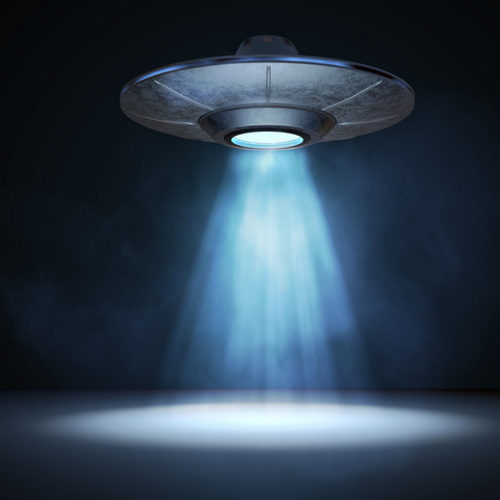
Seeing mysterious lights in the sky can often lead to thoughts of alien visitors. However, before you assume extraterrestrial origins, consider a more mundane explanation: weather phenomena. Dr. Chris French, a psychologist specializing in paranormal beliefs, points to atmospheric conditions like ball lightning or lenticular clouds as potential culprits. These natural occurrences can easily be mistaken for flying saucers or other unidentified flying objects. So while some sightings remain unexplained, many can be demystified by looking at the sky’s natural wonders.
Ball lightning, for instance, is a rare phenomenon that looks like glowing orbs of light. They can appear during thunderstorms and are often mistaken for UFOs due to their unusual appearance. Lenticular clouds form at high altitudes and can resemble large, hovering disks, adding to the confusion. It’s no wonder that these natural occurrences can be misinterpreted as something more otherworldly. While keeping your eyes on the sky, remember that sometimes the most amazing sights have earthly explanations.
4. Eerie Feelings In Certain Locations

Have you ever walked into a place and felt an immediate sense of dread or unease? While some might chalk this up to the paranormal, there’s a scientific angle to consider. Research suggests that these feelings can be tied to environmental factors, such as lighting, room layout, or even the presence of certain chemicals. For example, carbon monoxide poisoning can cause symptoms like dizziness and confusion, which might be misinterpreted as ghostly encounters.
In addition, the power of suggestion can play a significant role in how you perceive a place. If a location is rumored to be haunted, you might be more likely to experience something unusual simply because you’re expecting to. Your brain can fill in gaps with imagined sensations or sounds, turning a perfectly ordinary place into something altogether more sinister. Understanding these psychological influences can help you differentiate between genuine paranormal activity and the tricks of the mind. So next time you feel uneasy, it might be worth looking at the details rather than jumping to ghostly conclusions.
5. Sleep Paralysis

Waking up unable to move, with a heavy weight on your chest, can feel terrifying and supernatural. But rather than an encounter with a night demon, you might just be experiencing sleep paralysis. This condition occurs when you’re caught between stages of wakefulness and REM sleep. According to a study published in the journal “Sleep Medicine Reviews,” this transitional state can produce vivid hallucinations and the sensation of being suffocated. While it’s a frightening experience, rest assured that it’s a well-documented sleep phenomenon.
During REM sleep, your brain is active, and your body is temporarily paralyzed to prevent you from acting out your dreams. Sometimes, you might wake up before this paralysis wears off, leaving you aware but unable to move. The hallucinations that accompany sleep paralysis vary widely but often include seeing figures or feeling pressure. Knowing that sleep paralysis is a natural, albeit unsettling, occurrence can provide some comfort. If you experience it frequently, it might be worth exploring sleep hygiene strategies to minimize these nighttime frights.
6. Shadow People

Seeing shadowy figures out of the corner of your eye might feel like an encounter with the paranormal. But before you jump to conclusions, consider the role of your brain’s perception and how it processes visual information. In low-light conditions or moments of fatigue, your mind might fill in gaps with imagined shapes, leading to the appearance of shadow people. Additionally, sleep disorders or stress can heighten the likelihood of experiencing these fleeting figures.
These sightings often occur in peripheral vision, where your eyes are less adept at detecting fine details. The brain tends to interpret vague information quickly, sometimes resulting in the perception of motion or form where there is none. This phenomenon is more common than you might think and often occurs when you’re on edge or feeling vulnerable. Understanding that shadow people are likely a trick of the mind can help you approach these experiences with a more skeptical eye. So, while it’s natural to feel spooked, it’s often your brain working overtime.
7. Haunted Locations

When a place has a reputation for being haunted, any odd occurrence can seem like evidence of ghostly inhabitants. However, it’s important to consider the role of suggestion and expectation in these experiences. A study by Dr. Christopher Bader at Chapman University found that people are more likely to report paranormal experiences in locations they believe to be haunted. This suggests that belief plays a significant role in interpreting ambiguous stimuli as paranormal. With this in mind, the power of suggestion might be more potent than any spectral presence.
Many haunted locations have creaky floors, drafty windows, and peculiar acoustics that can all contribute to the eerie atmosphere. When you’re primed to expect something supernatural, these environmental quirks can easily be misinterpreted. While this doesn’t disprove all ghost stories, it highlights how context and expectation shape our experiences. Before concluding that a place is genuinely haunted, consider whether your mind is filling in the gaps. Sometimes, the only things genuinely at work are imagination and perception.
8. Electronic Voice Phenomena (EVP)

EVP, or electronic voice phenomena, involves capturing unexplained voices on audio recordings. Many believe these are spirit voices attempting to communicate from beyond the grave. However, there’s a more scientific explanation known as auditory pareidolia, where your brain interprets random sounds as familiar patterns, like human speech. This cognitive bias can make normal background noise, like static or distant conversations, seem like something more mysterious.
Moreover, the power of suggestion can strongly influence what you perceive in these recordings. If someone tells you to listen for a specific word or phrase, your brain is more likely to find it in the noise. The equipment used to capture EVP is often sensitive and prone to interference, which can add to the confusion. While the pursuit of EVP can be fascinating, it’s essential to account for these psychological and technical factors. Acknowledging the brain’s tendency to find patterns can lead to a more critical evaluation of supposed spirit voices.
9. Déjà Vu

That eerie feeling of having experienced something before, known as déjà vu, can seem like a glitch in the matrix. While it might feel supernatural, there’s a scientific explanation rooted in the brain’s memory processes. Déjà vu is thought to occur when there’s a slight overlap or delay in neural pathways, causing a moment to be simultaneously processed in both short-term and long-term memory. This creates the illusion that you’re reliving a past experience when, in reality, it’s just your brain’s wiring playing tricks.
Stress and fatigue can increase the likelihood of experiencing déjà vu. When your brain is under strain, it’s more prone to these momentary lapses. While it may be unsettling, déjà vu is a normal cognitive phenomenon that most people experience at some point. Rather than signaling a paranormal event, it highlights the complexity of human memory. Next time it happens, try to see it as a fascinating reminder of how intricate your brain truly is.
10. Crop Circles

Mysterious patterns appearing overnight in fields of crops have long been attributed to alien visitors. However, many crop circles have been revealed as man-made, often created by artists and pranksters using simple tools and techniques. While some circles remain unexplained, they may result from natural phenomena such as whirlwinds or animal activity. Scientific analysis has shown that many crop circles lack any anomalies that would suggest extraterrestrial intervention.
Crop circles gained popularity in the late 20th century, spurring a wave of public interest and speculation. Artists like Doug Bower and Dave Chorley admitted to creating hundreds of these circles, demonstrating how easy it is to craft intricate designs using planks and ropes. While not every circle has a clear origin, most have reasonable explanations grounded in human activity. The allure of crop circles lies in their mystery and beauty rather than any extraterrestrial involvement. Accepting that creativity often outpaces reality can offer a new appreciation for these enigmatic formations.
11. Psychic Predictions

Psychic predictions often capture the public’s imagination, especially when they seem to come true. However, there’s a psychological phenomenon known as the “Barnum effect,” where vague or general predictions are interpreted as highly accurate by those who hear them. This cognitive bias can make horoscopes, psychic readings, and fortune tellings feel personal and specific, even when they’re not. Often, the details that fit are emphasized, while those that don’t are conveniently forgotten.
The Barnum effect is named after P.T. Barnum, who famously said, “There’s a sucker born every minute.” This highlights the human tendency to find personal meaning in broad statements. Skeptics argue that many psychic predictions rely on this effect, as well as the law of averages, where making enough predictions increases the likelihood that some will be correct. While some psychics claim genuine abilities, it’s essential to approach their predictions with a critical eye. Understanding the psychological mechanisms at play can help demystify the allure of psychic phenomena.
12. Bigfoot Sightings

The legend of Bigfoot, a large, ape-like creature roaming the forests, continues to captivate imaginations worldwide. However, many supposed sightings can be attributed to misidentifications of known animals or even elaborate hoaxes. Bears, for example, can appear remarkably human-like when seen from a distance or in poor visibility. The human tendency to find patterns and meaning in ambiguous stimuli, known as pareidolia, can also lead to seeing Bigfoot where there is none.
Hoaxers have further muddied the waters by creating fake footprints and photos. While some believers maintain that Bigfoot is real, the lack of concrete evidence suggests otherwise. The idea of an undiscovered creature living in remote areas is intriguing but increasingly unlikely in an age of smartphones and digital cameras. While the myth persists, it’s worth considering more conventional explanations before leaping to a paranormal conclusion. The allure of Bigfoot might lie more in the mystery itself than in reality.
13. Spontaneous Human Combustion

Spontaneous human combustion (SHC) describes the supposed phenomenon where a person catches fire without an external source. The idea of suddenly bursting into flames is undoubtedly terrifying and seems supernatural. However, scientific investigations have found more grounded explanations, such as the “wick effect.” In this scenario, a person’s clothing acts as a wick, soaking up melted body fat and fueling a slow burn that resembles SHC.
This effect can occur when an external source, like a dropped cigarette, ignites the clothing. Once the burn starts, it can continue smoldering for hours, often leaving the body mostly consumed while the surroundings remain unscathed. While SHC remains a popular topic in paranormal circles, the lack of evidence for a truly spontaneous event suggests a more mundane explanation. Understanding the wick effect can help demystify this macabre occurrence. So, while SHC might capture imaginations, science points to more conventional causes.
14. The Feeling Of Being Watched

The unsettling sensation that someone is watching you can often feel paranormal, especially when you’re alone. Scientifically, this feeling can be explained by your brain’s heightened state of alertness and pattern recognition. Humans have evolved to be sensitive to the presence of others as a survival mechanism, leading to a constant scanning for faces and figures. This hyper-awareness can create the illusion of being watched, even when you’re not.
Your peripheral vision often detects movements or shapes that might indicate another person’s presence. When your mind is on high alert, these sensory inputs can be misinterpreted, causing the sensation of being observed. Stress, anxiety, and fatigue can amplify this effect, making you more susceptible to these feelings. While it’s natural to feel uneasy, recognizing the brain’s role in this perception can provide some reassurance. Sometimes, the only thing watching you is your vigilant mind.


