

When the clock strikes midnight and the world quiets down, a peculiar phenomenon emerges: the late-night Google search. Whether you’re fighting insomnia or caught in the rabbit hole of curiosity, you’re not alone in your quest for answers to the bizarre and baffling. In a time that blurs the edges of reality and fantasy, your smartphone becomes the portal to the strange, the quirky, and the downright weird. Welcome to the world where your unfiltered thoughts take you down the most unexpected paths. Here are 14 strange things you, and many others, find themselves typing into Google during those witching hours.
1. How to Survive a Zombie Apocalypse
Admit it, there’s something weirdly captivating about planning your survival strategy for a fictional apocalypse. You’re not the only one strategizing an escape route should the undead start roaming your neighborhood. It’s a scenario that’s been glamorized by countless movies and TV shows, capturing our imaginations—and our search histories. Surprisingly, the Centers for Disease Control and Prevention even published a tongue-in-cheek zombie preparedness guide, making the concept creepily plausible. When you’re supposed to be dreaming, your imagination runs wild with visions of empty streets and creaky safe houses.
The curiosity around zombies ties into a broader human fascination with survival and resilience. Deep down, we wonder how we’d fare if our smartphone skills were swapped for survival instincts. It’s not just about the zombies; it’s about the thrill of imagining a world where daily routines and societal norms are turned upside down. For some, it’s an adrenaline rush, and for others, it’s a way to be prepared for any eventuality, no matter how fantastical. The next time you’re seeking solace from sleeplessness, perhaps you’ll find comfort in reading survivalist tips.
2. Why Do We Yawn?

Yawning is one of those things everyone does, yet no one fully understands. You’ve yawned countless times, but why does it happen? Scientists have theories—ranging from cooling the brain to social bonding—but nothing definitive. Late at night, when you’re too tired to sleep, this question may strike you as both profound and perplexing. As you type it into Google, you dive into a world of hypotheses and unanswered questions.
This simple act is linked to both your body’s need for oxygen and its social cues. When you see someone yawn, you’re more likely to do the same, highlighting its contagious nature. Imagine a time when yawning was a way to communicate tiredness or boredom in your ancient ancestors. Here you are now, in the modern age, still scratching your head over why you can’t stop yawning. Perhaps it’s these everyday mysteries that make the late-night hours so ripe for exploration.
3. Can Animals Predict Natural Disasters?

At some point, you’ve probably heard tales of dogs barking before earthquakes or birds flying away before storms. It’s a question that fascinates both animal lovers and skeptics alike. According to a National Geographic article, there is some evidence that certain animals can detect subtle changes in the environment that are imperceptible to humans. This leads to the notion that our furry friends might just be natural disaster prophets. So, in the still of the night, you wonder if your pet could potentially save your life.
The idea isn’t entirely far-fetched, considering the acute senses animals possess. Some scientists speculate that animals might sense changes in air pressure, ground vibrations, or even chemical alterations in the environment. You imagine your pet dog as a kind of fluffy early warning system, alerting you to impending doom. While science has yet to fully explain these phenomena, the concept certainly sparks intrigue. Perhaps it’s worth paying closer attention to your pets’ odd behaviors—they might know more than they let on.
4. Do Fish Sleep?

You’ve seen them in aquariums or on nature documentaries, constantly moving and seemingly awake. But do fish ever actually sleep? This question seems simple, yet the answer isn’t as straightforward as you’d think. Fish don’t have eyelids to close, so how would you even know if they were catching some underwater Zs? As you dive into this topic, you find that fish do sleep, but in a way that’s vastly different from land animals.
Fish enter a state of rest where their metabolism slows down, and they become less responsive to external stimuli. It’s a kind of half-sleep that allows them to remain somewhat alert to predators. Some fish even float in place or nestle into coral crevices as they rest. It’s an intriguing adaptation to their aquatic environment—a survival tactic wrapped in mystery. So next time you see a seemingly motionless fish, remember: It might be dreaming of coral reefs and open seas.
5. Do Plants Have Feelings?

At first glance, the idea seems whimsical at best—how could plants, rooted and silent, feel anything? Yet, this question has puzzled scientists and philosophers alike for centuries. According to Scientific American, research shows that plants can respond to environmental stimuli, like light and touch. They communicate through chemical signals and even exhibit behaviors that seem eerily emotional. As you explore this topic, you find a world where plants react defensively or optimistically to their surroundings.
There’s a profound allure in the idea that your houseplants might have more going on than meets the eye. When you water them or move them to a sunnier spot, they could be “thanking” you in their own silent way. This notion makes the everyday act of gardening feel like a silent dialogue with nature. As you ponder this, your perception of plants transforms, elevating them from mere décor to interactive life forms. It’s a testament to the complexity and wonder of the natural world.
6. Why Does Hair Turn Gray?

Aging is a topic that’s often avoided in broad daylight but becomes a point of curiosity as the hours grow late. Gray hair is one of the most visible signs of aging, but why does it happen? You might assume it’s just a natural part of getting older, but there’s more to it. Hair color is determined by melanin, and as you age, melanin production slows down, leading to those silvery strands. Late at night, this biological process becomes an intriguing puzzle.
Your mind starts to wander about the symbolism of gray hair in different cultures. Is it a sign of wisdom or merely a genetic roll of the dice? For some, gray hair is embraced, and for others, it’s something to hide. Understanding the science behind it can demystify the process and maybe even make it a little less daunting. So next time you notice a gray strand under the dim light, perhaps it’ll feel like a badge of honor rather than a blemish.
7. Can You Actually Die of Boredom?

It’s a question that seems both absurd and oddly relevant, especially during those sleepless nights. When you’re lying in bed, unable to sleep, boredom can feel suffocating, but could it really be fatal? According to a study published in the International Journal of Epidemiology, extreme boredom might have indirect links to mortality, such as through risky behavior or mental health issues. The idea of boredom being deadly in itself is more of a hyperbolic musing than scientific fact. Still, it’s fascinating to consider how a lack of mental stimulation can affect overall well-being.
Boredom, it turns out, is more complex than simply having nothing to do. It can lead to stress, anxiety, and even depression if it lingers too long. This might explain why your late-night Google search has taken such a morbid turn. You’re not just looking to fill your time; you’re searching for understanding of why idleness can feel so oppressive. While the notion of dying from boredom is an exaggeration, it’s a reminder of the importance of meaningful engagement in life.
8. Why Do Onions Make You Cry?

Cutting an onion is a universal kitchen woe, leading to teary eyes and questionable culinary decisions. But why does this happen? It turns out onions have a defense mechanism: when cut, they release a gas that reacts with the moisture in your eyes, forming sulfuric acid. This irritant prompts your lacrimal glands to produce tears. As you dig into this topic, you realize it’s a fascinating blend of chemistry and biology.
While there are many tips to mitigate onion-induced tears, from chilling them to using special goggles, few are foolproof. Yet, these kitchen challenges add a touch of drama to your cooking routine, turning a mundane task into something memorable. It’s a reminder of how even the smallest elements of daily life have underlying scientific explanations. Next time you’re dicing onions, you might just appreciate the quirky complexity of it all. Who knew making dinner could involve a mini chemistry lesson?
9. Do Aliens Exist?
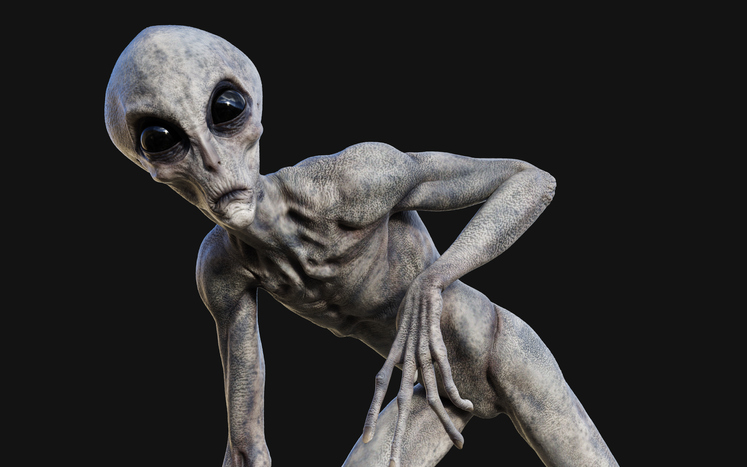
Staring up at the stars, it’s hard not to wonder if we’re alone in the universe. The question of extraterrestrial life is one that has haunted humanity for centuries. You find yourself drawn into debates and theories, from UFO sightings to scientific inquiries into alien life. Late at night, your imagination runs wild with possibilities of otherworldly beings. It’s a topic that’s as divisive as it is captivating.
The vastness of the universe makes the existence of alien life both plausible and mysterious. Scientists have discovered exoplanets in habitable zones, igniting hopes of discovering life beyond Earth. Yet, as of now, there’s no concrete evidence to confirm such theories, leaving plenty of room for speculation. This uncertainty fuels your curiosity, making the search for extraterrestrial life an endless source of fascination. In the quiet of night, you revel in the mystery, knowing it’s one of humanity’s greatest unanswered questions.
10. Why Do We Dream?

Dreams are a nightly escape into a world of imagination and randomness. But why do we dream, and what do these nocturnal narratives mean? Theories range from dreams being a way to process emotions to them serving as problem-solving exercises. As you search this topic, you encounter a vast array of interpretations, from psychological to spiritual. It’s a quest to understand the landscapes your mind paints while you sleep.
The science of dreaming is still shrouded in mystery, with researchers uncovering new findings every year. Some studies suggest that dreams help consolidate memories and enhance creativity. Others propose they’re a remnant of our ancestors’ survival instincts, replaying scenarios for future reference. Whatever the reason, dreams are a fascinating blend of reality and fiction. As you delve deeper, you may find that your dream life is just as rich and complex as your waking one.
11. What Are Black Holes?

Black holes have captivated astronomers and sci-fi enthusiasts alike, but they remain a cosmic enigma. Late at night, you find yourself pondering these celestial phenomena that defy the laws of physics. Black holes are regions in space where gravity is so strong that nothing, not even light, can escape. As you explore this topic, you’re drawn into the mysteries of event horizons and singularities. It’s a deep dive into the unknown, where space and time bend under the weight of gravity.
The concept of black holes challenges our understanding of the universe. They evoke questions about the nature of reality, time travel, and the ultimate fate of the universe. You imagine the possibility of alternate dimensions and the secrets they might hold. Even though they’re invisible, black holes have a presence that’s impossible to ignore. Your late-night musings might not solve these cosmic mysteries, but they certainly spark a sense of wonder and awe.
12. Are Ghosts Real?

The existence of ghosts is a topic steeped in folklore, religion, and personal testimonies. Whether you’re a skeptic or a believer, the idea of spirits lingering among the living is both chilling and intriguing. During those quiet hours, you find yourself exploring ghost stories, paranormal investigations, and scientific explanations. The allure of the supernatural is timeless, feeding into our deepest fears and hopes. As you navigate this topic, you enter a realm where reality and imagination blur.
Despite countless ghost stories and paranormal encounters, there is little scientific evidence to support their existence. Skeptics point to psychological and environmental factors as explanations for ghostly phenomena. However, the lack of proof doesn’t deter believers, who see it as a spiritual connection to the afterlife. Whether you view ghosts as figments of the imagination or genuine entities, they remain a subject of fascination. Late at night, it’s easy to fall into the spell of the unknown, where the line between reality and fantasy fades away.
13. What Is the Origin of the Universe?

The origin of the universe is a question that transcends time, culture, and scientific disciplines. Late at night, you might find yourself contemplating the beginnings of everything around you. The Big Bang Theory is the leading explanation, suggesting the universe began as a singularity that expanded over time. As you delve into this cosmic query, you encounter discussions on dark matter, cosmic inflation, and the multiverse. It’s a journey into the very fabric of existence, sparking a sense of wonder and curiosity.
Understanding the universe’s birth is a daunting but rewarding pursuit. Scientists use astronomical observations and mathematical models to piece together the universe’s history. Despite advances in technology and theory, many questions remain unanswered, leaving room for speculation. You realize that exploring the universe’s origins is as much about understanding our place in it as it is about the cosmos itself. In the quiet of night, these existential musings become a gateway to both knowledge and awe.
14. Why Does Time Seem to Speed Up as We Age?

Time is one of those concepts that feels both concrete and elusive. As you grow older, you may notice that the years seem to fly by quicker. It’s a phenomenon that has intrigued psychologists and neuroscientists alike. One theory suggests that as we age, each year becomes a smaller percentage of our life, altering our perception of time. Late at night, pondering this mystery, you realize it’s not just about aging; it’s about how you experience life.
As a child, everything is new, making time feel slower because of the abundance of novel experiences. As you age, routines and familiarity compress your sense of time, making it seem to speed up. This realization can be both liberating and sobering, urging you to make the most of every moment. By understanding why time feels like it’s accelerating, you might find ways to slow it down through mindfulness and creating new experiences. It’s a reminder that while time may be fleeting, its quality is what truly matters.


