

I remember being nine years old, getting kicked out of the house after breakfast with instructions not to come back until the streetlights came on. No phones. No plans. Just me and whatever kids happened to be outside that day.
We’d roam the neighborhood. Knock on doors to see who could play. Make up elaborate games with constantly shifting rules. Fight. Make up. Get bored. Figure out what to do next.
It wasn’t idyllic. It was often kinda brutal. But looking back, I realize those unsupervised hours taught me things I use every single day as an adult. Things I didn’t even know I was learning.
My friend, who’s a therapist, told me recently that she spends half her time teaching college students skills that used to develop naturally from unstructured play.
How to handle conflict.
How to read a room.
How to tolerate boredom without immediately reaching for their phone.
And I was shook: an entire generation missed out on the weird, messy, unglamorous education that came from just being outside with other kids until dark. Here’s what that experience actually taught—and why therapists want the younger generations to learn it.
1. They Can Handle Conflict By Themselves
Someone cheated at the game.
Someone said something mean.
Someone broke the rules.
And there were no adults around to resolve it.
So they figured it out. They argued. They negotiated. They learned to stand up for themselves without a teacher or parent intervening. They worked it out or they didn’t, but either way, they learned that conflict is something they could navigate on their own.
Research on childhood social development found that kids who regularly engaged in unsupervised play develop significantly stronger conflict resolution skills than those whose disputes are consistently mediated by adults. Learning to handle disagreements without intervention builds skills that adult mediation can’t replicate.
Gen Z grew up with adults managing every dispute.
Teachers stepping in at the first sign of conflict.
Parents calling other parents when kids had problems.
And now therapists are teaching college students how to have difficult conversations without someone else facilitating.
2. They Know How To Read A Room
They’d show up at the park and immediately assess the situation.
Who’s playing what. Who’s in a good mood. Who’s upset. Whether they could join or if they should hang back. All without anyone saying a word.
They learned to read body language. Tone. Energy. The subtle cues that told them whether they were welcome or intruding. Whether the game was serious or casual. Whether someone was actually fine or just saying they were fine.
And that skill—reading unspoken social dynamics—is something they use constantly as adults.
But Gen Z grew up communicating primarily through text. Where tone is indicated by emojis, where they can edit before they send, and where they never had to read a room because they weren’t in one with other kids without adult supervision.
3. They Can Deal With Being Left Out
Sometimes they showed up, and the game was already full.
Sometimes the other kids didn’t want them to play.
Sometimes they were picked last.
And it sucked. But they survived it.
They learned that being excluded wasn’t the end of the world. That they could handle it. That they’d find something else to do or try again tomorrow. That rejection was temporary and survivable.
The youths grew up in a world where being left out is documented and permanent. They can see exactly who was invited to what, and therapists are seeing an entire generation that can’t tolerate any form of social rejection without getting triggered.
4. They Can Make Plans Without Technology

They’d agree to meet at the park at 3. No confirmation texts. No GPS. No “where are you?” messages. They just showed up at 3 and hoped everyone else did too.
Research tracking executive function development shows that kids who coordinated social activities without technology developed stronger planning and time management skills than those who relied on constant digital communication. The absence of real-time coordination forced better upfront planning.
And sometimes people didn’t show up. They either waited, went looking for them, or gave up and found something else to do. They learned to handle uncertainty and to adapt when plans fell through.
Gen Z can’t function without constant updates. They text “here” from the parking lot. They panic if someone doesn’t respond immediately. The idea of just showing up somewhere and seeing what happens feels insane.
5. They Can Assess Physical Risk In Real Time
They climbed trees, jumped off swings, rode bikes down hills—they literally learned to calculate risk on the fly.
How high is too high. How fast is too fast. When to push themselves and when to back off.
Studies on risk assessment and play show that kids who engage in physical risk-taking during unsupervised play develop better judgment about their own capabilities and limitations. They learn through experience rather than being told what’s safe.
That skill translates to adult life. Knowing when to take a risk and when to be cautious, trusting their own assessment instead of constantly seeking external validation.
Parents hovering over the playgrounds was how Gen Z grew up. They never had to assess risk themselves because adults did it for them. And now they’re paralyzed by decisions because they never developed the internal calibration that comes from testing their own limits.
6. They Can Navigate Social Hierarchies
Playing outside had its own social structure. Some kids were leaders. Some were followers. Some were better at certain games. And it wasn’t fair or democratic, but they learned to operate within it.
They learned when to lead and when to follow. How to assert themselves without being bossy. How to join a group that already has dynamics. How to negotiate status without a teacher making sure everyone gets a turn.
But Gen Z grew up with enforced equity.
Everyone gets a trophy. Everyone plays every position. Adults manage the situation to make sure nobody feels bad.
They never learned how to deal with the messy, unfair reality of social dynamics. They’re entering workplaces and relationships completely unprepared for the fact that life isn’t fair and nobody’s going to make sure everyone gets equal treatment.
7. They’re Not Afraid Of Silence Or Awkwardness
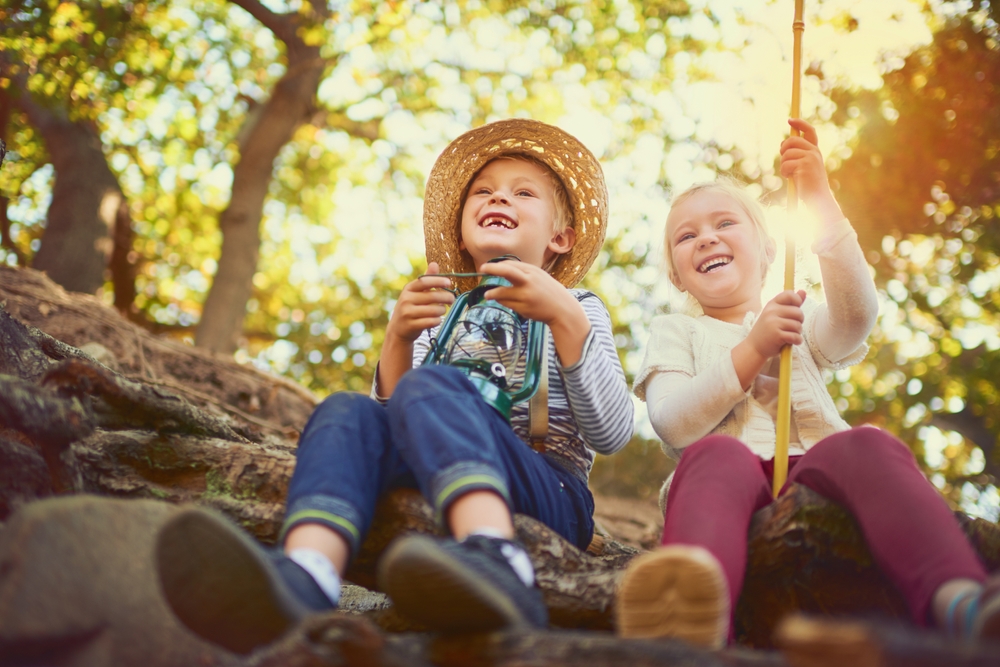
Sometimes they’d just sit there—nobody talking, nothing happening, just existing together in silence. And it was fine. Normal.
Research on communication patterns found that kids who spent significant time in low-stimulation environments with peers developed higher tolerance for conversational pauses and social awkwardness.
Not Gen Z. They fillA every silence. They’re on their phones the second conversation lulls. They need constant stimulation, constant engagement, constant entertainment.
And that makes a real connection harder. Real relationships have stretches where nothing’s happening, and that’s okay. But they never learned that those moments are survivable. So they avoid them.
8. They Know How To Entertain Themselves With Almost Nothing
They’d have a stick and a rock, and somehow that would turn into an hour of entertainment.
They’d make up elaborate scenarios with whatever was around.
They’d build entire worlds out of nothing.
That resourcefulness—that ability to create something out of nothing—is a skill most people who played outside until dark still have. They don’t need much to have fun. They can make things work with what’s available.
Gen Z? They grew up with access to everything. If they were bored, there was an app for that. A video. A game. They never had to be creative with limitations because they never had real limitations.
And now they’re adults who can’t function without the right tools, the right setup, the right conditions. They can’t improvise. Can’t make do. Can’t figure it out with what they have. Because they were never forced to.


