

While many ‘mysterious’ natural phenomena have been unraveled by science, there remain a few that sit stubbornly outside our current understanding. These mysteries not only pique our curiosity but also pose potential risks, urging us to pay attention and possibly worry about the unknown. Here are 14 natural phenomena that continue to baffle scientists and why they should be on your radar.
1. Ball Lightning
Imagine a calm evening suddenly interrupted by a glowing sphere of electricity floating eerily across the sky. That’s ball lightning—an elusive weather phenomenon that has puzzled scientists for centuries. Witnesses describe it as a floating orb of light, varying in size from a golf ball to a beach ball, sometimes accompanied by a hissing noise. It’s unpredictable, making it difficult to study, but its mysterious nature captures our imaginations and leaves us wondering how something so bizarre could exist.
According to a study published in the Nature journal, ball lightning has been sporadically documented throughout history, yet remains scientifically unexplained. Some researchers suggest it could be a form of plasma, while others theorize about chemical reactions in the atmosphere. Despite numerous theories, the phenomenon’s exact cause is still a mystery. What makes ball lightning concerning is its potential danger—reports of it entering homes and causing electrical disruptions are not unheard of.
2. Earthquake Lights

Just before the ground starts shaking, people have reported witnessing strange lights flashing in the sky. Known as earthquake lights, these luminous phenomena have left geologists and physicists searching for answers. Typically appearing as blue, white, or pink glows, they sometimes take the form of streaks or orbs in the sky. Earthquake lights are rare and unpredictable, adding to the difficulty of studying them scientifically.
While the exact mechanism behind earthquake lights remains unclear, some scientists hypothesize that they could be caused by electrical charges released from rocks under stress before an earthquake. This theory, however, fails to explain why such phenomena occur only in certain regions and not globally. Without a definitive explanation, predicting when or where earthquake lights might appear is impossible, leaving them as an unresolved slice of nature’s light show. Their enigmatic presence reminds us of the vast unknowns still lurking within our planet.
3. Taos Hum

In the small town of Taos, New Mexico, residents and visitors have reported hearing a persistent, low-frequency hum. Dubbed the “Taos Hum,” this auditory enigma has sparked intrigue and frustration in equal measure. Descriptions of the hum vary, with some comparing it to the sound of a distant diesel engine. Yet, despite numerous investigations involving acousticians and scientists, the source of the sound has never been identified.
A study conducted by the University of New Mexico attempted to pinpoint the hum’s origin, involving surveys and sound measurements. However, the study concluded that only about 2% of Taos’s population could hear the hum, suggesting it might be subjective rather than environmental. This makes the phenomenon even more perplexing, as it blurs the line between physiological perception and external reality. The Taos Hum serves as a reminder of the limitations within our scientific capabilities and the mysteries they fail to unravel.
4. Bermuda Triangle
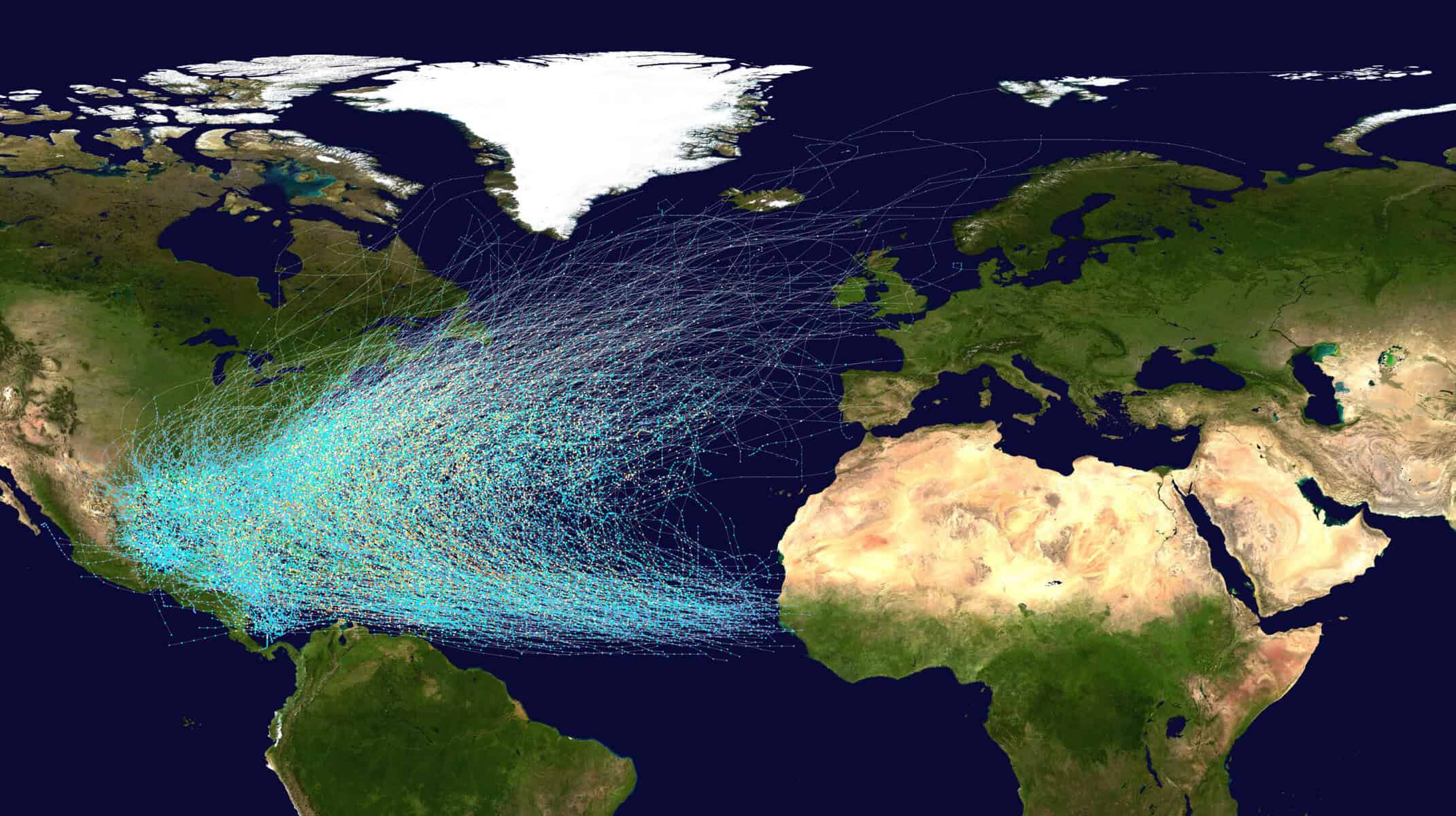
The Bermuda Triangle, a notorious region in the North Atlantic Ocean, has been the site of numerous unexplained disappearances. Ships and aircraft have vanished without a trace, fueling countless theories ranging from natural anomalies to extraterrestrial activities. The area, bounded by Miami, Bermuda, and Puerto Rico, has captured the imagination of conspiracy theorists and scientists alike. Despite extensive research, no conclusive evidence explains the mysterious phenomena associated with this zone.
Some scientists propose that the region’s anomalies might be due to environmental factors like rogue waves or methane hydrate eruptions. Others suggest compass variations or unpredictable weather patterns as possible explanations. Despite these theories, the Bermuda Triangle continues to evoke a sense of mystery and caution. Whether a genuine natural phenomenon or the stuff of legend, it remains a captivating enigma etched in maritime lore.
5. Dark Lightning

Dark lightning is a phenomenon as intriguing as it sounds—bursts of gamma rays produced during thunderstorms, invisible to the naked eye. Unlike ordinary lightning, which is visually spectacular, dark lightning is stealthy and insidious. It occurs within a fraction of a second and can release as much radiation as 10 chest X-rays. The invisible nature of dark lightning means most people are oblivious to its occurrence, yet its potential health implications are concerning.
Research published in the “Geophysical Research Letters” sheds light on this cryptic phenomenon, suggesting that dark lightning originates from high-energy particles colliding with atmospheric atoms. This interaction generates a burst of gamma rays, which poses a radiation risk to aircraft flying through thunderstorms. While the frequency and impact of dark lightning are still under investigation, its existence challenges our understanding of storm dynamics. It’s a stark reminder of the hidden dangers lurking within nature’s most familiar spectacles.
6. Great Attractor

In the vastness of the universe, a cosmic anomaly known as the Great Attractor exerts a gravitational force that pulls galaxies, including our Milky Way, toward it. Situated some 150-200 million light-years away, this mysterious region defies our understanding of cosmic distribution. Telescopes and astronomical surveys struggle to observe the Great Attractor directly due to its location behind the Milky Way’s dense galactic plane. Its gravitational pull remains one of the universe’s most baffling puzzles, inviting both awe and concern.
Despite the advances in cosmic mapping, the Great Attractor challenges our understanding of gravitational forces at a grand scale. Scientists speculate it could be a massive concentration of dark matter or an enormous galaxy cluster. As researchers strive to unlock its secrets, the Great Attractor reminds you of the mysteries that lie beyond our cosmic neighborhood. Understanding its true nature could reshape our comprehension of universal dynamics.
7. Rogue Waves

Imagine a seemingly calm sea suddenly giving rise to a towering wave, seemingly out of nowhere. These are rogue waves, colossal oceanic phenomena that can reach heights of 100 feet or more. They appear unexpectedly and are powerful enough to sink even the largest ships, making them a maritime nightmare. Despite their ferocity, rogue waves remained dismissed as maritime myths until scientific evidence proved their existence.
A study by the European Space Agency utilized satellite radar to capture these waves, validating the accounts of sailors who had encountered them. Still, what causes rogue waves to form remains a contentious topic, with theories ranging from constructive interference to ocean current dynamics. Their unpredictable nature poses a significant challenge to marine navigation and safety. Recognizing and understanding rogue waves is crucial, as they represent the ocean’s wild side, defying expectations and demanding respect.
8. Hessdalen Lights

In the remote valley of Hessdalen, Norway, mysterious lights dance across the sky, captivating locals and scientists alike. Known as the Hessdalen Lights, these unexplained phenomena manifest as floating orbs of light, changing colors and intensity. Unlike other light anomalies, the Hessdalen Lights are relatively frequent, with sightings recorded several times a year. Despite numerous studies, including electromagnetic and spectroscopic analysis, their origin remains elusive.
Some researchers speculate that the lights result from ionized gas or plasma interacting with atmospheric elements, but no definitive explanation has been established. The lights have attracted global attention, with scientists and tourists flocking to Hessdalen in hopes of witnessing the spectacle. For researchers, the lights present an ongoing scientific puzzle, a challenge that underscores the complexities of our natural world. As a visitor or a curious observer, the Hessdalen Lights offer a glimpse into the ethereal, reminding you of nature’s unexplained wonders.
9. Marfa Lights

In the desert near Marfa, Texas, mysterious lights appear on the horizon, flickering and darting unpredictably. Known as the Marfa Lights, these phenomena have sparked tales of ghosts, aliens, and scientific intrigue. The lights typically appear as glowing orbs, sometimes stationary and other times moving rapidly. Despite numerous investigations, neither their origin nor their consistency has been satisfactorily explained.
Some hypotheses suggest atmospheric reflections of car headlights or geological factors involving underground gases as potential causes. However, these explanations fail to account for sightings reported long before automobiles existed. The persistent mystery of the Marfa Lights continues to draw visitors and researchers alike, offering both a tourist attraction and an unresolved scientific question. As you stand in the desert night, witnessing the enigmatic display, you’re reminded of the boundary between folklore and science.
10. St. Elmo’s Fire

During thunderstorms, you might witness a strange, luminous glow clinging to the tips of ship masts or aircraft wings. This is St. Elmo’s Fire, a weather phenomenon that has mystified mariners and aviators for centuries. Often mistaken for lightning, it’s actually a form of plasma caused by the ionization of air molecules during electrical storms. The blue or violet glow is both eerie and beautiful, adding an element of wonder to the stormy skies.
The phenomenon is named after St. Erasmus of Formia, the patron saint of sailors, who saw it as a favorable omen. Despite its frequent occurrences during thunderstorms, the exact conditions necessary for St. Elmo’s Fire remain partially understood. While it poses no direct danger, its unpredictable appearance can be alarming for those unfamiliar with it. St. Elmo’s Fire serves as a reminder of the atmospheric mysteries that continue to enchant and occasionally bewilder people around the world.
11. Wow! Signal

In 1977, a radio telescope detected a strong, narrowband radio signal from outer space that lasted for 72 seconds, now famously known as the Wow! Signal. This anomaly, detected by Dr. Jerry R. Ehman at Ohio State University, has been the subject of extensive debate and speculation. The signal’s origin remains unknown, with theories ranging from interstellar communication to natural cosmic phenomena. Despite numerous attempts to detect the signal again, it has never been replicated or explained.
The Wow! Signal’s discovery ignited discussions about the possibility of extraterrestrial life and the limitations of our current technological capabilities. Some scientists theorize that the signal could have been a one-time natural event, while others hope it represents a communication attempt from another civilization. Regardless of its source, the signal’s enigmatic nature challenges our understanding of the cosmos and our place within it. The Wow! Signal serves as a tantalizing clue in the ongoing search for answers beyond our planet.
12. Placebo Effect

The placebo effect is a psychological phenomenon where people experience real improvements in their health after receiving a treatment with no active therapeutic effect. This paradoxical response has baffled medical researchers for decades, challenging the fundamental principles of pharmacology and treatment efficacy. Studies show that the placebo effect can trigger significant changes in brain chemistry, leading to genuine improvements in symptoms. The mere belief in treatment’s effectiveness appears to play a crucial role in its impact.
Despite its widespread recognition, the mechanisms underlying the placebo effect remain poorly understood. Some researchers suggest that psychological factors, such as expectation and conditioning, are responsible, but these explanations remain incomplete. The placebo effect raises questions about the mind-body connection and the complexities of human perception. It underscores the need for a deeper understanding of how psychological and physiological processes interact in the healing process.
13. Double Slit Experiment

In the realm of quantum mechanics, the double slit experiment stands as one of the most perplexing demonstrations of wave-particle duality. When particles like electrons are fired through two parallel slits, they create an interference pattern on a screen, indicating wave-like behavior. However, when observed, they instead behave like particles, collapsing the wave function. This experiment challenges our understanding of reality, suggesting that the act of observation alters the outcome.
The double slit experiment raises profound questions about the nature of consciousness and its role in the physical world. Despite extensive research, no consensus exists on why particles behave differently when observed. Some interpretations propose that particles exist in multiple states until measured, while others suggest more abstract explanations involving parallel universes. The experiment symbolizes the enigmatic nature of quantum mechanics and the fundamental mysteries of the universe.
14. Tunguska Event

In 1908, a massive explosion flattened over 800 square miles of forest in Siberia, known as the Tunguska Event. Despite the absence of a crater, the blast was equivalent to about 15 megatons of TNT, making it one of the most powerful natural explosions in recorded history. Scientists have theorized that a meteoroid or comet exploded in the atmosphere, but no definitive evidence has been discovered. The event remains a source of fascination and inquiry, highlighting the potential dangers posed by cosmic events.
Recent expeditions to the site have unearthed more clues, including unusual mineral deposits, lending support to the meteor or comet hypothesis. However, the lack of a crater and minimal fragments continues to puzzle researchers. The Tunguska Event serves as a reminder of our planet’s vulnerability to extraterrestrial impacts and the gaps in our planetary defense systems. Understanding such phenomena is crucial for preventing and mitigating potential future threats.


