

For centuries, humans have looked to the stars, the oceans, and even the tiniest cells to answer one impossible question: why does life exist at all? From philosophers to physicists, theories have ranged from divine design to cosmic accidents—but new scientific discoveries are bringing us closer than ever to understanding life’s true origins. Researchers now believe the answer may lie in an elegant set of physical laws that make life not just possible—but inevitable.
1. Earth Is The Sweet Spot
The idea of the “Goldilocks Zone” suggests Earth is uniquely positioned for life because it sits in a region around the Sun that’s neither too hot nor too cold. This optimal distance allows liquid water to exist, a crucial ingredient for life as we know it. Astrophysicists often point to this zone when explaining why Earth, unlike its immediate planetary neighbors, has such diverse life forms. It’s as if the universe provided the perfect conditions for life to snuggle right in.
A study published in Nature explains how Earth’s precise positioning affects its temperature stability, crucial for maintaining life-supporting conditions. The research highlights that even slight changes in distance from a star can dramatically alter a planet’s climate. So, Earth’s spot in the solar system isn’t just a happy accident—it’s a fundamental reason life thrives here.
2. Chemical Reactions Sparked Life

Life might just be an extraordinary consequence of routine chemical reactions. In the primordial soup of early Earth, simple molecules combined in complex ways, eventually giving rise to life. These chemical processes created building blocks like amino acids, which are essential for forming proteins and DNA. Over billions of years, these interactions became more sophisticated, leading to the diversity of life you see today.
Think of it as nature’s own alchemy. The transformation from simple to complex is a miracle of chemistry, yet there’s nothing magical about it. These reactions were inevitable given the right ingredients and conditions, much like baking a cake when you have flour, eggs, and heat. The beauty is in the simplicity that leads to complexity.
3. Humans Are Made Of Star Dust

Astrophysicists often remind you that you’re made of stardust. After stars explode in supernovae, they scatter elements like carbon, hydrogen, and oxygen—key ingredients for life—across the universe. These stellar remnants formed planets, including Earth, infusing them with the raw materials needed for life. It’s a cosmic chain reaction where the death of stars seeds the potential for life elsewhere.
Research from NASA provides compelling evidence that the same elements found in living organisms are abundant in space. Their study of interstellar clouds shows that these life-essential elements are universal, suggesting that the building blocks of life might be widespread. So, every breath you take, every cell in your body, is a continuation of a cosmic narrative as old as the stars.
4. Evolution Is Nature’s Plan

Evolution isn’t just about survival of the fittest; it’s about life’s adaptability and resilience. Over millions of years, simple organisms evolved into complex life forms, adapting to their environments in remarkable ways. This adaptability is a testament to the power of natural selection, where advantageous traits become more common across generations. You are, in many ways, the result of countless tiny adjustments made over epochs.
Consider evolution as nature’s way of tinkering with life, finding what works and discarding what doesn’t. This process has led to the astonishing diversity of life on Earth, from microscopic bacteria to towering redwoods and blue whales. Evolution doesn’t work toward a goal; instead, it’s an ongoing journey of experimentation and refinement. It’s an elegant dance of trial, error, and survival.
5. Water Equals Life

Water is often called the “universal solvent,” a phrase that underscores its role in sustaining life. Its unique properties allow it to dissolve a variety of substances, facilitating the chemical reactions necessary for living organisms. This makes it an ideal medium for transporting nutrients and waste products in biological systems. Life, as you know it, wouldn’t be possible without water’s unparalleled ability to support and promote biochemical processes.
A report from the United States Geological Survey highlights how water’s polarity and structure make it exceptionally versatile. This adaptability enables water to moderate temperatures, dissolve essential nutrients, and serve as a habitat for countless organisms. Water’s role in life’s existence is so fundamental that astrobiologists look for it when searching for life elsewhere in the universe.
6. Cells Are Basically Cities

Cells are the basic units of life, often described as tiny engines driving the complex machinery of living organisms. They perform essential functions like energy production, waste elimination, and reproduction. Inside these microscopic structures, intricate processes occur, sustaining life through a delicate balance of chemical reactions. Cells represent life’s ingenuity at its most fundamental level.
Think of cells as bustling cities, each with a specific role in maintaining the health and functionality of an organism. They adapt to different environments and challenges, showcasing life’s resilience and diversity. This cellular complexity is a testament to nature’s remarkable ability to create order from chaos, allowing life to flourish in myriad forms.
7. DNA Is Life’s Blueprint
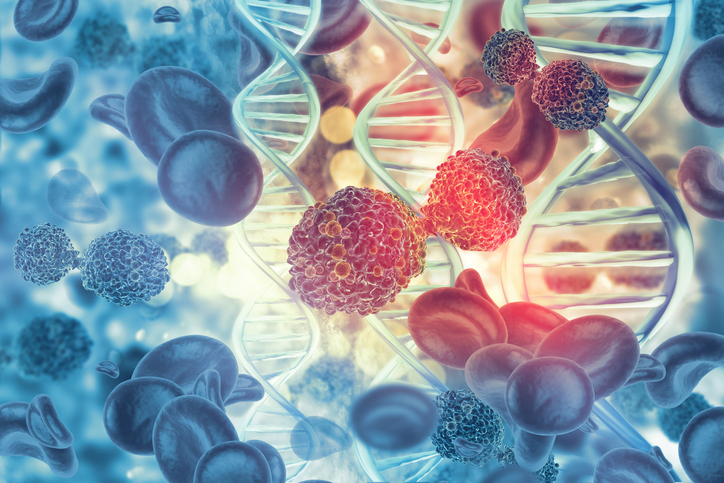
DNA is often referred to as the blueprint of life, encoding the information needed to build and maintain an organism. It’s a complex molecule composed of sequences that dictate everything from eye color to susceptibility to certain diseases. The more scientists learn about DNA, the more they grasp its critical role in evolution and species diversity. It’s a testament to life’s incredible complexity and precision.
The Human Genome Project, a landmark study, mapped the complete set of human DNA, providing invaluable insights into genetics and heredity. This project underscored how small variations in DNA sequences lead to the vast diversity of life. Through DNA, life manages to perpetuate itself with remarkable fidelity, passing on vital information from one generation to the next.
8. Symbiosis Powered Partnerships

Symbiosis is the art of living together, where different species engage in mutually beneficial relationships. These partnerships can range from the simple to the highly complex, showcasing nature’s ability to foster cooperation. From fungi aiding plants in nutrient absorption to bees pollinating flowers, these alliances help sustain ecosystems. Life thrives not because of solitary struggle but through collaborative effort.
Consider the human gut microbiome, a bustling community of bacteria that aids digestion and strengthens the immune system. This relationship is a perfect example of how life evolves to form partnerships that enhance survival. Symbiosis is a reminder that cooperation, as much as competition, drives life’s existence and evolution, creating interdependence in the web of life.
9. Earth Has A Protective Shield

Earth’s magnetic field acts as a protective barrier, shielding life from harmful solar radiation and cosmic rays. This invisible force field is generated by the motion of molten iron in Earth’s core, creating a magnetic shield that deflects charged particles. Without it, the planet would be bombarded with radiation, making life as you know it untenable. It’s one of nature’s many safeguards that enable life to flourish.
Imagine Earth as a spaceship with a built-in radiation shield, protecting its precious cargo of life. This magnetic field preserves the atmosphere and water, essential for maintaining habitable conditions. It’s a silent guardian, often taken for granted, but crucial for sustaining the delicate balance necessary for life to exist.
10. Sunlight Created Lifeforms

Photosynthesis is nature’s way of converting sunlight into chemical energy, a process that fuels life on Earth. Plants, algae, and certain bacteria capture solar energy and convert it into glucose and oxygen, supporting their growth and providing sustenance for other organisms. This process is foundational to life, forming the base of the food chain and affecting global carbon and oxygen cycles.
Imagine plants as nature’s solar panels, diligently harvesting sunlight to produce energy-rich compounds. This energy sustains not just the plants themselves but also the myriad creatures that rely on them for food. Photosynthesis is a marvel of efficiency and innovation, illustrating how life ingeniously taps into the sun’s vast energy resources to sustain itself.
11. Tectonic Plates Created Homes

Plate tectonics, the movement of Earth’s outer shell, plays a crucial role in shaping the planet’s surface and creating diverse habitats. This slow-motion dance of continental drift influences climate, sea levels, and the distribution of life forms. It’s responsible for mountains, ocean basins, and earthquakes, constantly reshaping the world you inhabit.
Think of plate tectonics as Earth’s creative sculptor, molding the landscape and influencing ecological niches. These geological processes create environments ripe for evolution and adaptation, fostering biodiversity. The dynamic nature of plate tectonics ensures a constantly changing planet, where life has evolved to thrive amid perpetual transformation.
12. Survival Is A Game

Natural selection is the process through which advantageous traits become more common in a population, leading to evolution over time. It’s nature’s way of testing which traits best suit an environment, driving the diversity and complexity of life. This relentless selection ensures that life forms adapt to changing conditions, perpetuating life’s resilience.
Imagine natural selection as a never-ending contest, with countless competitors vying for survival. Those best suited to their environment thrive and pass on their genes, while others fade away. It’s a ruthless yet effective mechanism, one that continuously hones life to meet the challenges posed by ever-changing environments.
13. Extremophiles Are Life-Enhancing Trailblazers

Extremophiles are organisms that thrive in environments once thought inhospitable to life, like deep-sea vents or acidic hot springs. Their existence challenges traditional notions of where life can endure, expanding the boundaries of what’s considered habitable. These hardy life forms demonstrate incredible adaptability, often relying on unique metabolic processes to survive.
Consider extremophiles the trailblazers of life, venturing into realms where others dare not tread. Their resilience offers clues about how life might exist on other planets with extreme conditions. Extremophiles highlight life’s tenacity and capacity to adapt, reminding you that life is often found in the most unexpected places.
14. Genetic Mutations Are Driving Diversity

Genetic mutations, while often associated with disease, are a driving force behind evolution and biodiversity. These random changes in DNA can introduce new traits, some of which may offer survival advantages. Over time, beneficial mutations become more common, fueling the diversity of life you see today.
Imagine mutations as nature’s random lottery, occasionally yielding winning numbers that enhance survival. These genetic surprises introduce innovation, pushing life to explore new possibilities and adapt to changing environments. Mutations remind you that life’s complexity is partly owed to its willingness to embrace the unpredictable.
15. Extraterrestrial Life Is A Thing

The search for life beyond Earth isn’t just about finding alien civilizations; it’s about understanding the universality of life’s processes. Scientists scan the cosmos for signs of life, from microbial organisms to advanced civilizations, using telescopes and space probes. This quest expands your understanding of what life might look like and where it could exist.
It’s a thrilling exploration that challenges assumptions and sparks curiosity about life’s potential ubiquity. Each discovery, like the detection of organic molecules on a distant moon, offers tantalizing hints about the possibilities of life elsewhere. The search for extraterrestrial life isn’t just about finding others; it’s about understanding your place in the cosmic tapestry.


