

Since breaking free from her conservatorship, Britney Spears has proudly embraced her liberation — but not without raising new questions among fans who once fought fiercely for her autonomy. Every headline, post, and unexpected appearance since then has carried an emotional undertone that feels harder to ignore. What looks like empowerment on the surface can sometimes read as exposure, instability, or even a quiet plea for help. These 10 moments reveal the complicated reality of what her “freedom era” may truly feel like behind the scenes.
1. The Cryptic Posts About “Suffering,” “Darkness,” and Inner Pain
ShutterstockHer November 30 Instagram caption was filled with references to suffering, inner darkness, and emotional wounds that still shape her life. She wrote about overwhelming sadness, the ache of loss, and the need to listen to the “child within” — a phrase often used in trauma recovery work. Mental-health experts noted that such public expressions of emotional pain paired with provocative imagery can indicate a destabilized emotional state, a dynamic supported by trauma research from the Cleveland Clinic that highlights how loss and grief often resurface in cycles. For fans, the shift from raw vulnerability to a toned-down caption hours later suggested regret or second-guessing. It felt like she had revealed too much too quickly and then tried to pull it back.
This pattern — reveal, retract, repeat — resonates with those familiar with emotional dysregulation. Sharing pain openly can feel cathartic in the moment, but it can also lead to shame or panic afterward. Britney’s edited caption reflected that push-pull dynamic, the tension between wanting to be understood and wanting to protect herself. Supporters recognized the emotional instability behind the swings in tone and presentation. To many, the caption wasn’t just a post; it was a warning sign wrapped in poetic language.
2. The Half-Naked Dancing Video That Left Fans Worried
In late November 2025, Britney returned to Instagram with a video of herself dancing in a leopard-print bodysuit and heels to Adele’s “Send My Love (To Your New Lover),” paired with a reflective caption about “suffering” and inner darkness. The initial post was raw, emotional, and vulnerable — but the quiet editing of the caption hours later only deepened fan concern. Psychologists who study celebrity mental health note that frequent emotional disclosures paired with sudden content alterations can signal deep internal conflict, a pattern documented in research from the American Journal of Psychiatry on fame-related stress. When a public figure oscillates so quickly between glamor and pain, it often points to an unresolved emotional storm. For longtime supporters, the dancing didn’t read as carefree; it felt like an unfiltered glimpse into turmoil that she couldn’t fully articulate.
In celebrity psychology, this kind of presentation is sometimes described as the “false self,” in which a polished outward persona masks growing inner instability. Research from UCLA’s Center for Mental Health in the Digital Age has found that social-media environments heighten this dissonance, creating pressure to perform even during emotional distress. That tension may explain why Britney’s glamorous choreography clashed so sharply with the melancholy tone of her words. Fans saw beauty, movement, and sparkle — but they also saw exhaustion in her eyes. The contrast made many wonder whether her freedom had come at the cost of her emotional grounding.
3. The Hidden-Hills Sleepover With the Kardashians

In November 2025, social-media stories revealed that Britney had spent the night at a Hidden Hills home belonging to members of the Kardashian family. Cozy pajamas, selfies in bed, and group photos painted the picture of a carefree girls’ night. But for many fans, the moment raised red flags about influence, vulnerability, and emotional readiness. When placed alongside her recent breakup turmoil and emotionally charged Instagram posts, the gathering felt less like fun and more like a potentially risky social environment. The Kardashians’ high-pressure, highly public lifestyle isn’t known for quiet healing — and that contrast worried many.
Research on celebrity friendship dynamics, including a study in the Journal of Social Psychology, shows that high-profile social circles often entail emotional trade-offs, such as increased scrutiny, identity stress, and relational instability. These environments can heighten anxiety, particularly for individuals already navigating fame-related trauma. For Britney, the bright lights and heightened expectations of such a circle could be emotionally taxing, even if presented as “just a sleepover.” Fans felt torn: they wanted her to enjoy freedom, but they also feared she was stepping into a world that might exploit her fragility. Behind the selfies, the pressure of being “on” never truly goes away.
4. The Growing Public Silence With Her Boys

In the wake of resurfaced rumors and painful revelations related to her ex-husband’s memoir, Britney’s public absence from her sons, Sean Preston and Jayden James, has grown increasingly noticeable. While silence around children is often a healthy and private choice, the timing has made fans uneasy. Her social-media presence is full of dancing videos, emotional reflections, and cryptic posts — yet no visible signs of motherhood or reconnection. Supporters who remember how fiercely she fought to protect her kids during the conservatorship find the absence hard to interpret. To many, it feels like a gap filled with unanswered questions and quiet heartbreak.
On its own, a parent choosing privacy isn’t alarming — but in Britney’s case, that privacy appears to coincide with heightened emotional volatility. Fans worry that the distance may reflect deeper struggles she hasn’t shared publicly. Detachment from family is often a sign of emotional overwhelm, especially in high-stress environments. The situation paints a portrait of someone trying to manage inner chaos while keeping up appearances online. As her posts grow more symbolic and expressive, her silence around her boys grows louder.
5. The Scenes of The Lonely, Isolated Mansion She Calls Home

Recent insider descriptions of Britney’s home paint a stark contrast to the glamorous images fans imagine — with reports of clutter, sprawling empty rooms, and a lack of consistent support. The isolation of a massive mansion might seem luxurious, but psychology suggests otherwise. Studies on loneliness and environmental stress, including findings from the National Institute of Mental Health, indicate that large, unstructured living spaces can intensify emotional instability for individuals coping with trauma. For someone accustomed to a highly structured life for over a decade, the sudden shift to solitude can feel like being dropped into emotional freefall. Freedom without support can quickly morph into a different kind of confinement.
Fans see the home as more than a backdrop — they see it as symbolic of her current emotional state. A beautiful mansion can become a psychological maze when the rooms echo with silence and unprocessed grief. Without a strong support system, every empty hallway becomes a reminder of what’s missing rather than what’s possible. Over time, such an environment may magnify insecurities, regrets, and unresolved pain. The mansion may be stunning from the outside, but inside, it appears to be a place where freedom and loneliness blend uneasily.
6. The Crying Makeup Social Posts

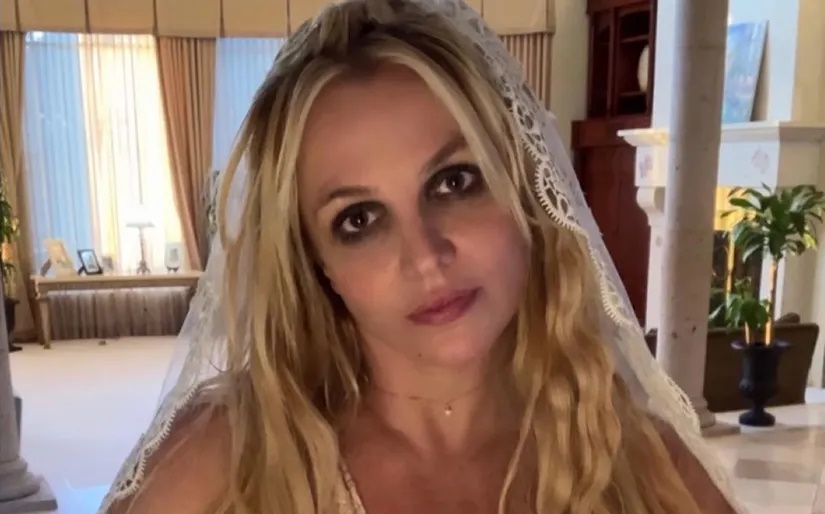
In several recent social-media photos and videos, fans noticed smudged eyeliner and tear-streaked cheeks — small details that hint at something deeper when paired with Britney’s emotional captions. What might appear, at first glance, to be an aesthetic choice takes on new meaning when set beside her references to darkness, grief, and confusion. For many supporters, the streaked makeup felt like an unfiltered moment slipping through a carefully curated persona. It looked like the kind of vulnerability that isn’t planned or posed, but rather the residue of genuine distress. These visual cues intensified concerns that she may be silently battling emotions she can’t bring herself to articulate publicly.
The contrast between her glamorous dance routines and the visible traces of crying left fans conflicted — proud of her openness, yet deeply worried about the emotional state behind it. Emotional leakage, as psychologists call it, often appears in subtle ways when someone is overwhelmed or struggling. Britney’s tear-stained photos became symbolic of that leakage: unguarded, raw, and undeniably human. The posts felt like a window into moments she didn’t fully edit or reframe before sharing. For many, this wasn’t a sign of healing but a quiet signal of distress.
7. The Wine-Bar Exit That Felt Like a Red Flag

Just days before her Instagram return, paparazzi photographed Britney leaving a wine bar while holding what appeared to be a champagne flute. Even though her team later clarified she wasn’t drinking, the images had already spread, sparking worry about impulsivity under intense public scrutiny. The timing — amid emotional posts and personal upheaval — made the moment feel less like a casual night out and more like a destabilizing escape. Supporters feared that she was walking a line between newfound independence and dangerous exposure. To many, the sight of her stepping into a swirl of flashing cameras felt like déjà vu from darker eras of her past.
For someone emerging from years of tightly monitored life, unstructured outings can be emotionally destabilizing. Routines provide safety; sudden public moments can reopen old wounds. Fans weren’t alarmed by the wine bar itself but by the context around it — the instability, the loneliness, and the fragile emotional climate. A night that might seem harmless for anyone else felt loaded when placed within Britney’s broader pattern of vulnerability. It reminded supporters how easily “freedom” can turn into overwhelm when the world is always watching.
8. The Erratic Appearing, Then Disappearing From Social Media

Britney’s habit of disappearing from social media, then reappearing with dramatic posts, has become a pattern fans can’t ignore. In the weeks before her November return, she deactivated her Instagram account altogether following tension with her ex-husband. This cycle — vanish, reappear, post emotionally charged content, vanish again — creates a sense of instability that leaves supporters unsure what version of her will emerge next. Instead of signaling calm reflection, these disappearances often feel abrupt and reactive. Each return is met with a mix of relief and dread.
The volatility of her online presence has become a storyline of its own. Fans have learned to brace themselves for emotional whiplash, wondering whether her next reappearance will bring joy, sadness, or chaos. Social-media instability can be a red flag for emotional distress, especially for someone processing trauma in real time. The unpredictability fuels concern that she may be toggling between emotional overwhelm and attempts at self-protection. For many, the vanishing acts don’t feel like boundaries — they think like distress signals.
9. The Public Fallout From Her Ex’s Memoir

Her ex-husband’s memoir resurfaced years of painful allegations, thrusting Britney back under a microscope she never asked to revisit. The timing collided with her dance videos, emotional captions, and high-profile social outings, creating a perfect storm of scrutiny. Supporters who watched her fight for her freedom felt heartbroken that old wounds were being reopened publicly. The renewed criticism compounded concerns that she might be emotionally unprepared for this level of exposure. For many fans, it felt like she was being thrust back into the role of tabloid spectacle just as she was trying to rebuild her identity.
The emotional weight of rehashed accusations can be destabilizing, especially when layered on top of fame fatigue and unresolved trauma. Fans worried that the backlash might trigger a retreat into isolation or a spike in erratic behavior. The paparazzi attention, the judgment from strangers, and the viral dissection of her every move created a pressure cooker environment. These circumstances raised uncomfortable questions about whether Britney ever truly got the chance to heal. Instead of closure, the memoir seemed to ignite another round of emotional upheaval.
10. The Unhinged Glamour That Looks Like a Mask

In every recent video or photo — whether she’s dancing in heels, posing in a new outfit, or lounging at a party — there’s a tension fans can’t ignore. Glamour sits on the surface, but fragility flickers underneath, creating a portrait that feels both beautiful and heartbreaking. Supporters who once celebrated her freedom now question whether autonomy has protected her or exposed her. The curated sparkle in her posts often feels like a mask keeping the world from seeing the depth of her pain. Behind the poses and sequins, many fear she’s battling demons in private.
Britney’s “freedom era” has become a complicated symbol — part empowerment, part emotional alarm bell. The contrast between her vibrant, provocative aesthetic and the melancholy woven through her captions reflects a woman trying to define herself while still carrying old wounds. Fans want to believe in her liberation, yet they can’t unsee the signs of struggle. The tension between hope and worry has become the emotional soundtrack of her post-conservatorship life. And for many, her story now feels like proof that autonomy and stability are not always the same thing.


