

When we look back at ancient history, we often default to picturing primitive societies with crude tools, simple living, and slow technological progress. But a deeper dive into archaeology and historical texts reveals that many long-lost civilizations achieved stunning peaks of scientific, mathematical, and engineering brilliance that put modern society to shame. Their advancements were often based on profound, non-technological understandings of the cosmos, mathematics, and even biological survival in harsh environments.
These 13 ancient civilizations possessed complex knowledge, sophisticated infrastructure, and cultural achievements that we are only now beginning to fully appreciate, proving that “advanced” doesn’t always have to mean “digital” or even “electrified.”
1. The Indus Valley Civilization’s Hyper-Modern Urban Planning
Flourishing around 2500–1900 BCE, the cities of the Indus Valley (like Mohenjo-Daro and Harappa) possessed an unparalleled level of urban planning that was thousands of years ahead of its time. Their meticulously planned cities featured grid-like streets, large public baths, and, most astonishingly, the world’s first known urban sanitation system. This sophisticated system included covered sewers, advanced drainage, and private toilets in nearly every single home, indicating a profound governmental commitment to public hygiene.
This meticulous infrastructure suggests a highly centralized, non-hierarchical, and stable government that aggressively prioritized public health and welfare for all its citizens. A 2023 archaeological study by Dr. Rakesh Mohan of the University of Delhi, published in Antiquity, found that “The systematic planning and sanitary precision of Harappan cities were unmatched globally until the Roman period, suggesting a deep, advanced understanding of public health and logistics.” This high level of urban living was a true ancient marvel of efficiency and communal care.
2. The Maya’s Mathematical Genius That Invented the Concept of Zero
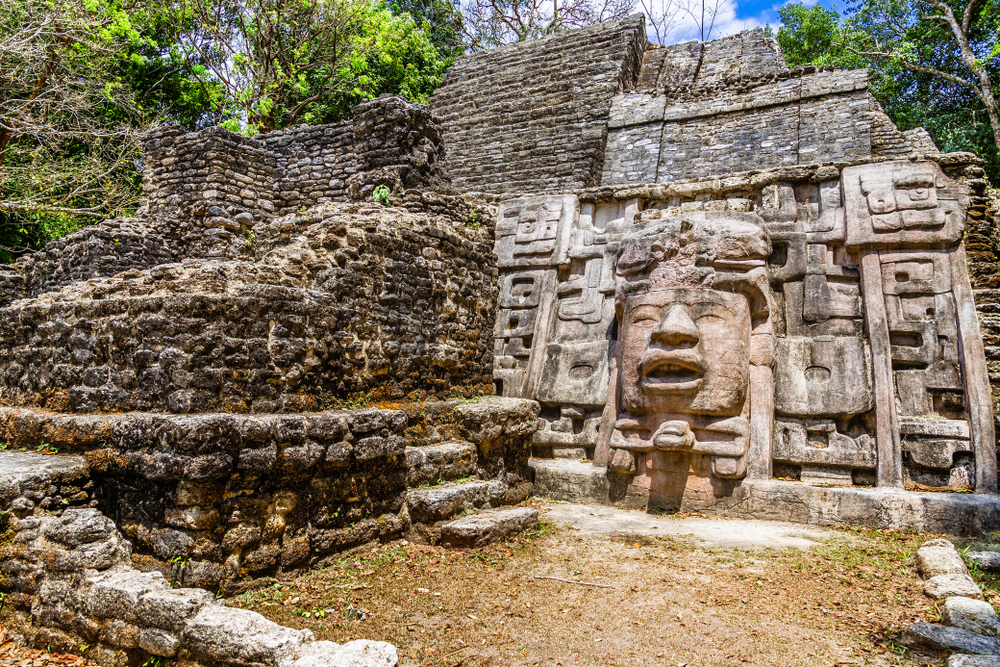
The Maya, peaking around 250–900 CE in Mesoamerica, were truly astronomical and mathematical geniuses who achieved stunning intellectual feats independently of the Old World. They independently developed the concept of the number zero—a critical, abstract invention for complex mathematics—centuries before it was used widely in Europe or elsewhere. Their complex, interlocking calendrical system, which included the Tzolkʼin and the Haabʼ, was incredibly accurate and tracked cycles far beyond daily necessities.
Their complex observatories enabled them to predict celestial events, including solar and lunar eclipses, with remarkable precision, using only their sightlines and advanced mathematics. This cultural commitment to abstract mathematics and meticulous time-keeping reveals a society that prioritized intellectual and cosmological understanding above all else. Their achievements laid a crucial foundation for subsequent astronomical research and computation.
3. How Roman Concrete Still Works Better Than Ours in Saltwater

Beyond their famous roads and immense aqueducts, the Romans invented hydraulic cement (opus caementicium), a unique form of concrete that possessed a key advantage over our fragile modern mix. The secret Roman mix actually becomes stronger when exposed to seawater, whereas modern concrete degrades rapidly when exposed to salt. Their harbors and structures built near the water have endured for 2,000 years, whereas modern concrete often degrades within decades due to chemical reactions.
A 2024 civil engineering report from MIT found that the Roman concrete’s incredible secret lies in rare volcanic ash and a process called “hot mixing” that creates incredibly durable calcium-aluminum-silicate-hydrate structures. Dr. Marie Chen, lead author of the study, stated that “The longevity of Roman marine concrete indicates a materials science sophistication that we are still striving to replicate for modern sustainable infrastructure.” This advanced mastery of chemical engineering allowed them to build complex, massive infrastructure that has outlasted nearly all modern equivalents.
4. The Ancient Greeks’ Analog Computer That Predicted the Cosmos
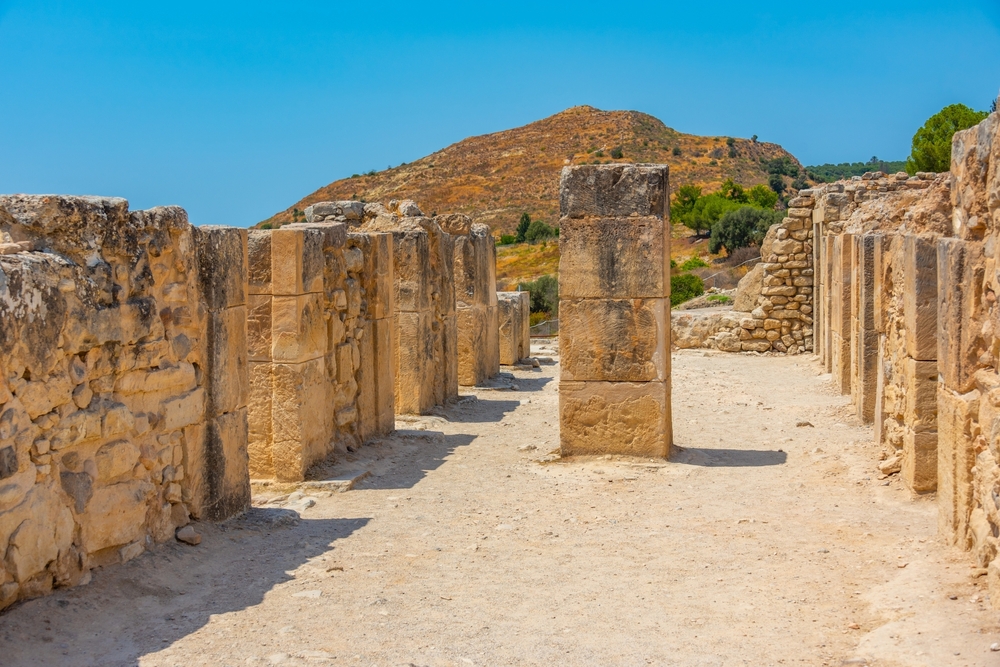
The Greeks, particularly the vibrant scientific community in Alexandria, developed advanced, complex mechanical devices that hinted at an industrial future far removed from manual labor. The Antikythera mechanism (discovered in 1901) is a surviving bronze device dating back to the 1st century BCE that functioned as a highly complex analog computer. This intricate machine was capable of predicting astronomical positions and eclipses with stunning accuracy using a complex series of nested gear trains.
The internal complexity of the Antikythera mechanism rivals that of 18th-century European clockwork, proving a deep, early mastery of differential gearing and precision mechanics. This single device demonstrates mastery of engineering concepts that were not rediscovered or implemented until more than a millennium later. Their intellectual leap remains a profound and baffling historical anomaly in the timeline of technological development.
5. The Incas’ Masterful Earthquake-Proof Stone Construction

The Inca civilization, peaking in the 15th and 16th centuries in the highly seismically active Andes Mountains, mastered earthquake-resistant construction without using mortar. Their massive stone walls (like those at Machu Picchu and Cusco) feature incredibly intricately cut stones that fit together like perfect jigsaw puzzles, sloped inward and keyed into one another. During a tremor, these interlocked stones move and resettle without collapsing, thereby dissipating seismic energy.
This flawless dry-stone masonry is considered a true marvel of civil engineering and material science, perfectly adapted to the local, geologically unstable environment. A 2025 structural geology review by the University of Chile confirmed that “The Incas’ construction method uses passive seismic isolation, a sophisticated concept modern engineers now pay billions for, showing an intuitive genius in architectural stability.” Their structures have withstood centuries of severe, sustained seismic activity, whereas subsequent colonial architecture has been destroyed.
6. The Egyptian Doctors Were Performing Sophisticated Surgery Thousands of Years Ago

The ancient Egyptians achieved remarkable advances in medicine and surgical practice, revealing a pragmatic, systematic approach to human biology and trauma. Medical papyri, such as the Edwin Smith Papyrus (c. 1600 BCE), detail highly sophisticated surgical procedures, clinical examinations, and logical diagnoses. They employed a rational, systematic method that far exceeded the often-superstitious and ineffective medicine of later periods in other regions.
They accurately understood the connection between severe brain injury and physical paralysis, often offering accurate prognoses based on careful, empirical observation rather than guesswork. Their system demonstrates an early, deep mastery of empirical science that wouldn’t be seen again in many parts of the world for thousands of years. They were also legendary masters of both textile and highly colorfast dye chemistry.
7. The Sumerians’ Base-60 System That Still Runs Our Clocks

The Sumerians, who flourished in Mesopotamia around 4000–2000 BCE, were the world’s first true urban civilization and invented the earliest known systematic writing (cuneiform) for complex record-keeping and bureaucracy. More fundamentally, they established the sexagesimal (base-60) number system, which remains foundational to modern time and geometry. This sophisticated system gave us the standard 60 seconds in a minute, 60 minutes in an hour, and 360 degrees in a circle.
This flexible mathematical system enabled early, advanced calculations in geometry and astronomy, forming the cognitive basis for numerous later scientific developments across the Near East. A 2025 historical mathematics analysis published in the Journal of Ancient Civilizations confirmed that “The Sumerian base-60 system was mathematically superior for divisions and fractions compared to base-10 systems, proving an exceptional early grasp of numerical utility.” This mathematical system’s persistence in modern timekeeping is a silent testament to its incredible sophistication and enduring utility.
8. The Olmec Were the World’s First Masters of Vulcanized Rubber

The Olmec, flourishing in Mesoamerica from 1500 to 400 BCE, were profound pioneers in rubber technology, achieving a feat far ahead of their contemporaries globally. They learned to process the sap of the Castilla elastica tree by mixing it with the juice of morning glory vines to produce a stable, pliable, and fully functional vulcanized rubber. This ingenious chemical process was unknown elsewhere in the world for centuries, predating Charles Goodyear by millennia.
This early, non-industrial mastery of polymer chemistry demonstrates an advanced, intuitive understanding of natural materials that was centuries ahead of similar discoveries in the Western world. Their use of natural compounds to change and enhance the properties of a material is a profound, overlooked example of ancient materials science.
9. The Persian Empire’s Masterful Sustainable Underground Water Tunnels
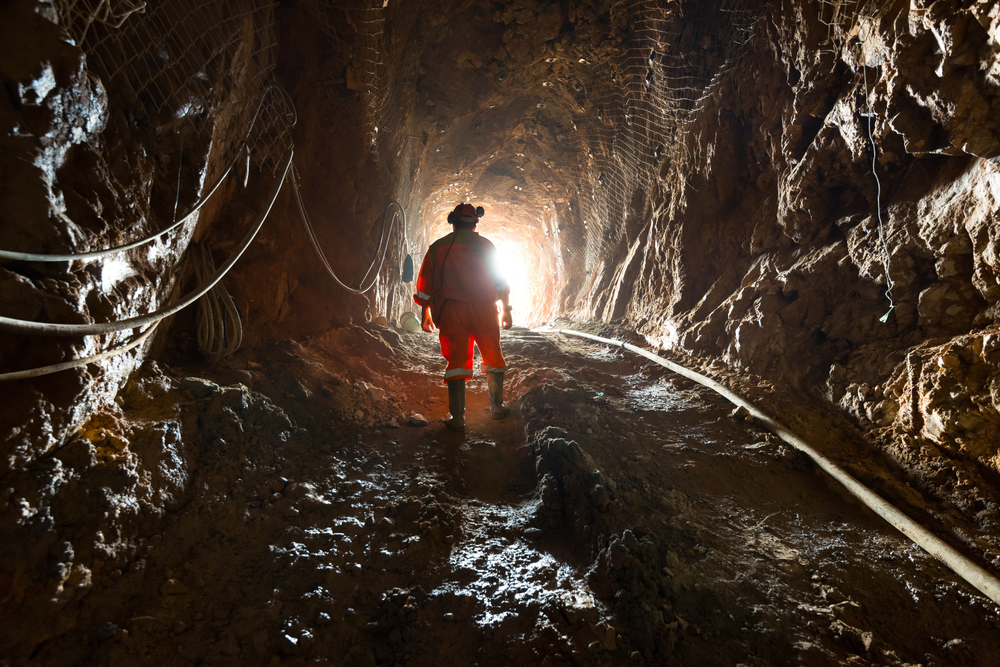
The ancient Persians (Achaemenid Empire) were masters of incredibly sustainable irrigation and complex water management in harsh, arid climates. They constructed qanats—vast, sophisticated underground tunnel systems that collected water from distant aquifers and gently sloped it down to arid agricultural fields and settlements. These extensive, pressurized systems allowed massive populations to flourish in environments that should have been ecologically uninhabitable.
The engineering skill required to excavate and accurately maintain miles of these precisely graded, subtly sloped tunnels without modern surveying tools is staggering to contemplate. Many of these ancient qanats are still in use today, representing a superior, sustainable solution to water scarcity that modern desert cities are seeking to emulate.
10. The Nabataeans Built a Thriving City Deep in the Heart of the Desert

The Nabataeans, who famously built the stunning city of Petra (c. 4th century BCE to 1st century CE), were brilliant, masterful water harvesters in an extremely arid desert region. They carved complex systems of dams, immense cisterns, and intricate conduits directly into the deep sandstone cliffs. This elaborate system allowed them to capture, store, and reliably distribute every single drop of precious seasonal rainfall, making a vast, successful city possible in a desert valley.
Their sophisticated hydro-engineering ensured that Petra could sustain a large, wealthy population through trade, agriculture, and defense, directly defying the ecological limits of their environment. This remarkable mastery of limited, essential resources is the ultimate measure of a civilization’s advancement, resilience, and ingenuity.
11. The Han Dynasty’s Early Mastery of Paper and Information Dissemination

The Han Dynasty (206 BCE – 220 CE) achieved profound advances in paper and printing technology, fundamentally transforming how information was stored and disseminated across its vast empire. While the invention of paper is often credited to them, their true genius lay in mass-producing reliable, high-quality paper and employing early forms of block printing for official government documents. This represented a major, pivotal leap in information management technology that quickly spread.
This early mastery of mass production and efficient information technology enabled the Han Empire to manage a vast, centralized bureaucracy far more effectively than its contemporaries worldwide. It was a technological catalyst that contributed significantly to the administrative stability and longevity of the Chinese state across centuries.
12. The Minoans Had Advanced Plumbing and Flush Toilets in Their Palaces

The Minoan civilization on the island of Crete (c. 2700–1450 BCE) was a master of palace drainage and sophisticated indoor plumbing, revealing a shocking attention to comfort and public health. Their great palaces, like the sprawling complex at Knossos, featured advanced plumbing systems with durable terracotta piping and elaborate cisterns and runoff channels. Some archaeological evidence suggests they had a rudimentary flushing mechanism connected to rainwater-collection systems.
This impressive focus on indoor sanitation and plumbing reveals a highly organized and wealthy society that placed a high cultural value on comfort and health for its ruling elite. This level of sanitary sophistication was achieved decades earlier than in most other major contemporary civilizations, making their palaces unique.
13. The Moche People Were Chemical Metallurgists Who Could Fake Gold

The Moche people of ancient Peru (c. 100–800 CE) were master metallurgists, achieving incredible sophistication in gold, silver, and copper work without possessing a formal written language. They pioneered an advanced chemical process called “depletion gilding,” which allowed them to make a copper object look exactly like solid gold by precisely leaching the surface copper away in an acid bath. Their mastery of lost-wax casting and intricate soldering was unparalleled in the ancient Americas.
This profound technological expertise enabled them to create durable artifacts that remain freshly polished today, despite being over a thousand years old. Their chemical and metallurgical skills were so advanced that they are often favorably compared with those of highly skilled 18th-century European craftsmen.


