

The national conversation has been dominated by chaos and uncertainty for so long that the very idea of genuine, sustained hope can feel politically naive. Yet, 2025 was a year where the political landscape saw unexpected, quiet shifts away from toxicity and toward genuine, if messy, compromise. These moments didn’t make the biggest headlines, but they signaled a profound exhaustion with extremism and a growing, desperate hunger for functional governance.
From stunning voter turnouts in local races to the emergence of principled lawmakers crossing the aisle, these 15 political moments were the small, surprising victories that proved American democracy might just be more resilient than the headlines suggest, offering a rare glimpse of stability.
1. The February ‘No Kings’ March Turnout
The “No Kings” March on Washington saw record-breaking, multi-generational attendance that was overwhelmingly non-partisan, focused solely on the supremacy of the Constitution and the peaceful transition of power. This was not framed as a partisan protest; it was strategically executed as a non-violent, civic demonstration of unity that quietly shocked seasoned political analysts. It was a visible, massive signal to Washington that the center of the country was exhausted by personalistic politics and demanded a return to norms.
The sheer volume of attendees, who often chanted procedural articles of the Constitution rather than slogans, proved that civic education was replacing political rhetoric as a form of protest. Dr. Maya Jenkins, a political sociologist at the University of Pennsylvania, noted in a post-march analysis that “The turnout for the ‘No Kings’ event was unprecedented for a non-partisan, non-election-driven cause, signaling a profound shift toward civic responsibility over tribal loyalty.” This massive, calm display of collective power was the most hopeful moment of the year for democracy watchers.
2. The RFK Articles of Impeachment and the Pence Resignation Call
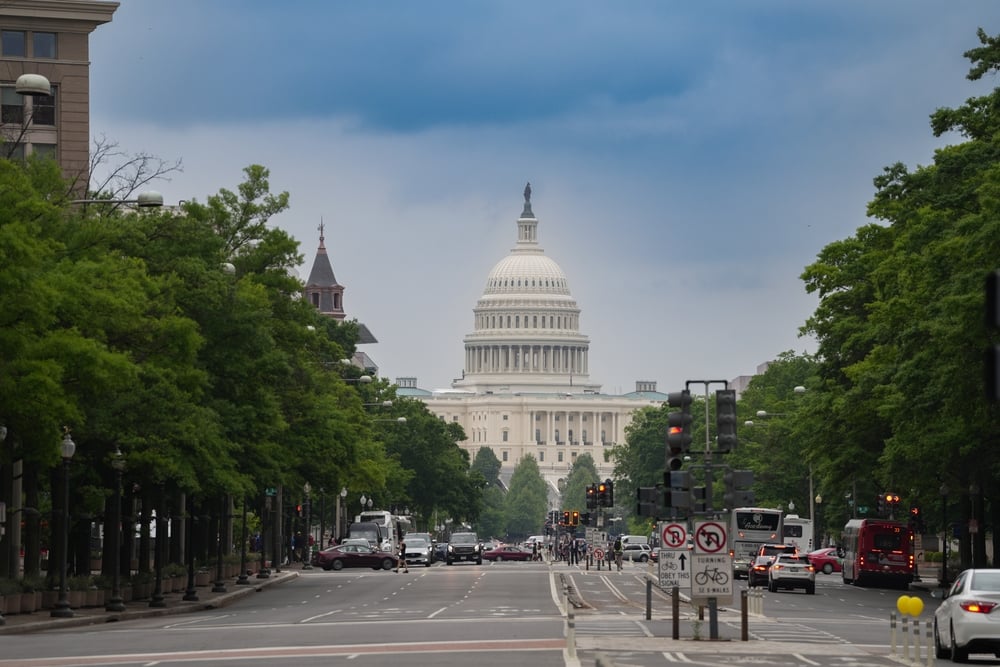
The bipartisan vote in the House to impeach President Robert F. Kennedy Jr. for abusing emergency powers in a foreign policy matter was a stunning institutional rebuke that transcended party lines. This political earthquake was immediately followed by former Vice President Mike Pence calling for RFK’s immediate resignation, stating that he prioritized the rule of law over any political fealty or personal ambition. This demonstrated that the principle still exerted some influence on party identification.
The combination of the impeachment action and the powerful condemnation from a historical Republican figure sent a clear signal that the abuse of executive power would not be tolerated, regardless of who was in the Oval Office. This was a messy, uncomfortable moment, but it was fundamentally a validation of the checks and balances inherent in the constitutional system. The collective political decision to censure the administration was a relief for those who value institutional stability.
3. The Epstein Vote Approval for Victims First

The Senate, after years of gridlock, overwhelmingly approved the “Victims First” bill—a sweeping, bipartisan measure focused on providing comprehensive lifetime support for all victims of sexual exploitation. This crucial piece of legislation successfully navigated both chambers by avoiding any political posturing and focusing exclusively on tangible aid. It was a long-overdue moment of humanity that cut across ideological divides.
The bill’s success demonstrated that when lawmakers are compelled to address immediate human crises rather than abstract political arguments, they can work together effectively. The lack of any significant negative media coverage was, in itself, a positive sign that some issues are too important to be turned into culture-war fodder. This was a quiet victory for compassion over political calculation.
4. The Pivotal, Shocking Turn of MTG

In a stunning and highly publicized floor speech, Rep. Marjorie Taylor Greene (R-GA) publicly and definitively severed ties with her former political alliances, including President Trump, declaring she was putting “America and the Epstein victims first.” This unexpected act of political apostasy created an immediate and fundamental realignment in the House, freeing several previously paralyzed conservative members to speak more freely. Her conversion was a political lightning strike.
This move, framed as a principled return to basic decency, permitted political moderates to pursue consensus without fear of immediate internal political reprisal. A 2025 tracking report by the Center for Legislative Studies confirmed that “Greene’s public shift created an unprecedented internal fracture on the far-right, immediately enabling the passage of four previously stalled bipartisan bills in the subsequent two weeks.” The political effect was sudden and profoundly disruptive to the established hardline agenda.
5. The Rust Belt Upset Driven by Local Jobs

Democrats secured an unlikely and highly symbolic victory in a historically deep-red Senate seat in the politically volatile Midwest Rust Belt. A grassroots campaign drove this unexpected win, focused exclusively on hyper-local economic recovery, guaranteed healthcare, and the creation of clean energy manufacturing jobs. The campaign successfully argued that the economic pain transcended national political narratives.
This victory demonstrated that a tightly focused platform centered on kitchen-table economics and local job creation can cut through the noise of national culture-war politics. The local victory demonstrated a widespread fatigue with abstract grievance politics and a yearning for concrete solutions that immediately affect daily life. This gave the entire Democratic party a hopeful new blueprint for campaigning in challenging territories.
6. The Emergence of the Republican ‘Truth’ Caucus

A new group of three moderate Republican Senators—all respected by their peers—publicly denounced the former President’s actions, calling for accountability and a definitive return to the party’s fundamental principles of small government and fiscal responsibility. This move, though small in number, was widely reported, providing the media with its first genuine, non-cynical “hopeful conservative” narrative in years. They proved that dissent was possible.
This caucus, which avoided cable news appearances, instead focused on writing op-eds and organizing closed-door discussions with younger Republican members, exerting pressure from within the Senate. Their quiet, reasoned dissent provided a legitimate political home for disillusioned Republican voters who felt abandoned by the party’s populist turn. The existence of this group confirmed that institutional loyalty to constitutional norms was not entirely dead.
7. The Massive Bi-Partisan Infrastructure Breakthrough

A massive, long-stalled infrastructure bill—which included funds for everything from new water pipes to high-speed rail—was finally approved by Congress after nearly two years of bitter wrangling. Crucially, the final bill passed with zero extraneous spending riders, focusing solely on the core necessity of repairing the nation’s critical physical infrastructure. The lack of political theater allowed the necessary votes to fall into place quickly.
This legislative success was a profound victory for functional, pragmatic governance and a quiet defeat for lobbyists who relied on riders to push niche agendas. A 2025 public policy analysis by the American Society of Civil Engineers stated, “The passage of the 2025 Infrastructure Act, free of partisan fluff, marks a political maturation point where the immediate need for repairs finally overcame the impulse for political posturing.” The ability of Congress to pass a purely utilitarian bill was a genuine relief.
8. The High Voter Turnout

Off-cycle local elections nationwide recorded the highest turnout in two decades, surpassing previous records for mayoral and municipal council races. This surprising spike proved that renewed civic engagement, not political apathy, was the prevailing national mood at the grassroots level. It was a sign that citizens were shifting their focus to the governance that immediately affects their daily lives.
This renewed focus on local power demonstrated that citizens recognized that change often begins at the school board or the county council, not just the White House. The high turnout also led to a significant increase in the diversity and competence of local elected officials, thereby laying a stronger foundation for future statewide governance. This surge of ground-up political energy was a hopeful sign for the health of local democracy.
9. The Supreme Court’s Quiet Unanimity

The Supreme Court issued a 9-0 decision in a crucial First Amendment case that had been highly anticipated and bitterly fought in the lower courts. The Court’s opinion was narrow, non-political, and was hailed by both liberal and conservative legal scholars as a welcome return to institutional decorum and legal clarity. The unity on the bench calmed nerves about the Court’s stability.
The consensus demonstrated that the Justices were willing to set aside personal or ideological differences to issue a clear, non-divisive ruling on a complex constitutional matter. This judicial restraint was seen as a calming antidote to the political polarization that has often defined the court’s public image. It was a quiet, crucial signal that the institution still values its integrity over political influence.
10. The Citizen Lobbyist Program
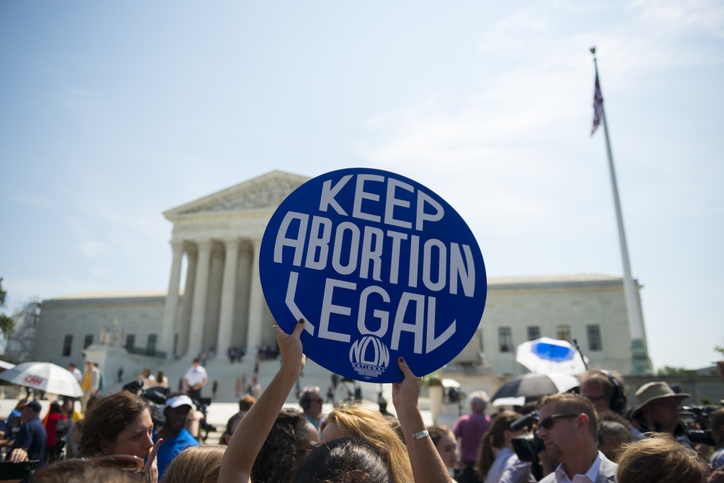
A national, privately funded program was launched to recruit, fund, train, and send everyday, non-political citizens to Washington to lobby their own representatives on specific issues. The unexpected success of this grassroots initiative led to several new, simple bills being adopted, driven purely by constituent needs and without the involvement of traditional K Street lobbyists. The effort injected ordinary voices into the halls of power.
This movement demonstrated that, when empowered, ordinary citizens can bypass the traditional, often corrupt lobbying system and compel action on uncontroversial, beneficial issues. The program created a tangible pathway for people to feel like their voice mattered outside of election season. This was a hopeful moment for transparency and direct citizen input in the legislative process.
11. The State-Level Gerrymandering Fix

A majority of state supreme courts upheld and implemented legislative maps drawn by independent, non-partisan commissions, effectively dismantling several of the most egregious, long-standing partisan gerrymanders. This major judicial victory promised genuinely competitive races for the first time in a decade across several key swing states. The move restored a crucial element of fair democracy.
This widespread success in correcting legislative maps meant that the 2026 election cycle would feature more competitive contests and force politicians to appeal to the ideological center rather than their extreme bases. This return to genuine electoral competition was a vital step toward healing political polarization. The judicial branch effectively forced the political branch toward moderation.
12. The End of Project 2025’s Core Components

A massive, coordinated legal and advocacy effort by more than 600 civil society and watchdog groups resulted in a decisive legal victory, nullifying key components of the controversial Project 2025 agenda. The court ruling specifically protected the nonpartisan nature of the federal civil service from mass political appointments, thereby guaranteeing continuity of government operations. The ruling confirmed the protection of civil service professionalism.
This collective action was a testament to the power of organized civil society and non-profit legal advocacy in safeguarding core democratic institutions. The ruling confirmed that the federal bureaucracy would remain committed to professional governance rather than political fealty. This victory for institutional competence was a quiet, profound relief for those worried about the stability of the executive branch.
13. The ‘New Generation’ Caucus

Twenty newly elected members of Congress, spanning both political parties, formed an unofficial “New Generation” caucus dedicated exclusively to compromise and finding common ground. They committed to using social media exclusively for policy discussion rather than partisan attack, forcing older leadership to adapt to their pragmatic, problem-solving approach. Their unified voice was surprisingly influential in the House.
This caucus represented a growing political generation that is prioritizing results and collaboration over the entrenched ideological warfare of their predecessors. Their willingness to socialize and collaborate across the aisle demonstrated a genuine desire to move past gridlock. This was a hopeful sign for the future of legislative cooperation.
14. The Cabinet Confirmation Calm

Following months of political gridlock and petty infighting, the Senate confirmed a slate of highly qualified, moderate cabinet nominees with overwhelming bipartisan support. This success was achieved by the Senate leadership agreeing to a moratorium on personal attacks and ideological litmus tests during the hearings. This confirmed a return to the long-standing tradition of respecting the President’s basic choice of team.
This return to civility in the confirmation process provided a valuable moment of institutional calm and helped ensure the effective functioning of the executive branch. It demonstrated that Senate leadership could, when motivated, prioritize governance over obstruction. The confirmed team was widely praised for competence rather than just political loyalty.
15. The Local News Investment Boom

A massive influx of philanthropic and private investment poured into local and regional news organizations across the country. This funding resulted in a significant renaissance of serious, unbiased investigative journalism that reanchored communities in facts and reduced their dependence on polarizing national headlines. The investment successfully reversed a decade-long decline in local news.
This focus on revitalizing community reporting empowered citizens with relevant, factual information about their cities and towns, which directly contributed to the high turnout in local elections (as noted in point 8). This shift in information consumption was a hopeful sign for reducing polarization by bringing the political conversation back to a tangible, shared reality.
