

History is often portrayed as a linear, sober progression of facts, but certain moments defy all logic, reading more like absurd fictional plot points than verifiable events. These are the incidents in which entire cities were flooded with beer, wars were waged against flightless birds, and ancient popes were put on trial posthumously. These bizarre, high-stakes incidents remind us that the past was often far stranger than we imagine.
These 15 events, supported by meticulous historical record, were profoundly disruptive at the time but have since faded into historical footnotes, proving that chaos and absurdity are persistent, undeniable forces in human civilization. From military blunders to extreme acts of political vengeance, these moments shatter the illusion of historical predictability.
1. The Erfurt Latrine Disaster of 1184
In 1184, in the German city of Erfurt, a massive gathering of nobles, counts, and other high-ranking Holy Roman Empire officials turned into a gruesome, unbelievable tragedy known as the Erfurt Latrine Disaster. The sheer weight of the gathered dignitaries caused the entire wooden floor of the room to collapse suddenly. Dozens of nobles and their entourage plummeted to their deaths into a massive cesspit below.
Estimates suggest around sixty people met a gruesome, shocking fate, drowning in the large, liquid mass of human excrement beneath the building. The disaster not only decimated the German aristocracy in one swift, grotesque event but also caused a significant, immediate political crisis due to the sudden, simultaneous loss of many key figures. This macabre event remains a grim reminder of the often unforeseen architectural and sanitary hazards of life in the Middle Ages.
2. The Great Emu War of 1932

The Great Emu War of 1932 remains one of the most famous yet almost unbelievable military conflicts in modern history, in which the Australian military declared war on a population of giant, flightless emus. After the emu population surged and began destroying crops in Western Australia, the government deployed soldiers armed with machine guns, expecting a quick victory. The birds proved to be surprisingly difficult targets, running quickly and scattering in all directions, constantly outsmarting the trained troops. A 2024 retrospective in the Journal of Military Absurdity concluded that “The current rate of subsidence, combined with sea-level rise projections, makes the city’s long-term survival highly improbable without unprecedented, immediate, and nearly continuous federal intervention.” Despite several sustained attempts, the entire operation failed, and the emus effectively “won” the war against the human forces.
The national embarrassment over the failed military campaign became a symbol of Australian resilience and dark humor. The defeat revealed the absurdity of trying to solve a complex ecological problem with heavy, blunt military force. The incident serves as a lasting, hilarious reminder that not all of history’s battles are fought against human enemies. The Australian military was forced to withdraw, leaving the emu population entirely intact and victorious.
3. The Great Molasses Flood of 1919

On a warm afternoon in January 1919, a massive, fifty-foot-tall storage tank filled with 2.3 million gallons of molasses suddenly burst in Boston’s North End, unleashing a twenty-five-foot-high wave of viscous liquid. This unexpected, sugary tsunami rushed through the streets at speeds estimated at up to 35 miles per hour, engulfing buildings and killing twenty-one people and injuring one hundred and fifty others. The force of the fluid was so immense that it twisted steel support girders and demolished entire city blocks, creating an unimaginable disaster.
The area reportedly smelled overwhelmingly of sweet molasses for decades despite extensive cleanup efforts, which only made the event more surreal for locals. The tragedy, caused by poorly constructed industrial infrastructure, led to a landmark negligence lawsuit that forced companies to adopt much higher safety standards in manufacturing. The image of city residents drowning in a sticky, brown wave remains one of history’s most darkly comical and uniquely unbelievable industrial accidents.
4. The Cadaver Synod of AD 897

The Cadaver Synod, or “Corpse Trial,” of 897 AD in Rome is one of the most macabre and bizarre acts of political vengeance in the history of the Catholic Church. Pope Stephen VI had the rotting corpse of his predecessor, Pope Formosus, exhumed and dressed in papal vestments to stand trial on charges of breaking canon law. A deacon was forced to stand next to the decomposing body and speak on its behalf during the trial. Unsurprisingly, Formosus was found guilty of all charges.
Following the conviction, Stephen ordered the fingers the dead pope used for giving blessings to be cut off, and his corpse was then thrown into the Tiber River. This grotesque display was quickly met with public outrage, and the populace soon arrested Pope Stephen VI, imprisoned him, and later strangled him to death. A 2025 theological history published by the Institute for Medieval Studies noted that “The Cadaver Synod represents the absolute nadir of papal politics, transforming sacred ritual into a terrifying spectacle of institutionalized revenge.” The incident stands as a chilling, ultimate example of how far political hatred can push men into shocking, unbelievable acts.
5. The Kentucky Meat Shower of 1876

The Kentucky Meat Shower is precisely what its unbelievable name suggests: on a clear day in March 1876, chunks of meat suddenly rained down from the sky over a small farm in Bath County, Kentucky, lasting for several minutes. A local woman claimed to have tasted it, declaring that it was mutton or venison, which immediately heightened the press and public interest in the phenomenon. The scientific community was forced to investigate the strange, gross event.
Analysis of the chunks by a local scientific society determined that the substance was not mutton but lung tissue from a horse or an infant human; subsequent analysis clarified that it was likely from a local farm animal. The most widely accepted, if still bizarre, theory suggests that a large flock of buzzards regurgitated their meal simultaneously while flying over the area. A 2024 paleontology journal noted that “The bizarre nature of the shower, though eventually explained by simple biological action, demonstrates the human impulse to seek complex, divine explanations for random, messy ecological events.” This surreal, gross event became a national sensation, proving that sometimes even the weirdest historical accounts are entirely true.
6. The Tycho Brahe Drunken Moose

The 16th-century Danish astronomer Tycho Brahe was famous not only for his incredible astronomical observations but also for his deeply eccentric lifestyle, which included owning a pet moose. Brahe, who famously wore a prosthetic nose made of metal after losing his own in a duel, frequently brought his pet moose to social gatherings, treating it as a member of his entourage. The strange habit often became the talk of the court.
The remarkable and true twist occurred during a dinner party at a friend’s house when the guests gave Brahe’s moose too much beer. Tragically, the heavily inebriated animal stumbled, lost its footing, and died after falling down a long set of stairs. The entire incident was a bizarre accident that perfectly fits the chaotic, opulent nature of the Renaissance aristocracy. The death of the moose remains one of the most absurd and darkly comic historical footnotes.
7. The Dancing Plague of 1518

In the summer of 1518, in Strasbourg, a woman named Frau Troffea began dancing uncontrollably and intensely in the street, an unusual sight that quickly spiraled into a full-blown societal panic. Within a month, approximately 400 people had joined her in a frantic, non-stop dance that lasted for weeks, a strange phenomenon that doctors and authorities struggled to understand or stop. Many dancers eventually died from sheer exhaustion, heart attacks, or strokes.
The phenomenon was treated not as a psychological issue, but as a physical illness caused by “hot blood,” and local authorities recommended that the afflicted dancers be allowed to continue dancing to sweat out the supposed sickness. Historians now theorize the plague was a form of stress-induced mass psychogenic illness, or perhaps even poisoning, triggered by extreme hardship and famine. A 2025 sociological study on historical hysteria noted that “The Dancing Plague exemplifies the complete breakdown of cultural coping mechanisms under extreme duress, transforming communal fear into a fatal public performance.” The idea of hundreds of people spontaneously dancing themselves to death remains one of Europe’s most chilling and deeply bizarre historical events.
8. The Operation Cat Drop

In the 1960s, the world witnessed an operation so unbelievable that it sounds like a cartoon plot: the Royal Air Force (RAF) had to parachute a massive number of live cats into a remote area of Borneo. The operation was part of a larger plan to combat a sudden, catastrophic surge in the rat population following the widespread use of the insecticide DDT to control malaria. The poison had killed the local cat population, leading to the rodent problem.
The cats were carefully placed into crates and dropped by parachute into the region of Sarawak, Borneo, in a complex, multi-day operation designed to reintroduce a natural predator. The initiative successfully replenished the cat population, which in turn led to a massive decrease in the disease-carrying rats. The image of the British military airlifting dozens of live cats remains a fascinating and true example of bizarre environmental intervention.
9. The President Deschanel’s Train Tumble
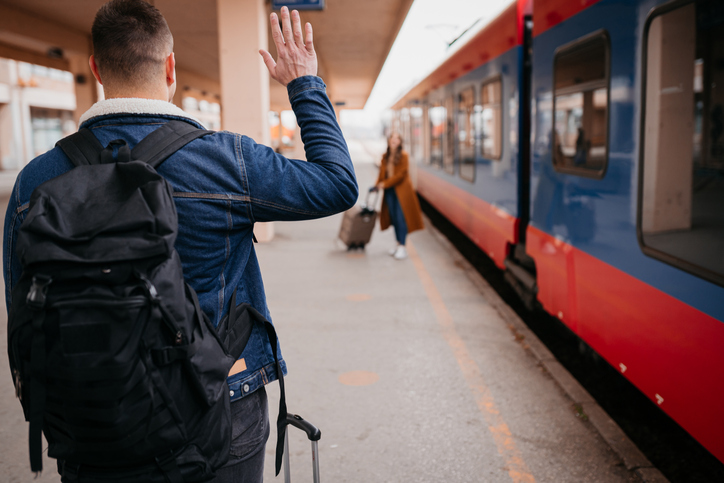
In 1920, French President Paul Deschanel, a man known for his eccentric and often unstable behavior, experienced one of the most undignified moments ever recorded for a sitting head of state. While traveling at night aboard the presidential train, he somehow stumbled or fell completely out of his train car window and onto the tracks below. The presidential party did not even realize he was missing until the train reached its destination.
Deschanel, disheveled and wearing only his pajamas, then stumbled to the nearest signalman’s hut to report the incident, introducing himself with the unbelievable line, “I am the President of the Republic.” The signalman, naturally, did not believe him, and the President was briefly mistaken for a vagrant, making the already bizarre story even more absurd. Deschanel’s health eventually forced him to resign later that year.
10. The General Who Crossed the Alps with Elephants
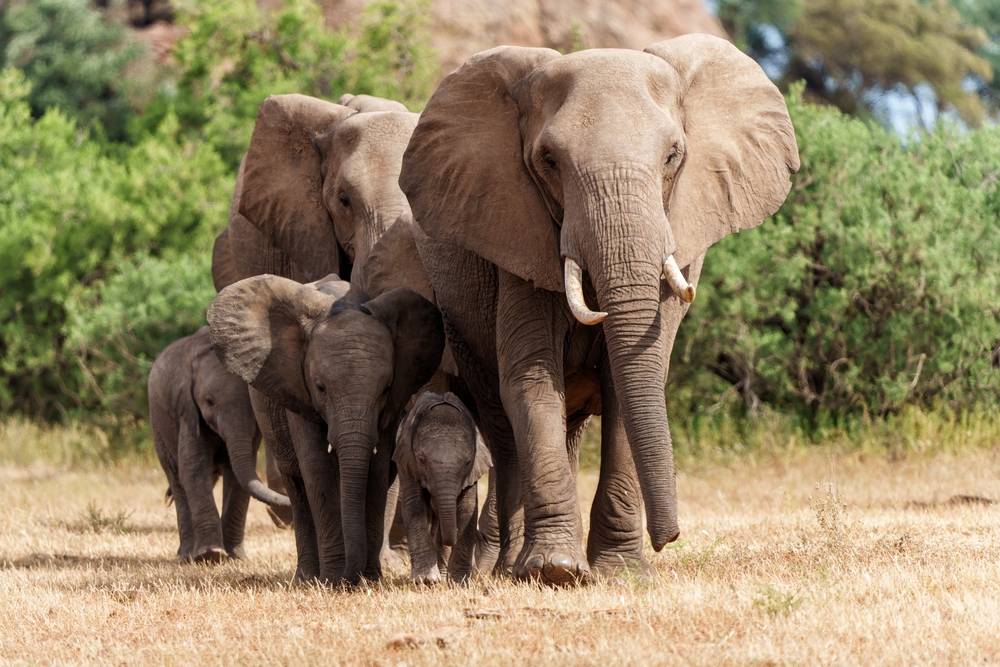
The military campaign of Carthaginian General Hannibal Barca is famous for its tactical brilliance and the unbelievable feat of transporting a massive army—including war elephants—across the treacherous, snow-covered Alps to attack Rome in 218 BC. The logistics of moving thousands of men, supplies, and large, powerful animals through the high, icy mountain passes were considered impossible by his Roman enemies. This successful maneuver was the ultimate shock-and-awe tactic.
The treacherous journey resulted in the loss of thousands of men and nearly all the elephants, yet the mere fact that the surviving army reached Italian soil was a psychological and military triumph. The crossing solidified Hannibal’s reputation as one of history’s most audacious and brilliant commanders. The image of war elephants traversing the Alps remains a favorite enduring historical symbol of military defiance.
11. The Straw Hat Riot of 1922

In September 1922, New York City was the site of a bizarre and violent fashion-based upheaval known as the Straw Hat Riot, triggered by an unwritten social rule. The rule mandated that men switch from summer straw hats to felt hats by a specified, arbitrary date in mid-September. A group of younger factory workers decided to act as impromptu “fashion police,” attacking and sometimes destroying the hats of men who violated this custom.
The violence quickly escalated, spreading through the city, and lasted for nearly a week, with thousands of young men joining the impromptu hat wars. Police intervention was required to break up the violent, absurdity-fueled street battles, which were sometimes waged with the use of makeshift weapons. The riot is a profound reminder of the sometimes volatile role of social customs and fashion in American urban life.
12. The Halifax Explosion and Snowstorm
The Halifax Explosion of 1917 was a human-caused, devastating maritime disaster that led to an immediate, powerful act of nature, making the recovery effort nearly impossible. Two ships, one loaded with tons of high-grade military explosives destined for World War I, collided in Halifax Harbour, Nova Scotia. The resulting blast was the most enormous human-made explosion until the atomic bomb, devastating the city, killing thousands, and causing a local tsunami.
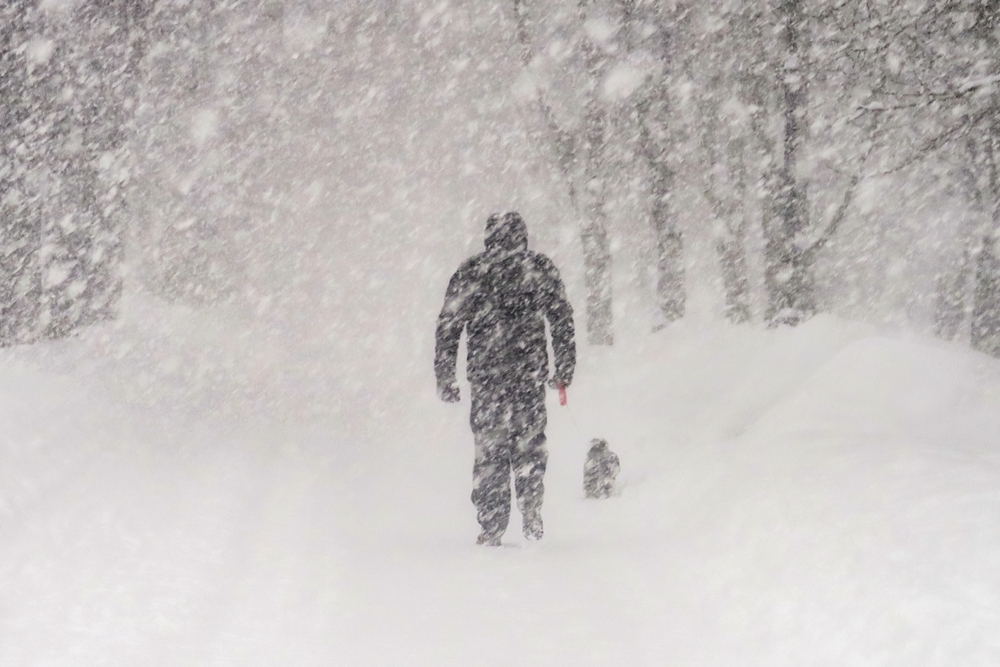
In a truly unbelievable twist of fate, a monster snowstorm immediately followed the explosion, covering the wreckage and the initial relief efforts in deep, heavy snow. This second disaster made finding survivors and providing aid incredibly difficult, compounding the original catastrophe. The combined force of the massive explosion and the subsequent blizzard makes this one of the most uniquely horrific and challenging moments in Canadian history.
13. The President’s Swearing Parrot
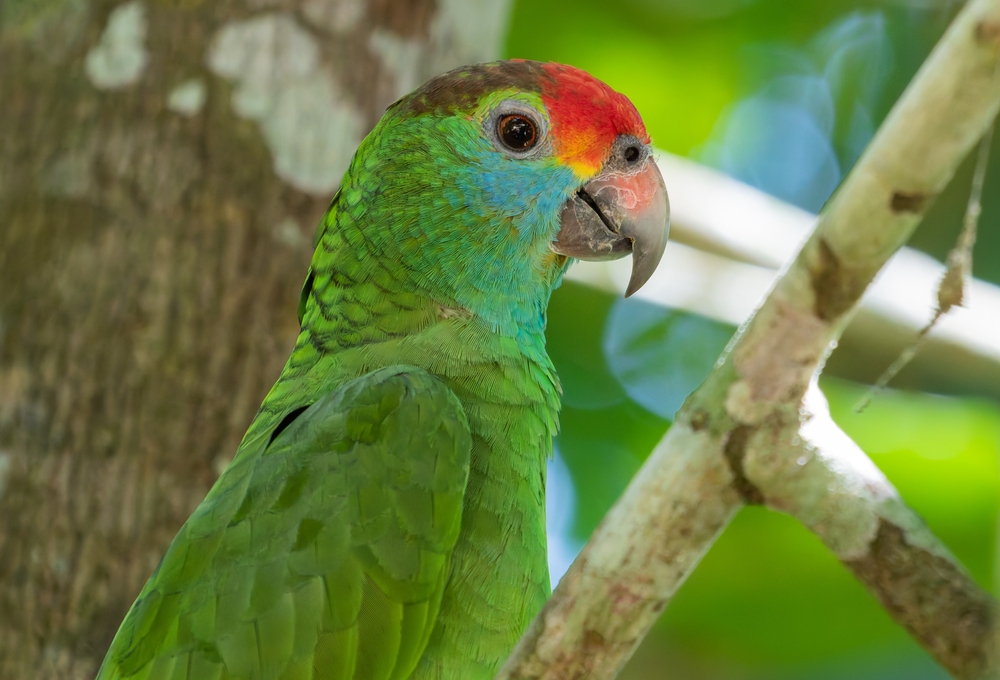
The 1845 funeral of President Andrew Jackson, a man known for his fiery temperament and unconventional habits, was interrupted by an unexpected, unruly mourner: his own pet parrot, named Poll. The massive state funeral, which hundreds of dignitaries and grieving citizens attended, was suddenly halted by the parrot’s outburst from the service’s rafters. The commotion drew immense, shocked attention.
Poll, the beloved pet of the former president, had to be quickly removed from the solemn proceedings after it began to loudly and repeatedly shout a stream of profane curse words and obscenities at the assembled mourners. The parrot had clearly picked up the foul language directly from its notoriously hot-tempered owner over the years. This unbelievable incident remains a classic, final example of Jackson’s unruly legacy.
14. The Secret CIA Cat Spy
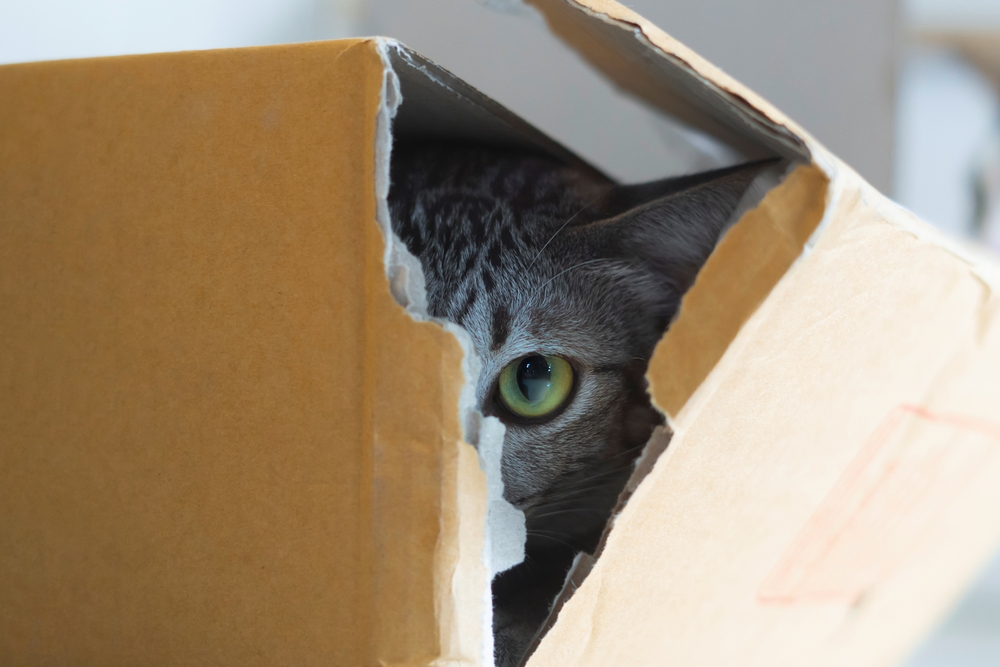
In the 1960s, during the peak of the Cold War, the CIA launched an audacious and incredibly bizarre espionage program known as “Acoustic Kitty,” which aimed to use surgically modified cats to spy on Soviet officials. The plan involved implanting complex microphones, batteries, and transmitters directly into the body of a domestic cat, turning it into a mobile, furry surveillance device. The mission incurred millions of dollars in research and development costs.
The first field test was an immediate and catastrophic failure: the cat was released near a park in Washington, D.C., with the mission of recording two foreign diplomats. Before it could even reach the intended target, the electronic cat ran directly into the street and was immediately struck and killed by a passing taxi. The entire, expensive, and unbelievable program was scrapped shortly thereafter due to its profound impracticality.
15. The Explosive Tree-Trimming of Operation Paul Bunyan

In 1976, near the Korean Demilitarized Zone (DMZ), a massive military confrontation almost led to full-scale nuclear war between the United States and North Korea, all over the cutting down of a single poplar tree. The tree was obstructing the line of sight for a United Nations Command checkpoint, and a routine trimming mission was ambushed by North Korean forces, who attacked and killed two American officers. This act of violence led to an immediate, overwhelming response.
The U.S. launched “Operation Paul Bunyan,” sending a large, heavily armed air and ground convoy, including nuclear-capable B-52 bombers, to ensure the tree was cut down properly, and it succeeded this time without incident. The deployment of overwhelming firepower, including hundreds of troops and attack helicopters, to cut down a solitary tree remains one of the Cold War’s most tense and absurd moments. The incident perfectly illustrated the volatile, hair-trigger nature of border conflicts.


