

Most Americans assume that the government responds to crises as they occur. In reality, the U.S. has spent decades quietly planning for worst-case scenarios most people never think about — or are never told. From nuclear fallout to mass displacement to the collapse of core systems, these contingency plans exist in binders, servers, and classified briefings long before disaster strikes. Some are public but buried, others were revealed through leaks, declassified documents, or investigative reporting. Together, they paint a sobering picture of just how fragile modern life really is.
1. The COG Plan
The Continuity of Government, or COG, plan is designed to keep the U.S. government operating after a catastrophic event such as a nuclear strike, terrorist attack, or mass infrastructure collapse. It outlines how leadership would be relocated, how Congress would be reconstituted, and how emergency powers would be activated if Washington, D.C. became unusable. The plan has existed since the Cold War and has been updated repeatedly, often without public debate. It assumes scenarios most Americans would rather believe are impossible.
According to reporting by The Washington Post and analysis by the Congressional Research Service, portions of COG remain classified due to their sweeping authority and constitutional implications. Experts have raised concerns that emergency powers could override civil liberties for extended periods. The plan prioritizes survival of governance over democratic process, a reality that unsettles constitutional scholars. It reveals how quickly normal rules could be suspended if leaders decide circumstances justify it.
2. Nuclear Fallout Relocation Zones
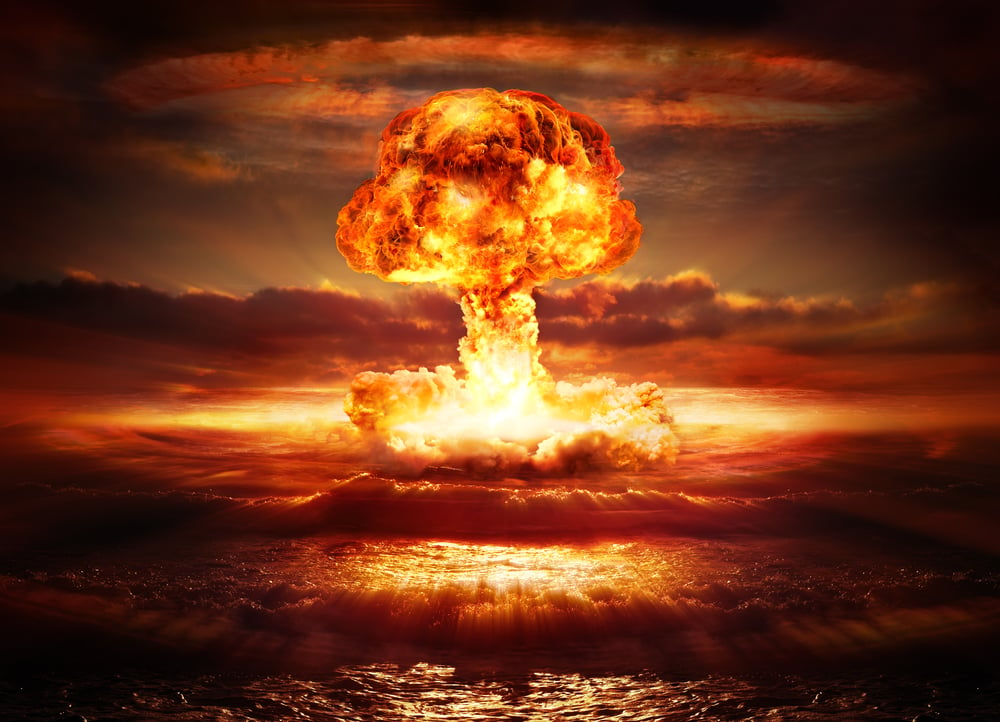
The federal government has mapped out large-scale relocation zones for populations displaced by nuclear fallout. These plans specify where survivors would be sent, how long displacement would last, and which regions would be designated permanently contaminated. The assumption is not just short-term evacuation but long-term societal reshuffling. Entire cities are quietly categorized as potentially uninhabitable.
What’s striking is how little the public knows about these zones, despite their existence for decades. The plans account for overwhelmed infrastructure, limited medical care, and food shortages. They also assume widespread panic and breakdowns in social order. It’s a reminder that recovery, in some scenarios, is not guaranteed.
3. FEMA’s Mass Fatality Management Plan

FEMA maintains a detailed plan for managing mass deaths following disasters, pandemics, or large-scale attacks. This includes temporary morgues, expedited death certification, and coordination with local governments to manage volumes far exceeding normal capacity. The plan exists because prior events showed how quickly systems collapse under extreme mortality. It treats mass death as a logistical problem that must be anticipated.
According to FEMA planning documents and public health research published in Health Security, mass fatality planning became more sophisticated after 9/11 and COVID-19. Experts note that these plans are designed to function even when families cannot be notified immediately. The emotional and psychological toll is acknowledged but secondary to logistics. The existence of such plans reflects an uncomfortable realism about future risks.
4. National Food Supply Rationing Scenarios

The U.S. government has contingency plans for food rationing during severe disruptions to agriculture, transportation, or imports. These plans outline how staples would be distributed, who receives priority, and how black markets might be addressed. Rationing is treated as a last resort but is clearly anticipated. The goal is to maintain order as much as to prevent starvation.
What alarms many analysts is the fragility of the modern food system. Just-in-time logistics leave little buffer for prolonged crises. Rationing plans acknowledge that shortages could last months or longer. They also quietly recognize that public trust would be critical and hard to maintain.
5. Cyberattack Blackout Response Plans

Federal agencies have coordinated plans for a massive cyberattack that disables power grids, banking systems, or communications networks. These plans assume simultaneous failures across multiple sectors rather than isolated incidents. The response would involve limited internet access, emergency broadcasts, and temporary suspension of some digital services. It is essentially a playbook for life without the systems we depend on daily.
According to the Department of Homeland Security and RAND Corporation studies, cyber threats are among the highest-probability national emergencies. Experts warn that recovery from a coordinated cyberattack could take weeks or months. The plans assume public confusion, misinformation, and economic paralysis. They also acknowledge that attributing attacks may be slow or impossible.
6. Pandemic Lockdown Escalation Protocols

Beyond what the public experienced during COVID-19, the government has tiered escalation plans for pandemics with higher fatality rates. These include stricter movement controls, longer lockdowns, and enforced quarantines. The plans are based on models of pathogens far more lethal than those in recent outbreaks. They are designed to be activated quickly, before public consensus forms.
These protocols assume resistance, fatigue, and political backlash. They also account for supply chain collapse and healthcare system failure. The plans treat social unrest as an expected side effect. They reflect lessons learned from both compliance and backlash during previous crises.
7. Emergency Detention and Movement Control Plans

The U.S. has legal frameworks and emergency plans that allow for detention or restricted movement during extreme national emergencies. These plans are rooted in public health law, wartime authority, and disaster response statutes. While rarely discussed, they exist precisely because voluntary compliance may fail. They are among the most controversial contingency measures.
Legal scholars cited by the Brennan Center for Justice note that these authorities have expanded quietly over time. Research shows they are intentionally broad to allow rapid response. Critics argue this creates potential for abuse or overreach. The tension between safety and civil rights is built directly into the plans.
8. Evacuation of Major Coastal Cities

Federal and state agencies maintain evacuation scenarios for cities threatened by hurricanes, sea-level rise, or infrastructure failure. These plans assume that millions of people will move simultaneously, with limited fuel, transportation, and shelter. They also assume many will be unable or unwilling to leave. The plans acknowledge that evacuation would be chaotic and incomplete.
Climate change has made these scenarios more likely rather than merely theoretical. Emergency planners openly admit that evacuation is not a perfect solution. The goal becomes harm reduction, not total safety. That distinction is rarely communicated to the public.
9. Emergency Control of Transportation Systems

In certain crises, the government can assume direct control over railways, ports, and air traffic. These plans prioritize military logistics, medical transport, and essential goods. Civilian travel would be severely restricted or halted. Transportation becomes a strategic asset rather than a public service.
This authority is established by longstanding federal law. The plans anticipate backlash but prioritize national stability. They also recognize how dependent modern life is on mobility. Removing it even temporarily would be deeply destabilizing.
10. Financial System Shutdown Scenarios
The Treasury and Federal Reserve have emergency plans to halt markets, limit withdrawals, or freeze transactions during systemic collapse. These measures are designed to stop panic rather than prevent losses. They acknowledge that trust in money is psychological as much as economic. Once panic spreads, recovery becomes far harder.
Such plans are rarely discussed publicly to avoid triggering fear. Yet they exist precisely because history shows how fast financial systems unravel. The assumption is that temporary pain prevents total collapse. Whether that would work remains unknown.
11. Emergency Broadcast Override Systems

The federal government can override all broadcast and digital platforms to issue emergency messages. This system is designed for national-survival scenarios, not routine alerts. It assumes the need to cut through misinformation and panic instantly. The tone and content would be tightly controlled.
These systems are tested quietly and infrequently. Their power lies in speed and reach. Critics worry about misuse, while planners argue that hesitation would be deadly. The balance between clarity and control is delicate.
12. Martial Law Contingency Planning

While not officially labeled as such, the U.S. has plans that resemble martial-law conditions in the event of a severe breakdown. These include military assistance to law enforcement and suspension of certain civilian authorities. The plans emphasize restoration of order over normal governance. They are intentionally vague to allow flexibility.
Officials stress that such measures would be temporary. History, however, shows that temporary powers can linger. The plans reflect both fear of chaos and fear of overreach. That contradiction is unresolved.
13. Long-Term National Reconstruction Scenarios

Finally, the government has models for rebuilding society after a catastrophic loss. These plans assume generational recovery timelines, not quick rebounds. They include population shifts, economic restructuring, and cultural change. The goal is continuity, not restoration of the past.
What’s most sobering is how calmly these scenarios are discussed in planning circles. They treat collapse as survivable rather than unthinkable. For the public, that realization is unsettling. It suggests the future is less guaranteed than we’re led to believe.


