

The artificial intelligence gold rush of the early 2020s has officially entered its most precarious phase as we move into 2026. While the world has been captivated by the “magic” of generative models, a colder financial reality is setting in for the Silicon Valley giants who bet trillions on a perpetual boom. We are now deep in a historic evaluation era, where the soaring cost of compute is colliding with the actual, measurable utility businesses are seeing on the ground. These 13 consequences outline what an AI market correction could mean for your job, your investments, and the global economy.
1. The “Nasdog” Return And A Brutal Equity Correction
The most immediate sign of an AI crash would be a sharp correction in the Nasdaq-100, eerily reminiscent of the early-2000s dot-com bust. Hyperscalers have spent hundreds of billions on infrastructure that’s depreciating rapidly without generating proportional revenue. If the narrative of infinite AI growth finally cracks, a 20 to 30 percent drop in tech-heavy indices could happen fast as institutional money rushes for safety. That reversal of the so-called “wealth effect” would ripple outward, dragging down consumer spending and business confidence worldwide.
A 2025 BCA Research analysis titled Return of Nasdog warned that tech investment hit 4.4 percent of U.S. GDP, nearly matching the peak of the 2000 bubble. The report noted that AI assets are depreciating at roughly 20 percent per year, creating annual costs that could eclipse combined profits for major players. Analysts also questioned the long-promised “productivity miracle” as enterprise adoption cooled entering 2026. The message was clear: the market is running on expectations that reality may no longer support.
2. The Data Center “Ghost Town” Era

If demand for premium compute stalls, the massive data centers rising across the U.S. could quickly become the ghost towns of the digital age. Companies like Microsoft, Google, and Oracle assumed insatiable demand when they doubled capital expenditures. A sudden pullback would freeze construction, leaving half-built megaprojects and warehouses full of idle silicon. These stranded assets would hit real estate, construction, and regional power markets hard.
What makes this especially destabilizing is how geographically concentrated these investments are. Entire local economies were built around the assumption that AI infrastructure would grow forever. A crash wouldn’t just affect balance sheets—it would hollow out communities that tied their futures to the compute boom.
3. The Collapse Of Circular Financing Illusions

Much of the AI ecosystem is propped up by circular financing, where chipmakers invest in startups that then use that money to buy the chipmakers’ hardware. On paper, it looks like organic growth. In reality, it’s the same capital sloshing around inside a closed loop. If one major player misses earnings, that illusion can collapse overnight.
A December 2025 Dealogic report showed tech firms issued over $428 billion in debt to fund AI expansion, much of it interdependent. Credit default swap spreads for major hyperscalers nearly doubled by early 2026, signaling rising fear among institutional investors. Analysts warn that circular financing inflates growth metrics without adding durable value. In a correction, this structure could turn a single failure into a full-blown chain reaction.
4. The Enterprise “Trough Of Disillusionment”

For years, executives approved AI pilots hoping to automate labor, accelerate workflows, and magically boost margins. But moving from demo to production has proven slower, messier, and far more expensive than expected. In a downturn, boards will demand proof instead of promises. Many AI initiatives will quietly be shelved.
Gartner’s hype cycle predicted this phase, and it’s arriving right on schedule. When budgets freeze, the thousands of startups that exist purely as wrappers around foundation models will feel the pain first. What follows looks less like innovation and more like an AI winter.
5. The Sovereign AI Pivot
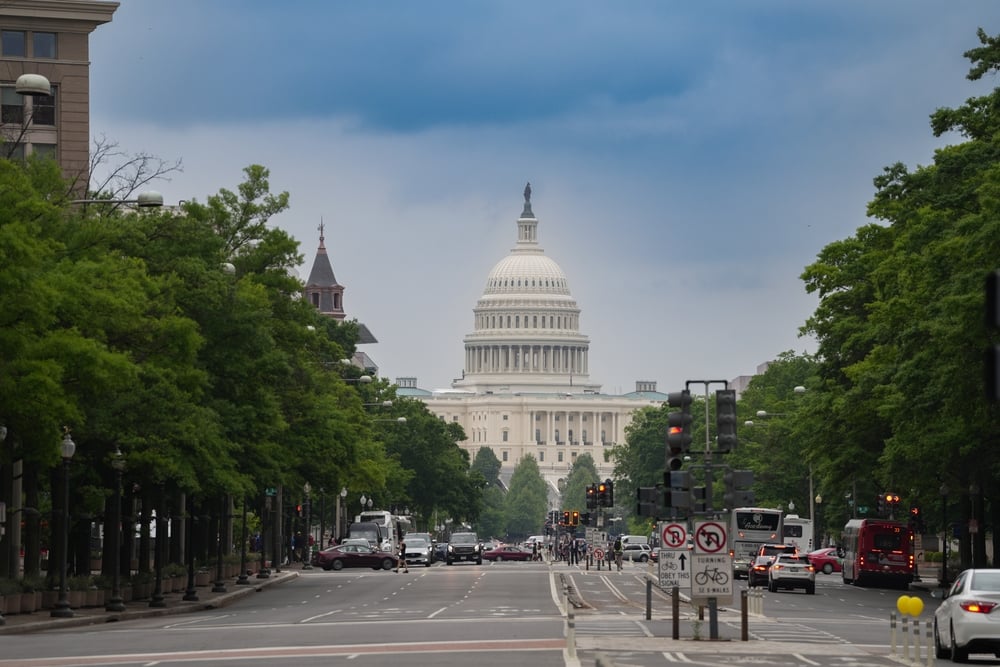
As cracks form in the U.S.-led AI boom, governments will accelerate efforts to build sovereign AI systems. Relying on a handful of American firms for critical infrastructure is increasingly viewed as a national security risk. Countries want models trained on local data, running on local hardware, governed by local laws. A crash would only accelerate that shift.
Stanford’s Human-Centered AI Institute has already documented this trend gaining momentum. Nations are moving away from one-size-fits-all models toward fragmented, regional ecosystems. The era of global AI dominance may give way to a more protectionist and politically segmented digital world.
6. The Synthetic Data Quality Spiral

The industry is already facing a peak data problem, where new models are trained on content generated by older models. This feedback loop risks amplifying errors, bias, and hallucinations. In a crash, funding for high-quality, human-curated datasets would dry up. The result is a polluted training environment.
That degradation means future models could actually become less reliable over time. The assumption that AI only improves with scale breaks down when the underlying data is compromised. The long-term consequence is slower progress and more unpredictable behavior from systems businesses rely on.
7. The Labor Market “Upskilling” Reckoning

An AI crash wouldn’t stop automation, but it would change how disruption hits workers. Instead of gradual transitions into AI-enhanced roles, companies would slash budgets and headcount in survival mode. Employees trained on specific tools could find those platforms defunded or abandoned overnight. The promised future would suddenly vanish.
A 2026 J.P. Morgan outlook warned that AI spending drove more U.S. GDP growth in 2025 than consumer demand. That concentration makes the economy unusually sensitive to a tech pullback. The real risk to workers isn’t machines replacing them—it’s capital exiting before new roles stabilize.
8. The Zombie Startup Apocalypse

A correction would expose how many AI startups are effectively zombies—technically alive but economically unsustainable. These companies survive on cheap capital and hype rather than revenue. When funding tightens, they won’t pivot; they’ll disappear. Consolidation will be fast and unforgiving.
The fallout won’t just affect founders and investors. Enterprises that embedded these tools into workflows could face sudden service outages or data migration nightmares. Trust in young AI vendors would erode quickly.
9. The Regulatory “We Warned You” Clampdown

A crash would hand regulators the justification they’ve been waiting for. Expect stricter disclosure rules, tougher safety standards, and limits on data usage. Governments will argue that unchecked speculation created systemic risk—and they won’t be wrong. Innovation would slow, but oversight would tighten.
This regulatory shift could reshape the industry more permanently than the crash itself. Smaller players would struggle to comply, further concentrating power among survivors. The irony is that regulation may entrench incumbents rather than dismantle them.
10. The End Of The “Prompt Engineer” Fantasy

The idea of prompt engineering as a standalone, high-paying career was always fragile. In a downturn, companies won’t pay premiums for skills that models increasingly automate themselves. Prompting will become a basic competency, not a job title. The gold rush mentality around AI careers will fade.
What replaces it will be deeper, harder-to-fake expertise. Systems thinking, domain knowledge, and human judgment will matter more than clever phrasing. The crash will separate durable skills from hype-driven roles.
11. A Return To Boring Fundamentals

After the dust settles, companies will refocus on reliability, security, and resilience. Flashy demos won’t matter if systems fail under pressure. Cybersecurity, redundancy, and operational stability will regain priority. AI will be judged on outcomes, not novelty.
This shift favors quieter, less glamorous innovation. The winners won’t be the loudest evangelists but the builders who focused on integration and trust. “Boring” will become the new smart.
12. Energy And Grid Pressure Finally Eases
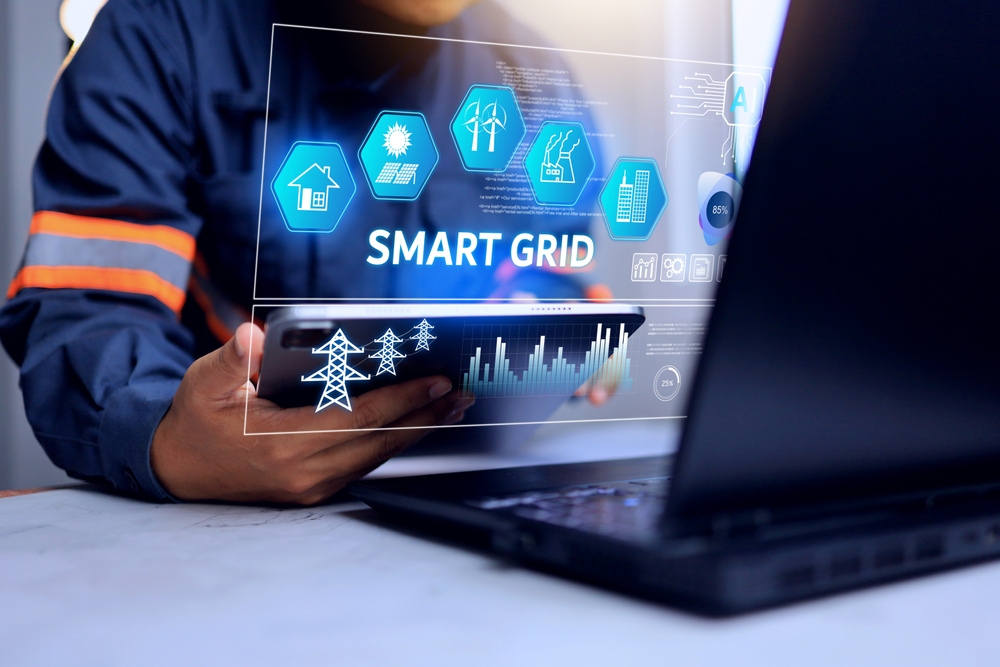
A slowdown in AI expansion would relieve enormous strain on power grids. Data centers are among the most energy-intensive facilities ever built. A pause would give utilities time to adapt and invest more thoughtfully. Energy markets would stabilize.
This breathing room could accelerate smarter energy policy rather than reactive buildouts. It may also force the industry to confront its sustainability problem head-on. Efficiency will matter more than brute-force scale.
13. The Rise Of Pragmatic AI

Out of the wreckage, a more grounded version of AI would emerge. Less magic, more utility. Fewer moonshots, more tools that quietly do their jobs well. This phase prioritizes reliability, transparency, and real economic value.
The crash wouldn’t kill AI—it would mature it. And in the long run, that shift may be exactly what the technology needs to earn lasting trust.


