

When conservative activist Charlie Kirk was fatally shot in September 2025, the national conversation fractured instantly. While many expressed standard condolences for the tragedy, a significant number of public figures found themselves grappling with a moral complication: how to condemn political violence without sanitizing the victim’s deeply divisive legacy. This conflict was personified by actress Amanda Seyfried, who initially commented, “He was hateful,” on social media.
Seyfried immediately faced fierce backlash, but she recently doubled down, stating she is “not f**king apologizing” for speaking a factual truth about his documented, racist, and misogynistic rhetoric. Her firm stance highlights a rare moment when Hollywood celebrities risked career damage to address the line between free speech and the cultivation of division. These 13 celebrities spoke out about the toxicity of Kirk’s brand of politics.
1. Amanda Seyfried
The Oscar-nominated actress set the tone for the entire debate with her immediate and unvarnished comment, labeling the conservative firebrand as “hateful.” Her brief but potent statement ignited a firestorm, with critics accusing her of celebrating the violence. Seyfried later clarified that she condemned the murder as “deplorable” but refused to back down from calling out the documented bigotry in his public quotes.
She recently reaffirmed her position, insisting her comment was “based on actual reality and actual footage and actual quotes.” Seyfried stressed that she is “free to have an opinion,” framing her refusal to apologize as a necessary defense of reality against spin.
2. Jamie Lee Curtis

The veteran actress offered a deeply empathetic, yet politically honest, response during an appearance on Marc Maron’s WTF podcast. Curtis tearfully condemned the tragedy, stating she believed Kirk was a man of faith and hoped he found peace in his final moments. Her grief was genuine and immediate, reflecting a desire to see humanity first.
Curtis quickly pivoted to the political reality, making it clear that she “disagreed with him on almost every point I ever heard him say.” Her commentary perfectly encapsulated the emotional tightrope walk many felt: mourning the person while rejecting the politics.
3. Representative Yassamin Ansari

The Arizona Congresswoman voted in favor of a House Resolution condemning the political violence. Still, she was quick to issue a detailed statement to ensure her vote was not misconstrued as an endorsement of Kirk. She unequivocally stated that Kirk was a “deeply troubling figure” whose rhetoric ran “directly counter to the values of equality and justice” she fights for. This was a straightforward political calculation to avoid implying ideological support.
Ansari expressed regret that the resolution claimed Kirk “worked tirelessly to promote unity,” calling that description a Republican effort to put Democrats in a bind. Her clarification was necessary to distance herself from the “racist, xenophobic, homophobic, and misogynistic rhetoric” that she correctly attributed to his public platform.
4. Jimmy Kimmel

The late-night host’s initial commentary on the assassination was notably controversial, as he both condemned the violence and injected political humor into the situation. Kimmel initially accused the “MAGA gang” of trying to characterize the shooter as someone other than one of their own, which was later proven inaccurate by early indictment details. His comments sparked a massive controversy about using such a tragedy for political points.
Kimmel’s segment ultimately led to a temporary suspension of his show, highlighting the danger of making light of political assassination, even when attempting to criticize the victim’s ideology. His response proved that the intersection of tragedy and polarizing rhetoric is fraught with peril for public figures.
5. Rosie O’Donnell

The outspoken comedian used her platform not only to condemn the killing but also to directly address the hateful rhetoric that she felt fueled the environment. O’Donnell was firm in stating that violence was “wrong on every level,” but also focused on the online hatred that she saw emanating from Kirk’s followers. Her response was a plea for humanity over political point-scoring.
O’Donnell’s commentary has always been fiercely progressive, and her response to Kirk’s death was consistent with her long-standing critique of figures who promote division. Her words urged people to reject the emotional escalation that leads to violence on all sides of the political spectrum.
6. Melissa Gilbert

The former Little House on the Prairie star, who has become a vocal political activist, chose a carefully worded statement emphasizing the protection of free speech, despite her fundamental disagreement with Kirk. Gilbert said she had “never agreed with Mr. Kirk” but believed in his “right to express himself without the fear of being shot.” Her response attempted to defend a core democratic principle.
Gilbert’s comments were a delicate balancing act, trying to condemn the violence while maintaining her ideological integrity. Her focus was on the sanctity of speech itself, implicitly criticizing the content of Kirk’s rhetoric by insisting he had the right to share it, even if she found it offensive.
7. Maria Shriver
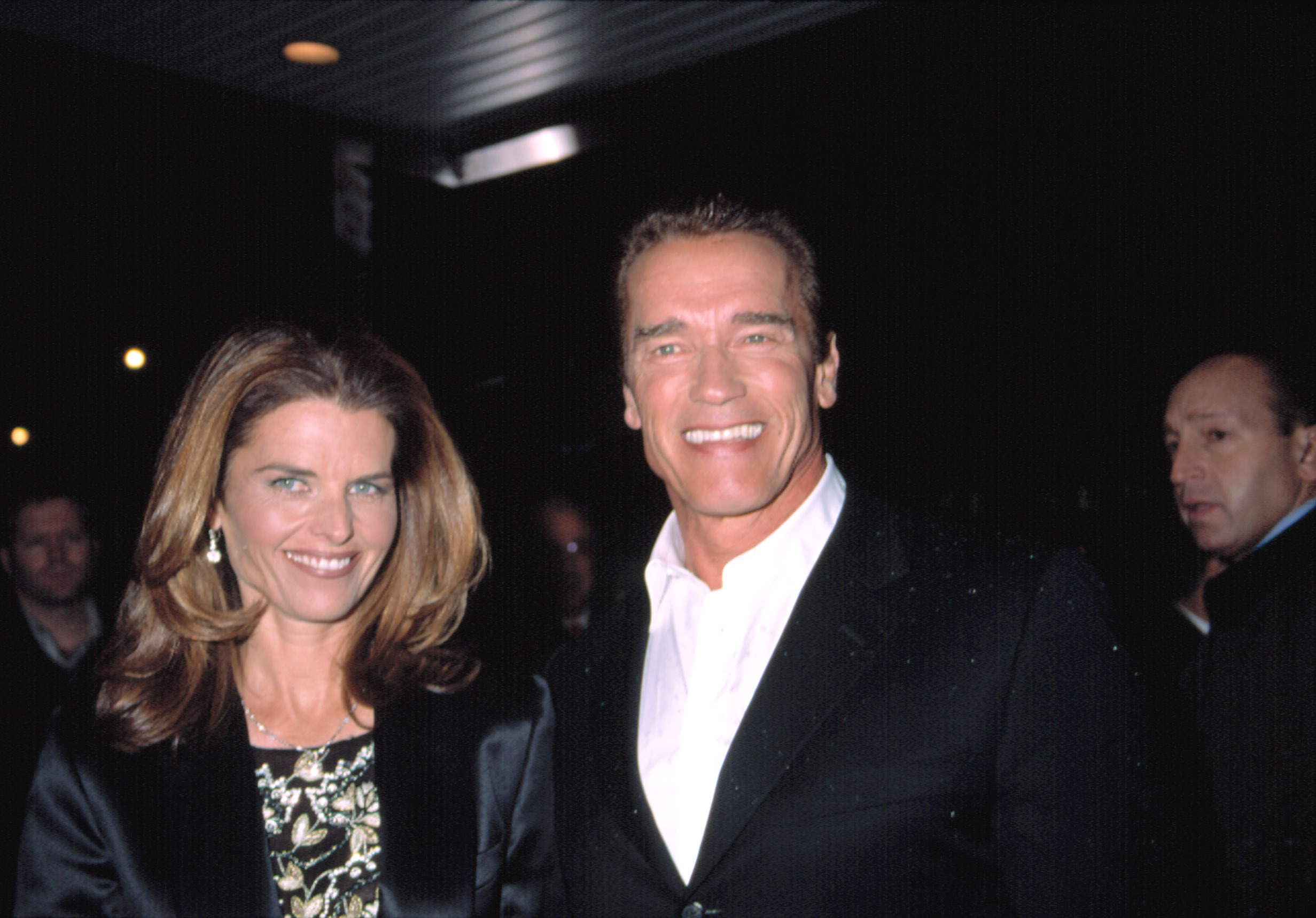
As a figure often critical of political extremism, Shriver called for a unified condemnation of the violence as a threat to democracy. Her statement stressed that the national tragedy should force a moment of “reflection and reassessment” of the country’s divided landscape. Shriver refused to use the moment to attack Kirk, instead focusing on the general toxicity that has become normalized.
She emphasized that everyone must agree to settle disagreements through debate and not bullets, a clear message aimed at the corrosive nature of the current political environment. Shriver’s call for civility was a measured critique of the division Kirk himself often promoted.
8. Stephen Colbert

The late-night host addressed the shocking news during his show with a somber monologue, setting aside his usual political satire to underscore the severity of the event. Colbert emphasized that political violence “does not solve any of our political differences,” implicitly criticizing the aggressive, zero-sum rhetoric that dominates public life. His was a call for peace delivered to a massive audience.
Colbert’s reaction was one of genuine concern that the assassination signaled a dangerous new phase in American politics. He urged his audience to reject the temptation toward further escalation, using the tragedy as a warning against unchecked ideological rage.
9. Jillian Michaels

The fitness entrepreneur, who identifies as “more centrist,” shared a personal anecdote about working with Kirk and emphasized Kirk’s graciousness despite their political differences. However, she used her statement to condemn the “hatred that has seeped into our culture,” saying, “If we allow hate to breed hate, we lose not only lives but our very humanity.” Her critique was directed at the toxic environment he contributed to.
Michaels made it clear that while she was personally saddened, the death should be a wake-up call to “reject this darkness—in our media, in our politics, and within ourselves.” She framed her condolences as part of a larger, necessary rejection of the culture of hostility.
10. Arnold Schwarzenegger

The former California Governor and Republican moderate issued a strong statement on social media, declaring that politics had become a “disease in this country” that had turned “deadly.” He used the tragedy to call for unity and a rejection of political extremes on both sides. Schwarzenegger’s unique status made his warning particularly impactful.
His message urged Americans to find their “better angels” and walk back from the extremes, directly targeting the kind of inflammatory rhetoric that he believes is destroying civil discourse. Schwarzenegger’s statement was a firm indictment of the culture of antagonism.
11. O’Shea Jackson

The actor and musician, who has been publicly critical of systemic racism, offered a response that implicitly criticized the focus on Kirk while ignoring other victims of violence. Jackson’s commentary highlighted the double standard in media coverage that often ignores the daily violence faced by marginalized communities. His frustration was palpable and widely shared.
Jackson’s post was a call for consistency in condemnation, asking the public to extend the same level of outrage to all acts of violence, especially those rooted in the racism and division Kirk was often accused of promoting. He challenged the selective nature of public empathy.
12. Joe Rogan

The podcaster, who had previously hosted Kirk on his show, was visibly shaken on air when he learned of the death, initially focusing on the violence. However, Rogan’s later commentary involved wrestling with the nature of Kirk’s political activism, admitting that while Kirk was “not a violent guy,” his rhetoric was often provocative and polarizing. His reaction was a messy, human exploration of the conflict.
Rogan’s platform allowed him to discuss the real-world consequences of the political fire he often stokes on his own show. His acknowledgment that the rhetoric was “heated” and “extreme” was an indirect criticism of the divisive brand of activism Kirk championed.
13. Holly Robinson Peete

The actress and activist offered a measured but firm response on social media, emphasizing the need to focus on healing rather than escalating the rhetoric. Peete, whose activism often addresses social justice issues, condemned the violence but used the moment to call for a higher standard of decency in public life. She made it clear that the violence was unacceptable, regardless of her politics.
Peete’s commentary reinforced the need to separate the person from the political firestorm they helped to create. Her focus on “healing” was a plea to step back from the hatred and division that she believes has poisoned the country’s discourse.


