

For better or for worse, AI has gone fully mainstream, a fact cemented by Time magazine naming the “Architects of AI” as its 2025 Person of the Year. This designation isn’t about a single genius but a powerful collective of individuals who imagined, designed, and built the technology now woven into the fabric of our daily lives. They are the new power players whose every product launch and boardroom shakeup sends tremors through industries ranging from Hollywood to medicine. Their choices about everything from algorithmic bias to open-sourcing models will shape the world we’ll live in for decades to come, making it essential to understand who they are and what they’re building.
1. The Lineup Is a Who’s Who of Tech Power
The cover art is a modern-day Lunch atop a Skyscraper, featuring industry titans like Sam Altman of OpenAI, Jensen Huang of Nvidia, Mark Zuckerberg of Meta, and Demis Hassabis of Google’s DeepMind. This high-profile cast solidifies AI’s position as a geopolitical and cultural force, far removed from the niche academic labs where it began. The magazine was intentional in selecting people—the individuals who build AI—rather than the concept itself, signaling a focus on the personal accountability that comes with such world-shaping influence.
An analysis by the Associated Press revealed that five of the eight people featured—Musk, Zuckerberg, Huang, Altman, and Su—are already billionaires with a collective fortune of over $870 billion. This staggering wealth underscores a major cultural talking point: the immense financial consolidation and profit motive driving this technological revolution. The concentration of this much power and capital in the hands of so few—many of whom have been vocal about the potential risks of their own creations—is a deeply felt source of public fascination and anxiety.
2. They Shifted AI from Niche to Necessary in a Year

2025 was cited as the year AI’s potential “roared into view,” moving from a novel technology for early adopters to a critical mass seeing it as part of their mainstream lives. What started as chatbots for fun quickly became an embedded collaborator in everything from drafting emails to coding. This sudden, exponential surge in adoption is the reason for the Person of the Year nod and the sense that there is truly “no turning back.”
This rapid integration is already reshaping professional life: according to Thomas Husson, a principal analyst at research firm Forrester, AI’s mainstream adoption is a “significant shift in technology’s role in society.” Now, tech organizations are increasingly seen as the “architects for enterprise AI,” providing the standardized, secure, and scalable building blocks for every other industry. The architects aren’t just building products; they are building a new operational infrastructure for global business.
3. Safety and Scrutiny Are Now Core Components

The architects’ rise has been inextricably linked to an intensifying debate over ethical guardrails, systemic bias, and the risk of unconstrained development. Reports emphasize that AI’s acceleration is outpacing “cultural governance,” creating a gap that threatens democratic oversight and exacerbates ethical risks such as deepfakes. This tension between innovation and regulation is a key feature of the AI zeitgeist.
The need for new structures is urgent, as leading AI companies are openly working to replace humans in “every facet of life,” according to Anthony Aguirre, executive director of the nonprofit Future of Life Institute. He argues that the impact could be “catastrophic” without guardrails protecting what is human. As a result, governments are scrambling to roll out rules like the EU AI Act, forcing companies to pour money into compliance dashboards and tools that audit algorithms for bias and track accountability.
4. Jensen Huang: The Engine Builder (Nvidia CEO)
A key figure on the cover is Jensen Huang, CEO of Nvidia, whose role is distinct from those focused on software models. He and his company are the core providers of the specialized hardware—the GPUs—that are the literal engine of modern AI. Without Nvidia’s high-performance chips, the vast computational demands of training and running large language models simply cannot be met at scale, making him the king of the “picks and shovels” of the AI gold rush.
This hardware-centric dominance is why Nvidia’s market valuation exploded, proving that the infrastructure layer is the most valuable and constrained resource in the AI economy. Huang’s leadership emphasizes that the AI revolution is fundamentally a hardware revolution first, one defined by an insatiable hunger for computing power. He is the architect building the physical foundation upon which all the software companies depend.
5. They Are the New Custodians of Culture

AI’s impact has profoundly transformed how culture is created, shared, and preserved, immediately raising thorny questions about authorship and cultural dispossession. Generative AI models are trained on vast datasets of human-created work, leading to ongoing, complex legal battles over intellectual property, fair compensation, and the very definition of creativity. This has made the architects the de facto arbiters of cultural value.
A report by UNESCO’s Independent Expert Group on Artificial Intelligence and Culture highlighted this critical tension: AI offers powerful opportunities for innovation but also risks reinforcing bias, accelerating cultural homogenization, and undermining creators’ rights through the uncompensated exploitation of data. The challenge, according to the report, is ensuring that AI enriches human creativity rather than homogenizing it, a responsibility that falls directly on the architects who design the algorithms and set the terms of service.
6. Demis Hassabis: The DeepMind Theorist (Google DeepMind CEO)

Demis Hassabis is the co-founder and CEO of Google DeepMind, representing the academic and scientific rigor side of the AI push within a corporate giant. His lab is known for foundational breakthroughs like AlphaGo, which mastered the complex game of Go, and AlphaFold, which revolutionized protein folding. His focus is on achieving Artificial General Intelligence (AGI) that can truly learn and solve problems as a human would.
Hassabis’s inclusion signals that AGI, while often sounding futuristic, is a serious, current endeavor led by some of the most influential people in technology. The combination of DeepMind’s long-term, foundational research with Google’s massive resources makes him a central figure in defining the intellectual and ethical path toward creating increasingly autonomous, thinking machines that can operate across multiple domains.
7. Female Leadership is Still Far from Balanced

While the Time selection includes key women, like AMD CEO Lisa Su and Stanford’s Human-Centered AI Institute Director Fei-Fei Li, the overall composition of the “architects” highlights a persistent gender imbalance at the top of the AI world. This is a critical concern, as the diversity of those building the technology directly affects the fairness of its output. A lack of diverse perspectives in the design phase can encode and amplify societal biases into algorithms, leading to harmful real-world consequences.
The Time editor-in-chief, Sam Jacobs, himself acknowledged the issue in his selection explanation, noting the magazine has named “more women than our founders could have imagined (though still not enough).” This cultural discourse is supported by a Deloitte survey on 2025 trends, which emphasizes the need for a shift in the workforce model, stressing that the future hinges on orchestrating a seamless blend of human ingenuity and machine intelligence, requiring diverse human oversight for ethical judgment and creativity. The lack of equitable representation at the decision-making table remains a liability for the entire field.
8. Sam Altman: The Public Face of Commercial AI (OpenAI CEO)

Sam Altman, the CEO of OpenAI, is arguably the most recognizable public face of the current AI boom, having overseen the launch and runaway commercial success of ChatGPT. His leadership has defined the shift from AI as a research curiosity to a consumer product capable of generating text and code for the masses. His name is synonymous with the speed and disruption of the generative AI movement.
His role is defined by the high-wire act of managing explosive growth, navigating complex boardroom drama, and publicly advocating for both the revolutionary potential and the existential risks of his technology. Altman’s celebrity status and his company’s rapid development cycle place him at the center of the cultural, political, and financial discourse surrounding the future of work and intelligence itself.
9. Lisa Su: The Silicon Savvy Strategist (AMD CEO)

Lisa Su, CEO of Advanced Micro Devices (AMD), is the hardware industry’s primary challenger to Nvidia’s dominance in the AI chip market. Her inclusion is crucial because it highlights the fierce competitive war for the physical underpinnings of AI. She has successfully pivoted AMD to aggressively develop high-performance accelerators and GPUs specifically designed to power enterprise and cloud AI workloads.
Her strategic focus on open standards and competing architectures is vital to preventing a monopoly in AI hardware, which could stifle innovation and drive up costs across the entire industry. Su’s work is essential to ensuring a robust, competitive, and geographically diverse supply chain for the chips that literally make deep learning possible, offering a necessary alternative to current market concentration.
10. Elon Musk: The Wildcard Investor and Developer (xAI CEO)
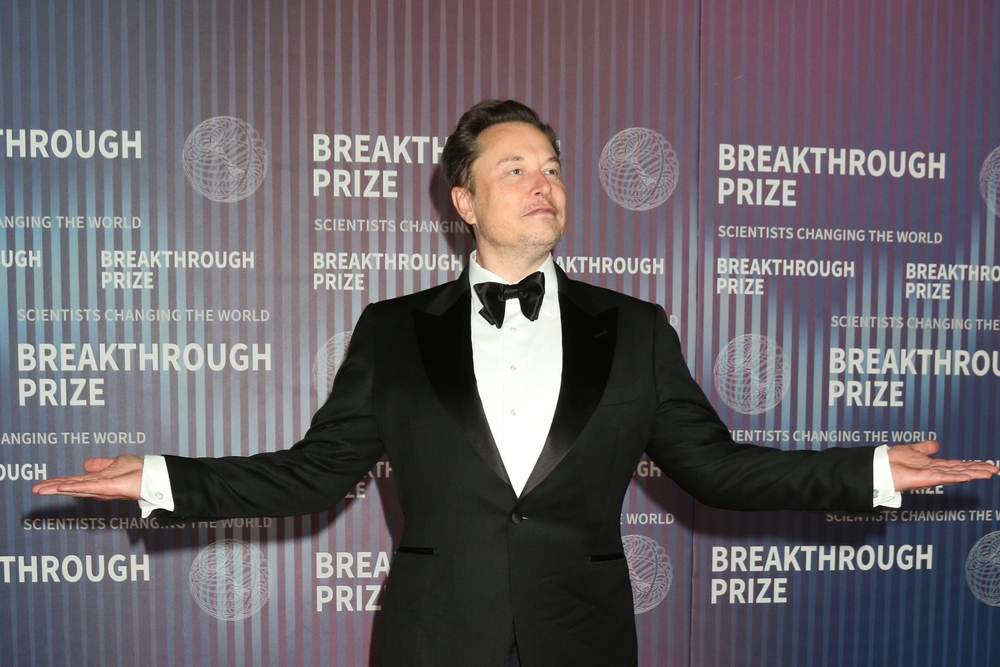
Elon Musk, the CEO of xAI (among many other ventures), represents the chaotic, high-stakes, and often contradictory elements of the AI architecture. He co-founded OpenAI, then left to later create xAI with the stated mission of building an AGI that will “seek maximum truth.” His inclusion reflects the immense personal capital and ideological conviction driving parts of the AI race.
Musk’s influence is felt through his massive infrastructure bets, his role in attracting top talent, and his vocal, often controversial public warnings about AI’s existential risks. He embodies the high-speed, personality-driven nature of the current tech cycle, where the personal vision and public drama of a single architect can instantly shift the direction of a multi-billion-dollar field.
11. Fei-Fei Li: The Human-Centered Academic (Stanford HAI Co-Director)

Fei-Fei Li, a Computer Science professor at Stanford and co-director of the university’s Human-Centered AI Institute (HAI), brings the voice of ethical, long-term academic responsibility to the group. She is recognized for inventing ImageNet, a massive dataset that was critical to the deep learning revolution, establishing her as a core figure in the field’s history.
Her current work focuses on ensuring that AI development prioritizes human well-being, ethics, and societal benefits, serving as an intellectual counterbalance to the rapid commercialization. Li is a strong advocate for public policy and education, representing the critical link among fundamental research, ethical guardrails, and the responsible integration of AI into sectors such as healthcare.
12. Dario Amodei: The Safety-First Builder (Anthropic CEO)
Dario Amodei, the CEO and co-founder of Anthropic, represents the growing commitment to AI safety and responsible development. Amodei and his co-founders, many of whom came from OpenAI, established Anthropic with a charter built on “constitutional AI,” a method designed to make AI models safer and more transparent through self-correction mechanisms.
His work highlights the tension within the architectural community regarding the speed of development versus the depth of safety. Anthropic’s success in securing significant funding proves that investors and policymakers are increasingly demanding safety-focused models, making Amodei a key architect in defining the regulatory and ethical standards for future commercial AI products.
13. They are Geopolitical Actors

The work of these architects has moved beyond being mere business news to becoming a central theme in global geopolitics and national security. AI chips (like those from Nvidia and AMD) are considered instruments of statecraft, and access to the most advanced models is a key point of rivalry between nations, most notably the US and China. The architects themselves are often called upon by governments for counsel and policy input.
This elevated status means their product roadmaps and strategic decisions carry global weight, directly affecting trade policy, military capabilities, and international economic stability. The architects find themselves navigating complex regulatory hurdles and export controls, confirming that their companies are viewed less as conventional tech firms and more as crucial infrastructure providers that affect global power balances.


