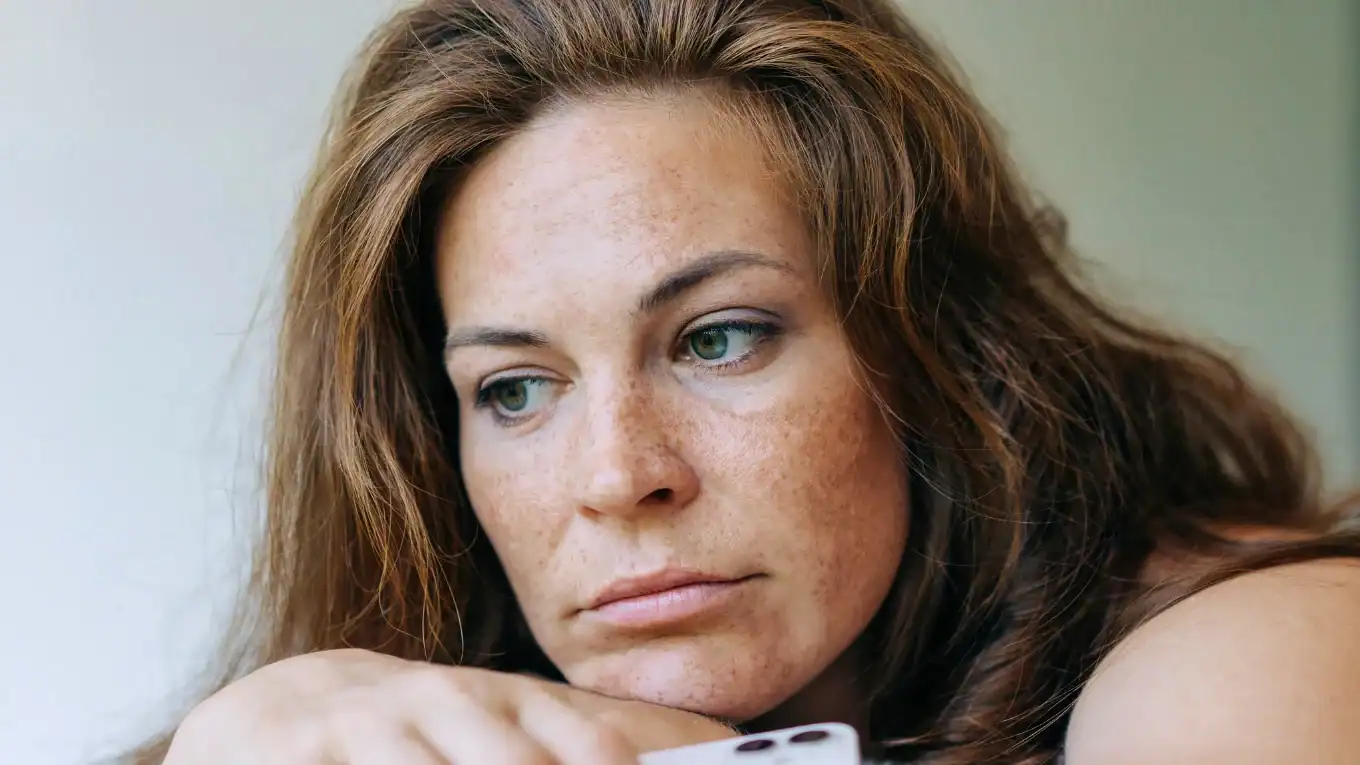
Last year, I had a medical scare.
It turned out to be nothing serious but before I knew that, I had to sit in an Emergency Room by myself for 4 hours. At some point, I picked up my phone and opened my contacts and just—scrolled.
Not looking for anyone in particular. Just looking. Trying to locate the person I would call.
I have 847 Facebook friends.
I have a group chat from a work trip three years ago that still occasionally pings.
I have acquaintances I genuinely like, people I’m happy to see at parties, former colleagues who would probably meet for coffee if I suggested it.
What I couldn’t find, scrolling through my contacts in that waiting room, was someone I could call without it being a production.
Someone who already knew the background.
Someone for whom my calling would feel like the obvious thing rather than a burden I was placing on them.
I put my phone away. I waited alone. Everything was fine.
But I’ve been thinking about that scroll ever since.
Because I’m not unusual. I’m not particularly isolated by the standards of modern adult life. I just have what a lot of people have—a wide, warm social world that somehow doesn’t include the specific kind of closeness you need when things go wrong.
Here’s how I think it happened.
Surface-level connections got very easy, and never went deeper
Social media gave me a way to stay loosely in touch with hundreds of people at once, and it’s genuinely not nothing. I know my college roommate had a baby. I know my old neighbor moved. I have a running, low-level awareness of dozens of lives that would have simply faded without the infrastructure to maintain them.
What it didn’t do was create closeness. Knowing someone’s highlights isn’t the same as knowing them. Liking a photo isn’t a conversation. And because the surface-level connection requires so little effort, it’s easy to mistake it for a relationship—to feel like you have a full social life when what you actually have is a wide, shallow one.
I’ve made this mistake. I’ve gone through stretches where my social world felt abundant—full calendar, active group chats, a general sense of being connected—and only realized later that nothing in it would have held weight in a waiting room. The warmth was real. The closeness wasn’t there.
Adult friendships got harder to maintain, and nobody warned me
When I was younger, proximity did most of the work. I saw the same people every day without planning it, and closeness accumulated almost automatically. The friendships felt effortless because, in a lot of ways, they were—the structure of my life was doing the work for me.
Adult life removed that structure. People moved, jobs changed, schedules fragmented. The friendships that survived stopped deepening on their own. They required deliberate effort that I often didn’t have, because adult life leaves a specific kind of residue: not the dramatic exhaustion of a crisis, but the low-grade depletion of a week that asked for everything and left nothing for the things that weren’t already scheduled.
So the friendships I had maintained rather than deepened. And maintaining, over enough years, starts to look like drifting. Not because anyone stopped caring, but because caring without regularity, without the ordinary accumulation of shared time, slowly hollows out. I have friendships that were once close that are now warm and distant at the same time, and neither of us quite knows how to close the gap.
I got better at performing connection than experiencing it
This one took me a long time to see.
I’m good at being in a room. I ask questions, I remember things, and I make people feel like the conversation mattered. I leave gatherings having been present and engaged and haven’t said anything real about myself for hours. It doesn’t feel dishonest—it feels like being good at social situations.
But there’s a difference between performing connection and having it. The performing version leaves me with a mild flat feeling afterward—like I ate something that looked nutritious and was still hungry an hour later. The real version, where something actually passes between another person and me, requires a different kind of risk: saying something true before I’m sure how it’ll land, not managing the impression, letting the conversation go somewhere I didn’t plan for.
I’ve gotten so good at the performing version that I rarely attempt the real one. And the gap between what I’m projecting and what I’m actually experiencing is, quietly, its own kind of loneliness.
I never quite made the ask
Deep friendship doesn’t usually happen to adults. It has to be made.
And making it requires something that feels uncomfortably close to vulnerability—reaching out more than seems warranted, saying directly that I value someone and want more of them in my life. It requires the possibility of rejection, or more commonly, a lukewarm response from someone who doesn’t feel the same way, which somehow feels worse.
So I mostly didn’t make the ask. I waited for the friendships to deepen on their own, the way they did when I was younger, and when they didn’t, I concluded that this is just how adult friendships are—warm but limited, fine but not close. I wasn’t wrong that this is how adult friendships tend to go. I just didn’t realize I was participating in making it so, by omission, along with almost everyone else.
My “emergency contacts” are people from my previous life
If you looked at my phone, you’d find my emergency contact is a college friend who lives in another time zone and mostly knows who I was at twenty-two. There’s a sibling who loves me but hasn’t been part of my day-to-day in years. A former roommate from a life stage that ended a decade ago.
These people matter. The relationships are real. But they’re relationships that are slightly frozen in the past, and there’s a specific loneliness that comes from realizing that the person who knows me best is also the person who knows me least current—who has my whole history but not my present, who would show up in a crisis but would be working from an outdated picture of who they were showing up for.
In that waiting room, I didn’t need someone from my past. I needed someone who knew what my life actually looked like right now. Those turned out to be different categories with almost no overlap.
I thought that because I was well-liked, I was well-known
Being liked is not the same as being known, but they can feel interchangeable from the inside—especially if you’re good at being liked.
I have evidence of warmth from a lot of directions. People are glad to see me. I get invited to things. And because being known feels like it should be the natural extension of being liked, I went a long time without noticing that something was missing—that the warmth was coming from people who knew my surface and not my interior. That I was liked but not, in the deepest sense, seen.
The waiting room made this clear. The people who would have been glad to hear from me were not the people I needed in that moment. Being popular in the social sense and having someone to call in an emergency are separate things, and I had a lot of the former and not enough of the latter.
The fix is smaller than it feels—and I’m already proof of that
I’ve been sitting with this for a year now, and I think what I’ve concluded is that I don’t need to reinvent my social life.
I don’t need a dramatic reckoning or a new philosophy of friendship.
I mostly just need to do, with one or two people, what I’ve never quite done: show up more than seems strictly necessary, say something true before I’m sure it’ll land, ask for more of the relationship than the relationship currently has.
Text first. Suggest the specific thing, not the vague thing. Let someone know that I value them and want more of them in my life, and risk the mild awkwardness of having said it.
It feels like a lot. In practice, it mostly isn’t. Most people want more closeness than they have and are waiting for someone else to initiate it.
And here’s the thing I keep coming back to: I sat in that waiting room alone for four hours, and I was okay. Not because nothing was wrong, but because I’ve spent years learning how to hold things. How to stay steady when it’s hard. How to be my own anchor when there isn’t one nearby. That’s kind of a big deal. That’s actually a lot. Most people haven’t had to develop that and don’t have it.
The goal isn’t to stop being someone who can handle things alone. It’s to stop having to.
I don’t need 847 friends. I need three or four people who would recognize my number.
And I’m already the kind of person who, when the moment comes, will be exactly that for someone else.
That’s a good place to start.
Editor’s Note: This piece is part of our “As Told to Bolde” series where we share personal stories from individuals we have interviewed or surveyed. For more information on how we create content, please review our Editorial Policy.