

I’m one of four kids. My partner is an only child. And the differences in how we move through the world are striking—not because one way is better, but because we learned completely different survival skills growing up. When you share a house with multiple siblings, you develop habits that seem normal to you but look strange to people who grew up with more space, more attention, and more quiet. These aren’t things you’re taught. They’re just how you learned to exist in a chaotic, crowded, competitive environment where everything—food, attention, bathroom time—was a limited resource.
1. You Eat Fast
Meals weren’t leisurely.
If you wanted seconds, you had to finish first. If you didn’t claim your portion immediately, someone else would. So you learned to eat quickly, efficiently, without lingering. You didn’t savor—you consumed and moved on.
That speed stuck. Even now, at a quiet dinner with no one competing for the last piece of bread, you still finish before everyone else. It’s automatic.
You’re done while others are halfway through, and you don’t even realize you’ve been racing until someone points it out.
2. You’re Comfortable With Noise and Chaos

Silence feels strange.
Growing up, there was always noise—siblings arguing, the TV blaring, someone practicing an instrument badly, multiple conversations happening at once. You learned to focus through it, to do homework while chaos swirled around you, to sleep through yelling. A study published in Developmental Psychology tracking family size and environmental adaptation found that children from larger families demonstrate significantly higher tolerance for ambient noise and distraction, with measurable differences in sustained attention performance in chaotic versus quiet environments compared to only children or those from smaller families.
Now, total silence feels unsettling. You don’t need it to concentrate. You actually function better with some background noise. The people who need absolute quiet to work seem fragile to you, overly sensitive. You’ve been conditioned to operate in the middle of a storm.
3. You Know How to Share (Even When You Don’t Want To)
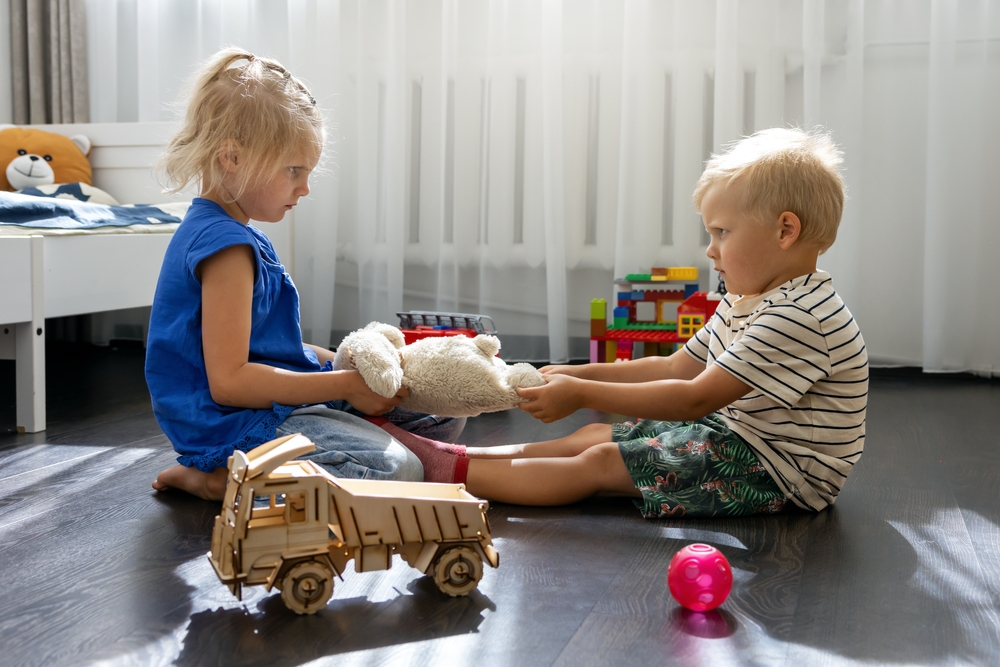
Everything was communal. Toys, clothes, space, attention. You didn’t get to keep things to yourself just because they were yours. If a sibling wanted to borrow something, you had to let them, or deal with the fallout of being labeled selfish. So you learned to share, even when it annoyed you, even when you knew they’d break it or lose it or never give it back. That reflex carried into adulthood. You lend things easily. You split food without thinking. You don’t have a strong sense of “mine” the way only children do. Sharing feels like the default, and holding onto something that someone else wants feels vaguely wrong, even when you have every right to say no.
4. You’re Fiercely Competitive

Everything was a competition.
Who got the best grades. Who was the favorite. Who got to sit in the front seat. Who won the argument. Who got their way.
Research on sibling dynamics and achievement motivation in the Journal of Family Psychology indicates that children from larger families develop heightened competitive drives as a byproduct of resource scarcity and attention competition, with this trait persisting into adulthood and manifesting in both professional ambition and recreational activities at rates significantly higher than those of peers from smaller family structures.
You learned early that if you didn’t fight for your place, you’d get overlooked. You developed a drive to be the best, to stand out, to win. That competitiveness doesn’t always serve you well—it can make casual games feel high-stakes, make collaboration harder than it should be, turn situations that aren’t competitions into ones anyway. But it also made you resilient, scrappy, and unwilling to settle for second place.
5. You Don’t Need Much Personal Space

You shared a room. Maybe with one sibling, maybe with three. You never had true privacy, never had a door you could close and know you’d be left alone. Findings from environmental psychology research in the Journal of Environmental Psychology suggest that individuals raised in high-density household environments develop different spatial comfort thresholds, with those from large families reporting lower personal space requirements and higher tolerance for physical proximity in both social and professional settings compared to those who had dedicated private spaces during childhood. Small apartments don’t bother you. Sharing an office doesn’t feel invasive. You’re fine with people being close, physically and otherwise. The need for expansive personal space that other people have—the discomfort with crowded trains, the irritation at someone sitting too close—doesn’t register the same way. You’re used to functioning in tight quarters. Space is a luxury, not a necessity.
6. You Can Mediate Conflicts Like A Pro

You’ve been navigating sibling disputes since you could talk—who started it, who’s lying, who deserves an apology, how to get everyone to calm down so dinner can happen. You’ve seen it all. You learned to read emotions, de-escalate tension, and find compromise when everyone’s dug in.
That skill translates directly into adulthood. You’re good in tense meetings. You can sense when a conversation is about to blow up and redirect it. You know how to make people feel heard without taking sides, how to diffuse conflict without making it worse. It’s not something you think about—it’s just pattern recognition from years of managing chaos.
7. You’re Resourceful

When you needed something, you couldn’t always ask for it.
Your parents were stretched thin. Money was tight. Attention was divided.
You learned to figure things out yourself. You improvised, adapted, and made do with what was available. You didn’t wait for help—you just handled it.
That resourcefulness stuck. You don’t panic when something breaks or when you don’t have the right tool. You find a workaround. You make it work. And when other people immediately give up or outsource a problem, you’re already halfway to solving it because the instinct to be self-sufficient is so deeply ingrained.
8. You’re Hyper-Aware Of Fairness

Growing up, fairness was everything—who got a bigger piece, who got more time, who was being treated better. You tracked it obsessively. According to research on equity, sensitivity, and birth order effects published in the Journal of Personality and Social Psychology, individuals from large families demonstrate heightened sensitivity to fairness violations and inequitable treatment, with this vigilance often persisting into adulthood and influencing everything from workplace dynamics to intimate relationships, as childhood competition for limited parental resources creates lasting schemas around distributive justice.
And that sensitivity to unfairness didn’t go away. You notice when someone’s getting special treatment, when rules are being applied inconsistently, when the distribution of work or resources is lopsided. It makes you a good advocate for equity, but it also means you can get stuck on things that others let slide. Fairness isn’t just a preference—it’s a deeply ingrained expectation shaped by years of fighting to make sure everyone got their share.
9. You Know How To Fend for Yourself Emotionally

Your parents loved you, but they couldn’t be there for every scraped knee, every hurt feeling, every moment you needed reassurance. There were too many of you. So you learned to self-soothe. To process your feelings alone. To not need constant emotional support to stay okay. You didn’t get coddled, and that made you tougher in ways that matter. Now, when something goes wrong, you don’t fall apart. You don’t need someone to validate your feelings or talk you through every upset. You can sit with discomfort, work through problems independently, and come out the other side.


