

The cashier looked at me like I’d pulled out a typewriter.
I handed her a twenty-dollar bill for my coffee. She stared at it for a second, then fumbled with the register like she’d forgotten how it worked.
“Sorry,” she said. “Most people just tap.”
And I felt it. That small, irrational embarrassment. Like I’d done something outdated. Inconvenient. Wrong.
But here’s the thing: I prefer cash. Not because I don’t have a card. Not because I don’t understand technology. Just because cash feels different. More real. More intentional.
And apparently, that preference says something about me.
Because in a world where most people tap their phones without thinking, the choice to use physical money isn’t just practical. It’s psychological. It reveals a specific set of traits that tend to cluster together in people who still count bills instead of checking balances on screens.
Here’s what psychology suggests about people who prefer cash.
1. You Need To Feel Money Leaving Your Hand
Cash isn’t abstract to you. It’s real. Physical. Finite.
When you hand over a twenty-dollar bill, you feel it leave your hand. You see your wallet get lighter. You experience the transaction as an actual loss.
Not just a number decreasing on a screen.
Research on payment methods and spending behavior consistently shows that people who use cash spend less and feel more aware of their spending than those who use cards or digital payments, primarily because physical currency creates psychological friction that digital transactions eliminate.
And you need that friction. You don’t want spending to be frictionless. You want to feel it.
Digital payments are too easy. Too disconnected. Like Monopoly money that doesn’t quite count.
But cash? Cash forces you to reckon with what you’re spending in a way that tapping a card never will.
2. You Like Hard Limits
You know exactly how much cash you have. You can see it. Count it. Feel when it’s running low.
And once it’s gone, it’s gone.
No overdraft. No credit limit to lean on. No way to spend money you don’t actually have.
That hard limit appeals to you. Because it removes temptation. Makes overspending impossible instead of inadvisable.
I’ve done this intentionally. Taken out $100 for the week and left my cards at home. And when the cash was gone, I stopped spending. Simple.
Digital payments require self-discipline. You have to track your balance mentally. Trust yourself to stop.
Cash does the stopping for you.
3. You’re Not Comfortable With Everything Being Tracked
Every tap creates a record. A data point. Evidence of where you were, what you bought, when you were there.
And you don’t love that.
Not because you’re doing anything wrong. Just because you value the idea that some transactions can be private. Anonymous. Yours alone.
Cash doesn’t leave a trail. It doesn’t get tracked. It doesn’t feed algorithms that build profiles of your purchasing habits.
Studies on privacy concerns and payment preferences show that individuals who prioritize financial privacy are significantly more likely to use cash, particularly for discretionary purchases where they value autonomy over convenience.
You’re not paranoid. You just prefer some separation between your purchases and your digital identity.
Some parts of your life can stay unmonitored. Unanalyzed. Unmonetized by companies selling your data.
4. Invisible Debt Makes You Uneasy

Credit cards and digital wallets make it easy to spend money you don’t have.
Buy now, pay later. Float purchases on credit without feeling the weight of owing.
And that makes you uncomfortable. Because debt you can’t see feels more dangerous than debt that’s visible.
With cash, you know exactly where you stand. You either have the money or you don’t.
No ambiguity. No accumulating balance you’re ignoring. No interest compounding in the background.
You’re not necessarily debt-averse. You just want debt to be intentional. Visible. Something you actively choose, not something you drift into because spending felt too easy.
5. You Trust Yourself More Than You Trust Systems
Digital payments require you to trust apps, banks, networks, and security protocols.
To believe that the infrastructure will work. That your money is safe. That the system won’t fail you.
But you’d rather just hold the money yourself.
Keep it where you can see it. Control it directly instead of trusting intermediaries to manage it for you.
Research on financial behavior indicates that individuals with a high internal locus of control demonstrate a stronger preference for cash and physical assets over digital abstractions.
When you pay with cash, you’re the only variable.
You don’t need Wi-Fi. You don’t need your phone battery. You don’t need the payment system to be working.
You just need the cash in your hand. And that self-sufficiency feels better than depending on systems you can’t control.
6. You Value The Ritual Of Paying
Paying with cash requires steps.
You pull out your wallet. You count bills. You wait for change. You put it back.
It’s slower. More deliberate. More involved than tapping a card.
And you don’t see that as a drawback.
Because the ritual makes the transaction meaningful. It creates a moment of awareness instead of letting spending become automatic.
I’ve noticed this in myself. When I pay with cash, I’m present for the transaction. When I tap a card, I’m already thinking about the next thing.
The payment happens so fast it barely registers.
But cash forces me to slow down. To be there. To acknowledge that I’m exchanging something of value for something else.
7. You Prefer Things You Can Hold
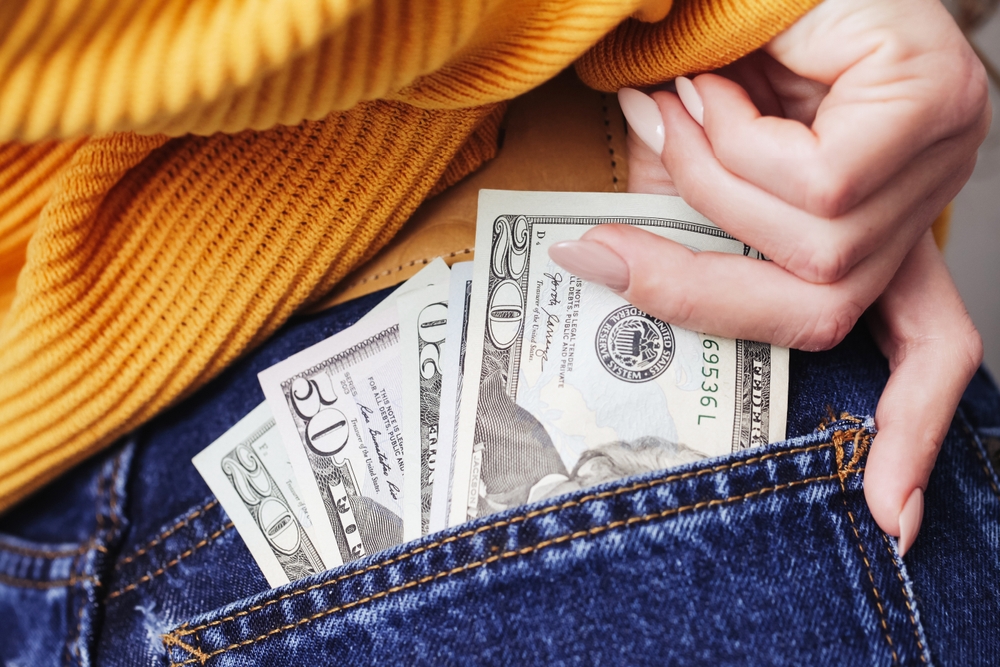
You probably have other analog preferences too.
Paper planners instead of digital calendars. Physical books instead of e-readers. Handwritten notes instead of typed ones.
You prefer the tactile. The physical. The real.
Digital systems feel ephemeral. Temporary. Like they could disappear if the power goes out or the servers crash.
But physical things persist. They exist independent of infrastructure.
Studies on technology adoption patterns show that individuals who maintain analog preferences across multiple domains tend to value permanence, tangibility, and independence from digital systems more highly than convenience or efficiency.
Cash fits this pattern perfectly. It’s money you can hold. That exists whether or not the internet is working.
That doesn’t require charging or updating or connecting.
8. You Want Spending To Hurt A Little
When you pay with cash, it hurts a little.
Not in a bad way. Just in an aware way.
You feel the money leaving. You see your stack of bills get smaller. You experience the purchase as something you’re giving up, not just something you’re acquiring.
Digital payments eliminate that feeling. They make spending feel neutral. Just numbers moving around.
No emotional weight. No sense of loss.
But you don’t want spending to feel neutral. You want to feel it.
Because that feeling is information. It tells you when you’re spending too much. When a purchase isn’t worth it. When you should wait.
Research on payment pain and spending behavior found that the psychological “pain of paying” is significantly higher with cash than with cards or digital methods, and this pain serves as a natural regulatory mechanism that reduces impulsive and excessive spending.
The pain is your brain’s way of making sure spending is intentional. And you’ve chosen to preserve that signal instead of eliminating it for the sake of convenience.


