

I didn’t realize certain foods were a class marker until I got older.
As a kid, it just felt normal that we had specific things in the fridge. Yogurt that wasn’t neon-colored. Bread that came from a bakery instead of a plastic bag. Pasta that had a name I couldn’t pronounce.
It wasn’t extravagant. No one was eating caviar on a Tuesday.
But looking back, there were patterns. The kinds of meals that quietly signaled resources. Time. Education. Exposure. The assumption that health and taste mattered.
If your parents regularly fed you these dishes, there’s a good chance you grew up upper-middle-class.
1. Grilled Salmon On A Weeknight
Not fish sticks. Not frozen fillets.
Actual salmon. Seasoned, maybe with lemon. Served with a vegetable that wasn’t canned.
Salmon isn’t just about taste. It’s about cost and access. It signals a household that could afford fresh protein and cared about nutrition trends long before they became mainstream.
Research on food consumption patterns has consistently found that higher-income households purchase significantly more fresh fish than lower-income ones, partly because of price and partly because of health awareness.
If salmon showed up casually in your childhood, that wasn’t neutral.
It meant someone was shopping at stores that sold fresh seafood. It meant your parents were reading articles about omega-3s and heart health in the 90s. It meant dinner wasn’t just about feeding you—it was about optimizing your nutrition in ways that required both knowledge and resources.
And it meant your family could absorb the cost of a protein that might be $12-15 a pound without it being a special occasion. That kind of casual luxury—where healthy food isn’t reserved for celebrations—is one of the clearest markers of upper-middle-class life.
2. Quiche For Brunch
I don’t mean scrambled eggs. Or pancakes.
Quiche.
It usually appeared during weekend brunches with guests, or as a make-ahead dish pulled out with quiet pride.
Quiche suggests time to cook, a familiarity with recipes that aren’t strictly utilitarian, and a comfort hosting others in a way that feels curated.
And it signals something specific about how your parents saw themselves. Quiche is a performance of casual sophistication. It’s French, but not intimidatingly so. It’s impressive, but not try-hard. It says: we know how to entertain. We read cookbooks. We have friends over, and we feed them well.
I remember watching my mother make quiche for Sunday gatherings, carefully blind-baking the crust, whisking eggs with cream, and arranging vegetables in neat patterns. It wasn’t just food. It was a statement about what kind of household we were.
And if your parents made quiche regularly, it likely meant they had the time to cook something that required planning and technique. That they had a social circle that appreciated it. That hosting was part of their identity, not just an obligation.
3. Whole Wheat Or Multigrain Bread As The Default
White bread was sometimes “for guests” or for specific recipes.
But in many upper-middle-class homes, the everyday bread was darker. Heavier. Marketed as healthier.
This wasn’t accidental. Studies on grocery purchasing show that higher-income and more educated households are more likely to buy whole-grain products, often because of early adoption of health messaging.
If you grew up thinking wheat bread was normal and fluffy white bread was a treat, that’s a clue.
Because in the 80s and 90s, whole wheat bread cost more and tasted worse. It was denser, less sweet, less appealing to children. But parents bought it anyway—because they’d internalized messages about fiber and nutrition that hadn’t reached everyone yet.
This was a class marker disguised as a health choice. It showed that your parents were reading the right magazines, listening to the right advice, and were willing to spend extra money on something that made meals slightly less enjoyable for their kids because they believed it was better in the long run.
Other families bought Wonder Bread because it was cheap and kids liked it. Your family bought sprouted grain bread from the co-op because your mom read an article in a newsletter about whole grains.
4. Fresh Berries Outside Of Summer
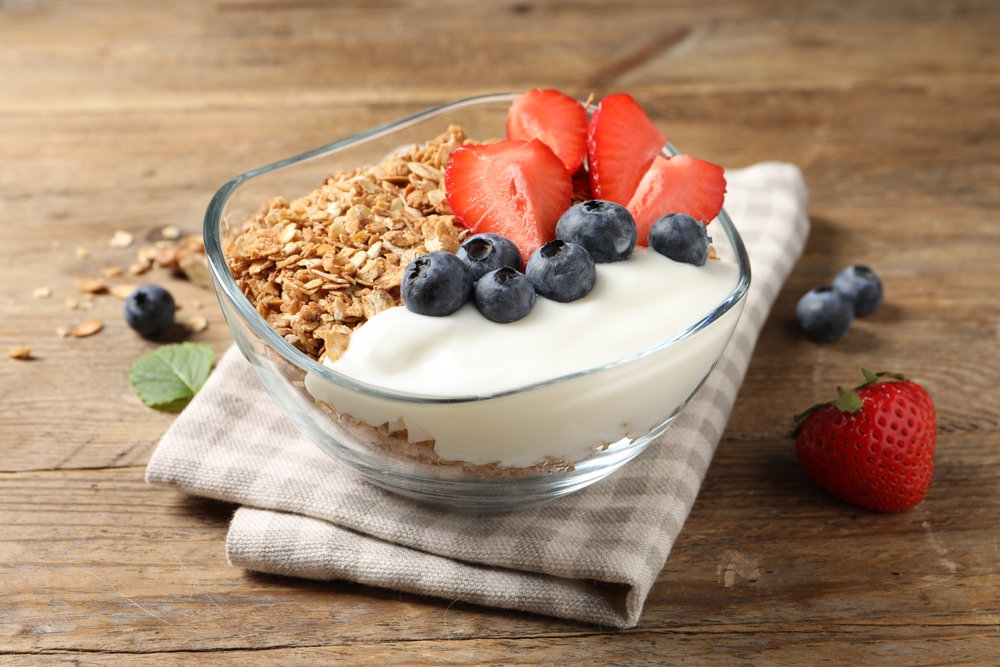
Strawberries in December. Blueberries in early spring.
Not frozen or canned.
You probably didn’t think twice about it at the time. But imported produce in the 80s and 90s wasn’t cheap—and it wasn’t universal.
Having it regularly meant your household budget allowed for “extras” without discussion.
It also meant your parents expected access to whatever they wanted, whenever they wanted it. Seasons didn’t dictate their purchasing. Availability did. If the store had Chilean blueberries in February, and your parents wanted them, they bought them.
That mindset—that food should be available year-round, that you shouldn’t have to wait for local growing seasons—is deeply tied to class. It reflects a worldview where convenience and preference override cost and practicality.
And as a kid, you absorbed that. You grew up thinking strawberries were a normal weekday snack in January. You didn’t know that for a lot of families, fresh berries were something you only had in summer when they were cheap and abundant.
5. Stir-Fry With Vegetables You’d Never Heard Of
Snow peas. Bok choy. Water chestnuts.
If you remember asking, “What is that?” and your parents answering casually, you were likely in a home that valued exposure and experimentation.
Upper-middle-class families often prioritize introducing children to diverse cuisines, partly because travel, education, and social circles reinforce it.
Dinner wasn’t just about filling you up. It was about broadening your palate.
This reflects a specific parenting philosophy: that children should be worldly. That they should know foods from different cultures. That exposure to variety is part of raising a sophisticated, well-rounded person.
It also suggests access. Your parents shopped at stores that carried bok choy. They had recipes—probably from a cookbook or a cooking class—that required ingredients not available everywhere. They had the confidence to cook foods outside their own cultural background and the expectation that you’d eat them.
And they saw food as educational. Each dinner was an opportunity to teach you something. To expose you to something new. To prepare you for a life where you’d travel, dine out, and navigate diverse social settings with ease.
That’s not how every family approaches food. For many, dinner is fuel. Comfort. Tradition. But in upper-middle-class households, it’s often also a lesson.
6. Greek Yogurt Before It Was Trendy
Long before it became a wellness staple, some households were already buying plain yogurt and adding fruit manually.
It wasn’t sugary. It wasn’t brightly packaged.
It suggested attention to health, reading labels, and being willing to spend more for perceived quality.
Food research often shows a strong correlation between income, education level, and the likelihood of purchasing “health-forward” items before they’re mainstream.
If your lunchbox included yogurt with granola instead of pudding cups, that likely wasn’t random.
Because while other kids had Yoplait tubes and Lunchables, you had plain yogurt with fresh berries and honey. And you probably felt a little weird about it. Maybe even envious of the kids with the fun, sweet stuff.
But your parents were operating from a different framework. They’d read about probiotics and sugar content. They believed that teaching you to prefer unsweetened foods was doing you a favor. They were willing to spend more money and more time to give you something they believed was superior, even if you didn’t appreciate it.
And that gap—between what you had and what you wanted—is itself a class marker. Because upper-middle-class parenting often involves delayed gratification and optimization. Your parents weren’t giving you what made you happy in the moment. They were giving you what they believed would benefit you in the long term.
7. Pasta With Homemade Sauce Instead Of A Jar

There’s nothing wrong with jarred sauce.
But if your parent simmered tomatoes, garlic, and herbs from scratch on a regular basis, that signals something specific: time.
Upper-middle-class status often shows up not just in money, but in flexibility. The ability to spend an hour cooking instead of relying on convenience food.
It also signals food literacy—the confidence to make something from base ingredients rather than buying it fully assembled.
And it reflects a value system where homemade was better. More authentic. More real. Where cooking from scratch was a point of pride, not just a necessity.
I remember my father making marinara every Sunday, letting it simmer for hours, the whole house smelling like garlic and basil. It was a ritual. A performance of competence. A way of signaling that we were the kind of family that did things properly.
It meant someone in your house had the time to cook that way. That they weren’t working multiple jobs with no time to do anything but heat up something fast. That food was important enough to warrant effort, care, and attention.
And it probably meant your parents had learned to cook from their parents, or from cookbooks, or from cooking classes. That they saw cooking as a skill worth having, not just a chore to get through.
8. Sparkling Water As A Normal Beverage
Nope, not soda. Not juice.
Sparkling water. Maybe in glass bottles. Maybe with lemon.
That detail feels small, but it often reflects subtle class cues: health-consciousness, European influence, and an avoidance of overly sugary drinks.
Consumption studies frequently show that higher-income households are more likely to substitute soda with bottled or sparkling water, especially as health messaging increased in the late 20th century.
If you grew up thinking fizzy water was normal and cola was occasional, you were likely in a household shaped by those values.
Because sparkling water wasn’t marketed to everyone. It was expensive. It was associated with Europe, with sophistication, with health. Buying it meant your parents had traveled, or aspired to a lifestyle where sparkling water was normal.
It also meant they’d internalized anti-soda messaging early. They saw sugary drinks as unhealthy, unsophisticated, something to avoid. And they passed that worldview on to you.
You probably didn’t realize how specific that was until you went to other kids’ houses and saw that most families had soda in the fridge, not San Pellegrino. That carbonated water with lime was not, in fact, universal.
But in your house, it was. Because your parents were signaling—to themselves and to others—what kind of people they were. Health-conscious. Informed. A little bit European. The kind of people who chose Perrier over Pepsi.
Food is never just food.
It’s culture. Access. Education. Priorities. It reflects what a family can afford—not just financially, but in time and attention.
If these dishes feel deeply familiar, it doesn’t automatically define your childhood. But it does hint at something about the environment you were raised in.
Sometimes class shows up quietly on a dinner plate.


