

We tend to think intelligence is about speed, trivia, or math tricks, but real cognitive sharpness shows up in unexpected places. It’s about pattern recognition, abstract thinking, and the ability to connect ideas across disciplines. The questions below aren’t designed to be easy or obvious—they’re meant to test how flexibly your brain works. If more than a few of these feel intuitive rather than intimidating, your intelligence may be operating on a higher level than you realize.
1. Why Do We Have a 60-Minute Hour?
The origin dates to ancient Mesopotamia, where the Sumerians used a base-60 number system. That mathematical choice shaped how time was divided long before clocks existed. Sixty is highly divisible, which made it practical for calculations. Modern timekeeping is essentially based on ancient math.
Cognitive historians note that recognizing how ancient systems still govern modern life reflects deep contextual intelligence. According to research published in the Journal of Cognitive History, people who understand legacy systems tend to score higher in abstract reasoning. This question tests your ability to connect past logic to present norms. Genius-level thinking often lives in historical continuity.
2. Why Can’t You Tickle Yourself?

Your brain predicts your own movements before they happen. That prediction dampens the sensory response, making self-generated touch less stimulating. When someone else tickles you, the brain lacks that forecast. Surprise is essential for sensation.
Neuroscientists studying predictive processing explain that this ability reflects advanced internal modeling. Research from the Max Planck Institute highlights prediction suppression as a core function of intelligence. Understanding this means grasping how the brain filters reality. That’s not common knowledge—it’s cognitive insight.
3. What Would Happen If All Insects Disappeared?

Most ecosystems would collapse within months. Pollination would fail, food chains would unravel, and soil health would degrade rapidly. Humans rely on insects far more than we realize. Civilization would struggle to survive.
Ecologists consistently warn that insect loss is a mass extinction trigger. A 2023 global biodiversity report confirmed insects underpin nearly all terrestrial ecosystems. Answering this correctly requires systems thinking, not surface knowledge. Genius thinking sees invisible dependencies.
4. Why Is the Sky Blue but Sunsets Red?

Shorter blue wavelengths scatter more in Earth’s atmosphere. When the sun is high, blue light disperses evenly across the sky. At sunset, light travels farther through the atmosphere, filtering out blue and leaving reds and oranges. It’s physics, not romance.
Understanding wavelength scattering shows comfort with scientific abstraction. According to optical physics research from MIT, an intuitive grasp of light behavior correlates with spatial reasoning skills. This question tests your ability to translate invisible forces into observable outcomes. That’s advanced cognition.
5. Why Do Humans See Faces in Random Objects?

This phenomenon is called pareidolia. The brain evolved to prioritize facial recognition for survival. It would rather falsely detect a face than miss a real one. That bias is hardwired.
Cognitive psychologists identify pareidolia as a sign of pattern sensitivity. Studies in the Journal of Vision show that high pattern recognition correlates with creative intelligence. Seeing structure in randomness is a hallmark of advanced brains. Genius minds over-detect meaning before they under-detect it.
6. Why Did Ancient Philosophers Distrust Democracy?

Thinkers such as Plato believed that democracy empowered emotion over reason. They feared uneducated masses could be manipulated by charismatic leaders. To them, knowledge—not popularity—should govern society. History has complicated that view.
Research in political philosophy shows that this skepticism has shaped modern constitutional systems. Understanding it means grasping nuance rather than slogans. According to political theorists, this tension continues to define modern governance. Genius thinking tolerates contradiction instead of simplifying it.
7. Why Does Time Feel Faster as You Age?

Your brain processes fewer novel experiences over time. Novelty slows perceived time, while routine compresses it. Childhood feels long because everything is new. Adulthood speeds up as patterns repeat.
Neuroscience research published by Stanford shows time perception is linked to memory density. High intelligence often involves awareness of cognitive illusions like this. Recognizing subjective time distortion requires meta-cognition. That’s a high-level mental skill.
8. Why Are Octopuses Considered Exceptionally Intelligent?
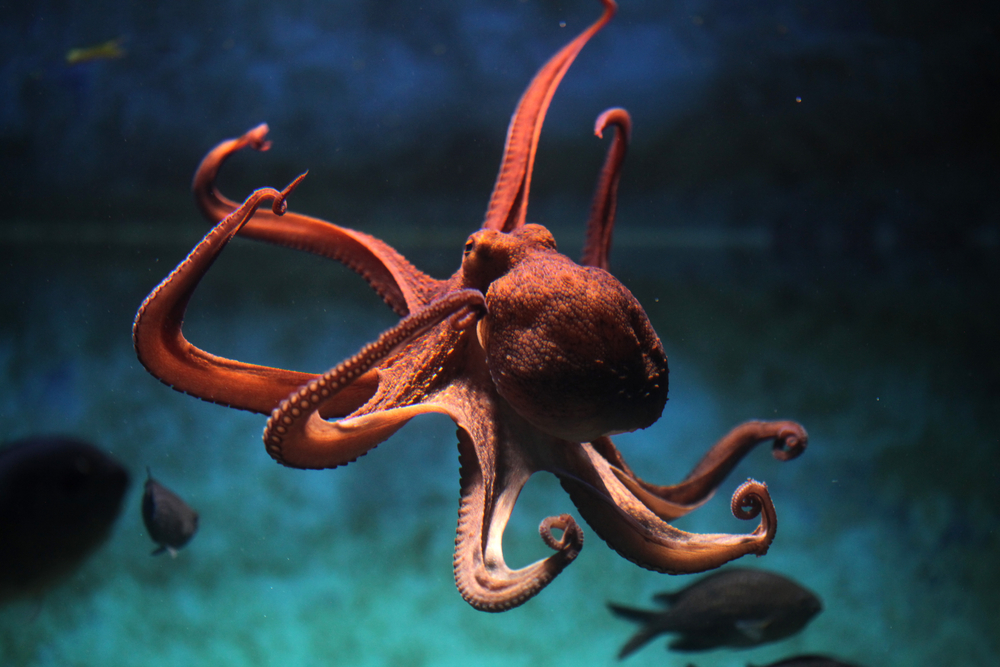
They solve puzzles, use tools, and escape enclosures. Their neurons are distributed throughout their arms, allowing independent decision-making. Intelligence doesn’t look human—it looks adaptive. Octopuses prove that.
Marine biology research confirms octopus cognition rivals many mammals. A 2024 study in Animal Cognition highlighted their problem-solving abilities. Understanding this requires breaking human-centered intelligence models. Genius minds redefine intelligence itself.
9. Why Do Lies Spread Faster Than Truth?

False information triggers emotional reactions. It’s often simpler, more dramatic, and easier to remember. Truth requires nuance, which slows transmission. Emotion beats accuracy online.
Behavioral science research shows emotionally charged content spreads more rapidly. A landmark MIT study found false news travels significantly faster than verified facts. Recognizing this reflects media literacy and critical thinking. Genius isn’t believing everything—it’s questioning it.
10. Why Are Some Languages Harder to Translate?

Some languages encode cultural concepts that don’t exist elsewhere. Words may carry emotional or contextual meanings without direct equivalents. Translation isn’t just linguistic—it’s philosophical. Meaning gets lost.
Linguists argue that language shapes thought itself. Studies in cognitive linguistics show that bilingual individuals often demonstrate greater cognitive flexibility. Understanding untranslatability requires conceptual empathy. That’s advanced intelligence.
11. Why Do Humans Fear the Dark?

Darkness removes visual information. The brain fills gaps with imagined threats. Evolution favored caution over curiosity at night. Fear became adaptive.
Evolutionary psychology explains dark anxiety as a survival mechanism. Understanding this requires recognizing how ancient instincts shape modern emotions. Intelligence includes insight into your own fear responses. Self-awareness is cognitive power.
12. Why Do We Remember Embarrassing Moments So Vividly?

Emotional intensity strengthens memory formation. The brain flags embarrassment as socially important. Those memories become harder to erase. Shame sticks.
Neuroscience research on emotional memory confirms this mechanism. Studies from UCLA show that social emotions increase memory retention. Recognizing this helps separate memory from meaning. Genius thinking doesn’t confuse intensity with importance.
13. Why Can Math Make Some People Lose Their Minds?

Math activates problem-solving centers tied to reward and frustration. Success elicits dopamine release, whereas confusion triggers stress responses. The emotional reaction isn’t weakness—it’s biology. Cognition and emotion overlap.
Educational psychology research shows emotional engagement improves problem-solving. Understanding this helps explain the existence of math anxiety. Genius minds work with emotions, not against them. Logic isn’t cold—it’s human.
14. Why Do Some Animals Love to Play?

Play develops cognitive flexibility and social learning. It helps animals practice survival skills safely. Play signals intelligence across species. It’s rehearsal, not leisure.
Ethology research shows that play correlates with problem-solving ability. Scientists note that species capable of play adapt faster to change. Recognizing this reframes play as a form of intelligence training. Genius sees purpose where others see fun.
15. Why Is Uncertainty So Uncomfortable?

The brain craves predictability to conserve energy. Uncertainty forces constant reassessment, which is exhausting. Anxiety fills the gap when answers don’t arrive. Control feels safer than truth.
Psychological research shows that intolerance of uncertainty limits reasoning ability. Highly intelligent individuals tend to sit with ambiguity longer. Comfort with not knowing is a cognitive advantage. Genius doesn’t rush closure—it waits for clarity.


