

The universe continually reminds us that our understanding of reality remains deeply incomplete, despite the billions invested in cosmic research. Every year brings a new particle or phenomenon that defies the established laws of physics and common sense. These are not just small historical errors; they are fundamental, irritating glitches in the matrix that keep physicists up at night.
From silent, unexplained sounds resonating across the globe to the strange energy density of empty space, these 13 bizarre mysteries continue to baffle researchers in 2026, proving that the more we know, the weirder the universe gets.
1. Why The Placebo Effect Still Works Better Than Some Drugs

The sheer, measurable power of the placebo effect—where a patient’s belief in a fake treatment (like a sugar pill) produces a genuine, physiological response—is a profound mystery that confounds pharmacology. Scientists have documented the brain releasing its own highly potent painkillers, or even adrenaline, based entirely on the patient’s expectation. The precise mechanism by which a non-active substance triggers a physical cure remains utterly baffling to modern medicine.
A 2025 review published in the prestigious New England Journal of Medicine reiterated that the placebo effect represents a powerful, untapped window into the mind-body connection that defies simple chemical explanation. Researchers are struggling to harness this ability without fully understanding its precise neurological trigger. Unlocking the true power of the placebo could fundamentally revolutionize current pain management and chronic disease treatment protocols.
2. The Elusive Nature of Dark Matter
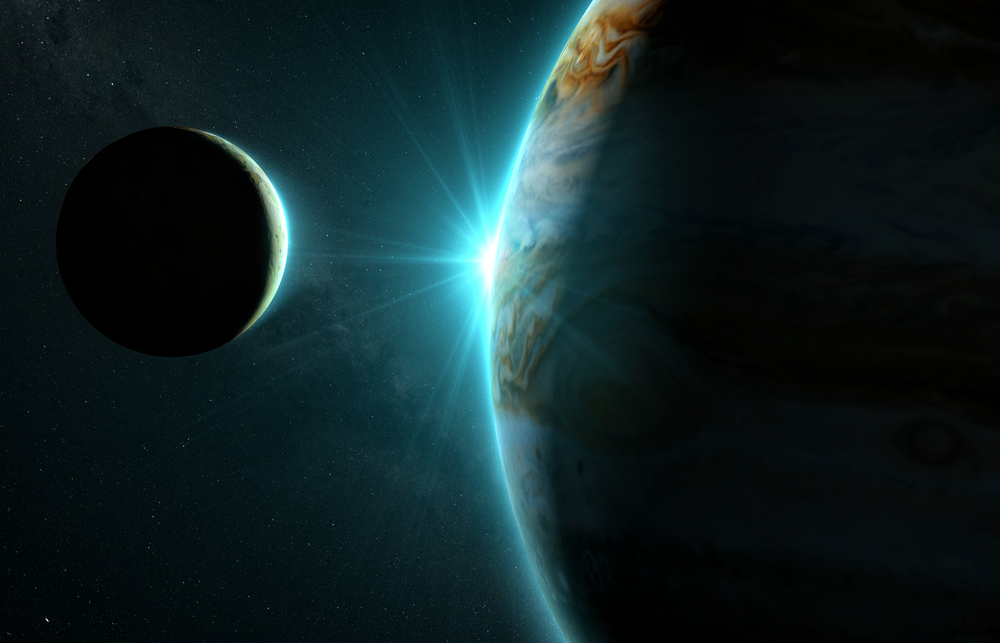
Only about five percent of the entire universe is composed of the visible, baryonic matter that makes up everything we can see, from stars to planets and us. The remaining 27 percent is thought to be Dark Matter, a mysterious, invisible substance that interacts with ordinary matter only through gravity. Its existence is inferred solely from its profound gravitational influence on galactic rotation, making it the dominant form of mass in the cosmos.
Despite decades of intense searching, multi-billion-dollar experiments deep underground have failed to directly detect a single Dark Matter particle, creating a massive crisis in particle physics. Its composition and the reason for its complete elusiveness remain the greatest unsolved problem in the standard model of modern physics. If Dark Matter does not exist, our current understanding of gravity and cosmic structure must be fundamentally incorrect.
3. The Unlocatable Hum That Drives People Crazy Globally

In various places around the world—from the UK to the American Southwest—a small, specific percentage of the population reports hearing a persistent, low-frequency, and intrusive humming or rumbling noise that has no clear local source. This phenomenon, known simply as “The Hum,” is audible only to certain people, often driving sufferers to distraction and sleepless nights. This noise defies scientific explanation despite being widely reported by thousands worldwide across different demographics.
Researchers have sought to attribute the sound to everything from industrial equipment and military communications to seismic activity, but no universal, verifiable source has ever been identified. A 2023 acoustics study published by the Royal Society noted that the sound is likely a combination of environmental and neurophysiological factors, but could not identify a consistent external source that explains its reported ubiquity. The inability to locate or explain this highly irritating phenomenon remains a profound mystery in urban acoustics and environmental science.
4. How Did Life Even Start from Random Chemicals

Scientists fully understand the mechanics of biological evolution, but they still cannot definitively explain the much deeper transition from non-living chemicals to the first self-replicating biological organism. This fundamental process, known as abiogenesis, asks: How did simple, nonliving molecules spontaneously organize into complex, information-carrying cells that could reproduce? The exact conditions and sequence of events required for this profound transformation remain entirely elusive.
Laboratory attempts to recreate the conditions of early Earth have successfully produced some of the basic molecular building blocks of life, such as simple amino acids. However, the conceptual and biological leap from these inert blocks to a functioning, self-aware, and replicating cell is the single most significant unsolved step in biology. The mystery of abiogenesis challenges our knowledge of chemistry, physics, and planetary science all at once.
5. The Forbidden Ultra-High-Energy Cosmic Rays That Defy Physics
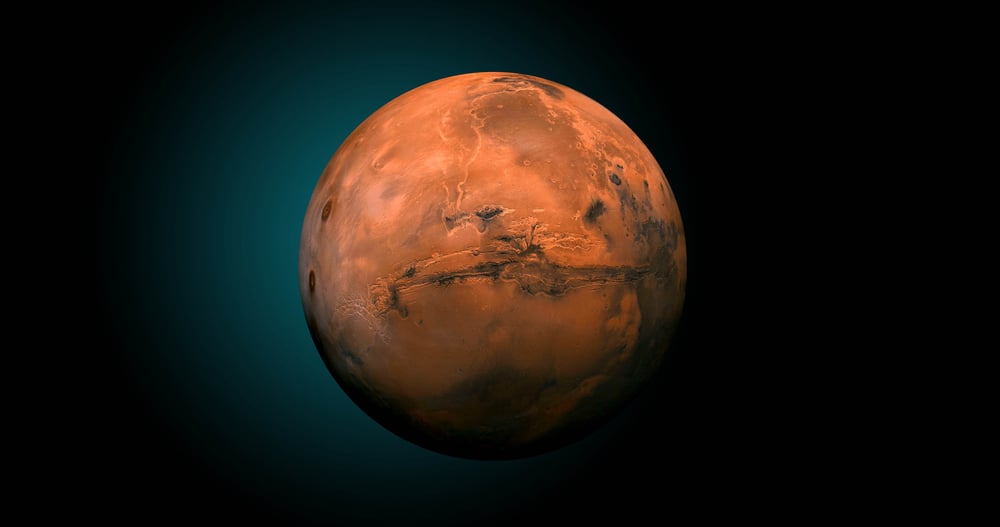
Cosmic rays are high-energy particles that constantly bombard Earth. Still, every so often, scientists detect ultra-high-energy cosmic rays (UHECRs) that possess more energy than any particle accelerator on Earth can produce. The sources and mechanisms that generate these extreme energy levels remain unknown to astronomers. Furthermore, many UHECRs seem to originate from regions of the universe that appear devoid of sources, which contradicts our models of particle decay.
These “forbidden” rays challenge the current established limits of physics on how far high-energy particles can travel before losing energy, a phenomenon known as the Greisen-Zatsepin-Kuzmin (GZK) limit. A 2024 analysis from the Pierre Auger Observatory suggested that the highest-energy rays likely originate from outside the Milky Way, contradicting some established astrophysical models. The existence of these hyper-energetic particles suggests a massive, unseen cosmic engine at work, far beyond our current understanding of particle acceleration.
6. Why Our Brains Are Not Just a Computer

Despite significant advances in cognitive science, the fundamental question of how a physical brain generates the subjective experience of consciousness—the feeling of “being you”—remains a major unresolved scientific and philosophical challenge. Scientists can map brain activity and identify neurological correlates, but they cannot explain the raw, personal experience of thought and feeling itself. Why doesn’t the brain simply process information like a sophisticated computer chip instead of creating a rich, internal, subjective world?
This “hard problem” of consciousness is the ultimate biological mystery that effectively straddles the line between science and philosophy. Researchers can track the electrical impulses and chemical changes that occur in the brain, but the non-physical, qualitative experience of awareness (often called qualia) that arises from that activity remains entirely unexplained. If we can’t explain why we feel and experience the world, we can’t truly understand the human mind.
7. The Deep, Dark Biological Reason Why We Still Dream

Dreams are a universal human experience, yet their fundamental biological and psychological functions remain fiercely debated and not fully explained by science. Theories range from simple emotional processing and memory consolidation to random, meaningless brain activity, such as the famous “Activation-Synthesis Model.” However, no single theory completely accounts for the bizarre, detailed narratives and emotional intensity of our nocturnal mental theater.
The complexity and unusual narrative structure of dreams suggest a profound psychological function for human survival. Yet, we still don’t know why the brain devotes so much energy to fabricating these elaborate, often meaningless, narratives while we sleep. A 2025 fMRI study by the Max Planck Institute for Human Cognitive and Brain Sciences suggested that dreams are essential for “future proofing” memory and practicing social scenarios. However, the exact mechanism of content generation remains opaque. The continued lack of consensus among researchers highlights a major, embarrassing gap in cognitive science that affects us all.
8. The Pioneer Anomaly That Broke NASA’s Spacecraft Calculations

In the 1980s and 1990s, NASA’s Pioneer 10 and 11 spacecraft, which were traveling far beyond the solar system, began to exhibit a small, unexpected deceleration in their velocities. This phenomenon, known as the Pioneer Anomaly, was a tiny, constant force gently pushing the probes back toward the Sun, completely unaccounted for by gravity or any known physics. This persistent, mysterious force was a genuine cosmic puzzle that defied easy calculation for decades.
Although subsequent investigations largely attributed the anomaly to the subtle, asymmetric emission of heat radiation from the craft itself, the prolonged initial mystery underscores the limits of our precise knowledge of physics even within our own solar system. The extreme complexity required to model tiny heat disparities proves that the known laws of physics can still harbor surprises even in seemingly familiar environments.
9. The Mysterious Plasma Orbs That Fly Through Walls

Ball lightning is a rare, terrifying, and completely inexplicable atmospheric phenomenon where a glowing sphere of plasma, often the size of a grapefruit, spontaneously appears during thunderstorms and moves erratically before vanishing without a trace. The spheres have been reported to float through walls or closed window panes without leaving any physical sign of damage or heat signature. Despite thousands of detailed anecdotal reports from highly credible witnesses, it has never been reliably studied or created in the laboratory under controlled conditions.
Its appearance and disappearance defy known electrical and physical laws, particularly the core question of what energy source sustains its existence for minutes at a time. Researchers don’t know what holds the plasma ball together or how it maintains its shape and energy without simply dissipating into the air. The mystery of ball lightning remains one of the last great, true unsolved atmospheric riddles facing meteorology.
10. Why Did the Highly Successful Neanderthals Vanish So Quickly

Neanderthals were highly intelligent, robust, and well-adapted ancient humans who dominated the European and Asian landscape for hundreds of thousands of years, mastering tool use and fire control. Shortly after the arrival of Homo sapiens (modern humans) from Africa, they rapidly disappeared across their entire range in a surprisingly short period. Science still cannot definitively explain their sudden, total extinction despite the availability of rich archaeological and DNA evidence.
Theories regarding their demise range widely from rapid climate change and disease susceptibility to direct conflict or subtle resource competition with the incoming Homo sapiens population. The exact reasons for their quick demise, despite their clear evolutionary success and intelligence, remain a central and unnerving question in human evolution and ancient history. It is a profound mystery that even successful human populations are fragile when faced with a competing species.
11. The Bermuda Triangle: Why It Still Sucks Up Ships and Planes

This infamous region in the western North Atlantic Ocean has been the alleged site of numerous unexplained ship and aircraft disappearances over the centuries. While many of the individual incidents have rational, weather-related, or human-error explanations, the clustering of anomalous, rapid losses in this specific area—often without distress signals—remains a persistent historical curiosity. The sheer volume of anecdotal reports and the fear surrounding the area is baffling to casual observers.
No definitive, scientific explanation—be it magnetic anomalies, massive rogue waves, or the sudden release of methane hydrates—has ever been conclusively proven as the sole culprit for all the losses. The ongoing mystery continues to capture the imagination and defy simple scientific dismissal, even though experts largely attribute the losses to dense ship traffic and the region’s unpredictable weather patterns.
12. The Bizarre Philosophical Puzzle of the Voyager Golden Record

The Voyager probes, carrying golden records designed to represent humanity to any extraterrestrial civilization that might encounter them, were launched decades ago and are now traveling through interstellar space. The puzzle for scientists is a philosophical one: if an alien civilization ever finds and plays the record, how will they possibly interpret the sounds, images, and mathematical language of a species that may no longer exist? This presents an enormous communication challenge across potentially vast cultural and scientific divides.
The mission’s ultimate success hinges entirely on the universal clarity of the information we choose to send, which is based on our human assumptions about alien intelligence and perception. The possibility of profound misunderstanding or a complete failure of communication across species is a deeply unanswerable mystery about cross-species contact that we will never resolve.
13. Why Cats Purr

The soothing, rhythmic sound of a cat’s purr is widely assumed to be a simple sign of contentment. Still, veterinary science and ethology have decisively shown that cats purr in a surprisingly wide variety of states. They often purr when they are injured, terrified, stressed, or actively giving birth, suggesting the sound has a far deeper function beyond simple pleasure or happiness. The mechanical and communicative functions of the feline purr remain highly elusive to researchers.
A 2024 study suggested that the low-frequency vibrations produced by the purr (typically between 25 and 150 Hertz) may promote bone growth and accelerate tissue repair, functioning as a self-healing mechanism. This would mean that the purr is not merely an expression of mood but a deep, unexplained biological function that promotes health and longevity. This simple, domestic sound carries a complex, unknown message that we are still trying to decode.


