

I was at a networking event last month when a woman walked in wearing a Gucci belt with the double-G buckle, a Louis Vuitton bag covered in a monogram, and Chanel earrings with the interlocking Cs big enough to see from across the room. She looked expensive. But everyone in the room clocked her as trying too hard.
Ten years ago, that outfit would have read as successful. Aspirational, even. But something has shifted. There, the wealthiest people in the room were wearing things I couldn’t identify. No logos. No obvious designer markers. Just expensive-looking clothes that didn’t scream their price tags.
Later, I watched her work the room, name-dropping and overexplaining her success. And I realized: the logos weren’t about wealth. They were about needing everyone to know she had wealth. Which is a completely different thing.
Here’s why wearing luxury logos in 2026 has become the fashion equivalent of insecurity.
1. It’s The Fashion Equivalent Of Trying Too Hard
There’s a desperation to logo-heavy dressing that people can smell. It’s the same energy as name-dropping, as talking too much about your accomplishments, as making sure everyone knows how much you paid for something. It’s effortful. Tryhard. And people with actual confidence don’t try that hard.
The wealthiest, most successful people I know dress like they don’t care what you think. Not sloppy—just unbothered. They’re not performing wealth. They’re living it. And they don’t need your recognition to validate what they already know about themselves. The logos are gone because the people who wore them evolved past needing external validation. And the people still wearing them are the ones who haven’t figured out yet that everyone can see exactly what they’re trying to prove.
2. Counterfeits Made Logos Meaningless
You can buy a fake Gucci belt on Canal Street for $40 and a knockoff Louis Vuitton bag online for $100. The logos that used to signal “I can afford this” now signal “maybe I can afford this, or maybe I bought it from a guy with a folding table.”
Research on luxury branding found something interesting: as counterfeit quality improved, logo-heavy luxury goods lost their status-signaling power. When people can’t distinguish real from fake at a glance, the logo stops functioning as a reliable wealth marker.
People who actually bought the real thing started feeling stupid wearing items that looked identical to cheap knockoffs. And the people who care most about being perceived as wealthy moved to brands that are harder to fake—the ones without obvious logos.
3. It Shows You’re Doing It For Everyone Else
When you wear a giant logo, you’re dressing for strangers. For people who don’t know you. For the general public whose recognition and validation you’re seeking. Because people who actually know you already know what you can afford. Studies show that people who engage in conspicuous consumption—buying things primarily to signal status—report higher anxiety about social standing and lower actual social satisfaction. Basically, the more you need strangers to recognize your wealth, the less secure you are in your actual position. The logo is a billboard. And billboards are for people driving by, not people who live in the house. If you’re advertising your wealth to strangers, you’re revealing that strangers’ opinions matter to you. And that’s not what confidence looks like.
4. You’re Buying Recognition, Not Quality

Logo pieces aren’t usually the best quality items a luxury brand makes. They’re the entry-level stuff. The bags with giant logos are often canvas, not leather. The belts are the cheapest thing they sell. The logo items are designed to be recognizable, not to be the pinnacle of craftsmanship. Which means when you buy them, you’re not buying the best thing you can afford. You’re buying the most recognizable thing you can afford. Prioritizing recognition over quality reveals that you care more about being seen as wealthy than actually having wealth. It’s insecurity disguised as luxury.
5. You Need Everyone To Know You’ve “Made It”
Wearing logos is a broadcast.
It’s saying: look, I have money.
I’m successful.
I belong in this room.
And the people who feel the need to broadcast that are usually the people least secure in it.
People who grew up wealthy don’t wear logos because their status was never in question. They don’t need to prove anything. But people who climbed into wealth, who worked for it, who came from nothing—they’re often the ones wearing the loudest markers. Not because they’re tacky, but because they’re still seeking validation that they’ve arrived. The logos are proof. Evidence. A defense against anyone who might question whether they belong.
6. You’re Compensating For What You’re Afraid People Will Assume
There’s a fear underneath the logos. A fear that without them, people will underestimate you. That they’ll assume you’re not successful, not wealthy, not important. So you wear the markers as insurance against being overlooked or dismissed.
Psychologists studying status anxiety found that people who feel their social position is precarious are significantly more likely to engage in visible status signaling than those who feel secure. The logos function as armor against the fear of being seen as less-than.
But here’s the thing: secure people aren’t afraid of being underestimated. They don’t need to prevent misperception. They’re comfortable being a surprise. The need to prevent anyone from misjudging your status—that’s pure insecurity.
7. You’re Letting The Brand Be Your Identity
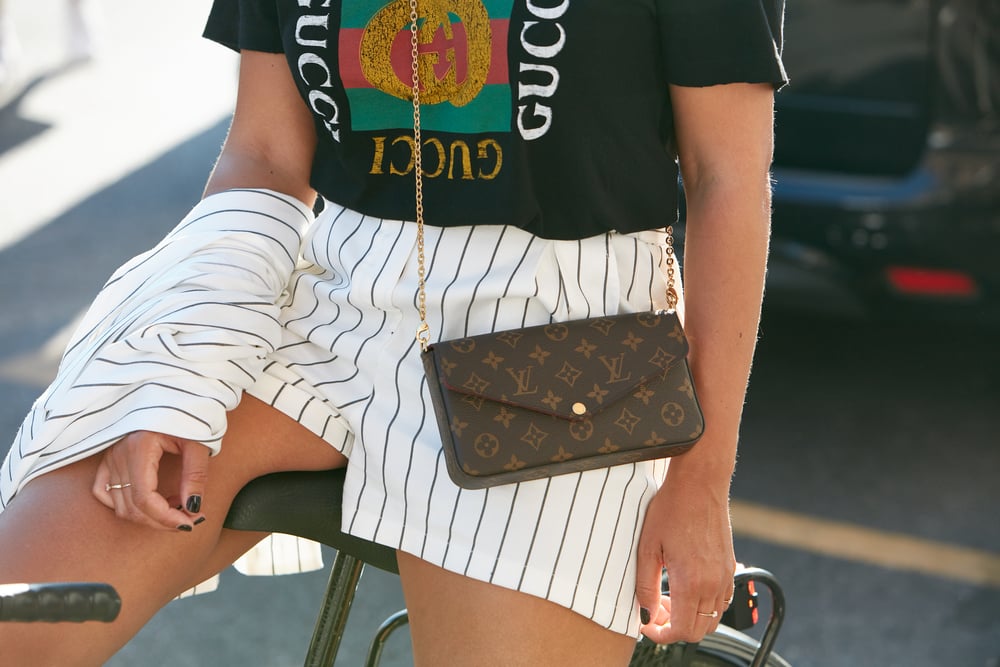
When you’re covered in logos, you’re not expressing yourself. You’re letting YSL, Celine, and Prada express you. You’re borrowing their identity because you haven’t developed your own. And that’s fundamentally insecure.
People with strong identities don’t need luxury brands to tell the world who they are. They’ve built a self that exists independently of what they wear. But people who aren’t sure who they are, who don’t have a clear sense of self, they use brands as a shortcut. The logo becomes their personality. And everyone can tell the difference between someone who has style and someone who bought a brand’s aesthetic because they don’t have one of their own.


