
Those who work in forensic science have the curiosity of a detective and the precision of a scientist. It’s a field where meticulous scientific techniques are used to uncover the truth and seek justice. If you’ve ever wondered what goes on behind the scenes of a crime investigation, here are 13 fascinating things forensic scientists do as part of their job to help unravel the mysteries behind crimes.
1. They Preserve and Analyze Crime Scenes

When you first walk into a crime scene, it’s like stepping into a three-dimensional puzzle waiting to be solved. As a forensic scientist, you meticulously examine every inch of the scene, looking for clues left behind by the perpetrator. This involves collecting evidence like fibers, hair, or blood that might help piece together what happened. Every item is a potential lead, adding another piece to the puzzle.
A study by the National Institute of Justice highlights the importance of maintaining the integrity of the crime scene to prevent contamination. This means wearing protective gear and following strict protocols so that evidence remains pure and untampered. The work done here sets the foundation for the rest of the investigation, making your role crucial to the pursuit of justice. It’s this dedication to detail that can make or break a case.
2. They Collect DNA Samples

The science of DNA has revolutionized the field of forensic science, making it possible to identify or exonerate suspects with remarkable accuracy. As a forensic scientist, you’re trained to collect DNA samples from a variety of sources—anything from a cigarette butt to a hair follicle can hold the key to a person’s identity. This process requires precision, as even the slightest contamination can render a sample useless. Your goal is to extract clean, usable DNA that can be analyzed in the lab.
Once the sample is collected, it’s sent to the lab where it undergoes a process called DNA profiling. This involves comparing the sample against known DNA databases to find a match. In the world of criminal justice, DNA evidence is often the cornerstone of a strong case, providing irrefutable proof of a suspect’s presence at a crime scene. It’s a powerful tool that underscores the vital importance of your role in the justice system.
3. They Conduct Toxicology Tests
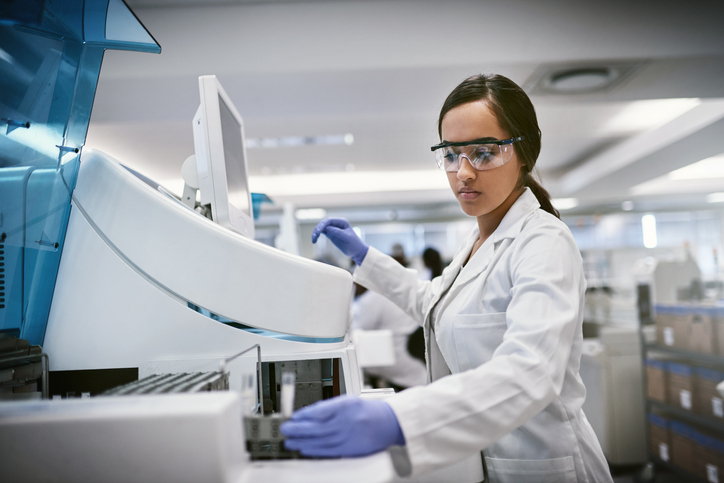
In the realm of forensic science, toxicology tests are key in determining whether substances like drugs or alcohol played a role in a crime. As a forensic toxicologist, you analyze blood, urine, or tissue samples from victims or suspects to detect the presence of these substances. This involves using advanced laboratory techniques to identify toxins and measure their concentrations. Your findings can be instrumental in understanding a person’s state at the time of an incident.
According to the American Society for Clinical Laboratory Science, toxicology testing has become more sophisticated over the years, allowing for the detection of even trace amounts of substances. This precision is crucial, as the presence of certain drugs can corroborate or refute witness statements and suspect testimonies. The results can influence the direction of an investigation, helping to establish the motive or cause of death. Your work in toxicology bridges the gap between science and law, offering a clearer picture of events.
4. They Examine Fingerprints

Fingerprint analysis is one of the oldest and most reliable methods of identifying suspects and connecting them to crime scenes. As a forensic scientist, you’re tasked with lifting fingerprints from various surfaces using powders, chemicals, or digital techniques. Each fingerprint is unique, making it a powerful piece of evidence that can place a person at a specific location. Once collected, you compare these prints against databases to find matches.
The process is meticulous and requires a keen eye for detail, as even partial prints can be useful. Advanced software has made it easier to analyze and match prints, but your expertise is crucial in ensuring accuracy. Fingerprint evidence has been a cornerstone of forensic science for over a century, and your role is vital in maintaining its integrity and reliability. It’s a testament to the enduring power of simple yet effective investigative techniques.
5. They Analyze and Test Ballistics
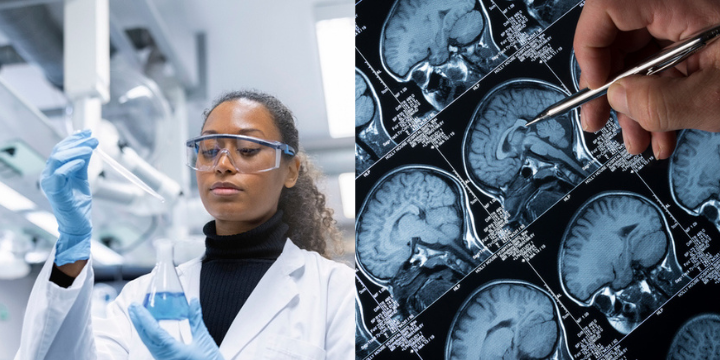
Ballistics is the study of firearms, ammunition, and the effects of shooting, and it plays a critical role in many investigations. As a forensic ballistics expert, your job is to examine evidence from shooting scenes, such as bullet casings and gunshot residues. You’ll compare markings on bullets and casings to determine the type of firearm used, its trajectory, and potentially, the shooter’s position. This analysis can provide crucial insights into a crime’s dynamics.
The FBI’s Ballistics Research Facility is noted for its state-of-the-art testing and analysis techniques, which have greatly improved the accuracy of ballistics investigations. Your expertise in this field helps law enforcement understand the nuances of a shooting incident, sometimes even linking weapons to multiple crimes. Ballistics analysis can be the key to solving complex cases, providing leads that direct the investigation forward. It’s a field where physics meets forensics, and your role is instrumental in deciphering its mysteries.
6. They Perform Digital Forensics

In today’s digital age, electronic devices are treasure troves of information that can be pivotal in criminal investigations. As a digital forensic analyst, you delve into computers, smartphones, and other devices to uncover hidden data. This could include anything from deleted emails and messages to browsing history and location data. Your role is to retrieve, preserve, and analyze this information, providing insights that could be key to solving a case.
This area of forensics is continually evolving, as technology advances and cybercrimes become more sophisticated. You must stay updated with new software and techniques to gather and analyze digital evidence effectively. Your findings can reveal crucial details about a suspect’s actions, connections, and whereabouts. In a world where digital footprints are as telling as physical ones, your work is essential in piecing together the digital puzzle of a crime.
7. They Analyze Bloodstain Patterns

Bloodstain pattern analysis involves studying the shapes, locations, and distribution of bloodstains at a crime scene to reconstruct the events of a crime. As a forensic scientist specializing in this area, you analyze these patterns to determine how a crime unfolded. This type of analysis can reveal the type of weapon used, the direction of blows, and even the movements of the victim and assailant during the incident. Your work helps to clarify the chaotic and often violent nature of crime scenes.
Research published in the Journal of Forensic Sciences emphasizes the importance of understanding fluid dynamics and physics in bloodstain pattern analysis. This scientific approach allows you to translate patterns into narratives that make sense of the evidence. By interpreting these patterns, you provide investigators with a clearer picture of the crime, which can be crucial in court. Your expertise transforms seemingly random stains into a coherent and compelling story.
8. They Meticulously Reconstruct Faces

Facial reconstruction is a fascinating blend of art and science, used to create an image of what a person may have looked like based on their skeletal remains. As a forensic artist, you work closely with anthropologists to rebuild faces on paper or using 3D modeling software. This process can help identify unknown remains, providing closure for families and leads for investigators. Your artistic skills and anatomical knowledge work hand in hand to breathe life into unidentified victims.
The process requires patience and precision, as small details can significantly impact the final image. You may use clues from the skull, such as the shape of the jaw or eye sockets, to guide your work. This technique not only aids in identification but also humanizes the remains, sparking public interest and potential recognition. Your reconstructions are not just artistic renderings but crucial tools in the pursuit of justice and identity.
9. They Analyze Handwriting

Handwriting analysis, or graphology, is a forensic tool used to authenticate documents and potentially identify the writer. As a forensic document examiner, you scrutinize handwriting for unique characteristics, such as slant, pressure, and spacing. Your analysis can determine if a signature is genuine or if a document has been altered. This work is vital in cases of forgery, fraud, and ransom notes.
Each person’s handwriting is as unique as a fingerprint, making your expertise crucial in linking documents to their authors. You employ magnifying tools and software to detect even the slightest variations that may indicate forgery. Your findings can corroborate other evidence in court, providing a silent testimony to the authenticity of documents. It’s a discipline where your attention to detail can tip the scales of justice.
10. They Study Insects to Determine Time of Death

Forensic entomology is the study of insects in criminal investigations, often used to estimate the time of death. As a forensic entomologist, you analyze insect activity on decomposing remains to provide investigators with a timeline. This involves identifying species, understanding their life cycles, and knowing how environmental factors affect their development. Your work can offer crucial insights in cases where the time of death is contested.
Insects can be exact indicators of decomposition stages, offering data that complements other forensic evidence. Your role requires both fieldwork, collecting samples, and lab analysis to interpret your findings. This niche area of forensics underscores the interconnectedness of life and death, with your expertise bridging the gap. In the grand tapestry of forensic science, your work with the smallest creatures can provide some of the largest clues.
11. They Identify Victims Through Dental Records

Forensic odontology involves the study of dental records to identify human remains and analyze bite mark evidence. As a forensic odontologist, you compare dental records with the teeth of unidentified remains to establish identity. This field is especially useful in mass disaster scenarios where bodies are not easily recognizable. Your meticulous comparisons can provide a name to the nameless, offering closure to families.
Bite mark analysis can also play a crucial role in criminal cases, often serving as evidence
in cases of assault or abuse. You analyze the patterns and impressions left by teeth to connect suspects to victims. Your expertise provides a unique and effective method for identification and evidence gathering. In a discipline where every tooth tells a story, your work is instrumental in piecing together the narratives of both life and death.
12. They Conduct Voice Analysis

Voice analysis is a growing area in forensic science, where you examine voice recordings to verify identity or detect deception. As a forensic phonetician, you analyze speech patterns, pitch, and rhythm to create a voice profile. This can help determine if a suspect is the speaker on a controversial recording, adding a crucial layer of evidence. Your analysis can also identify stress or deception in a person’s speech.
Advancements in technology have made voice analysis more accurate, allowing you to dissect even minute vocal nuances. Your work requires a blend of linguistic knowledge and technical skills, as you navigate complex software and auditory cues. This emerging field offers exciting possibilities for the future of forensic science, bridging the gap between spoken words and legal certainty. In a world where voices can be as telling as fingerprints, your expertise speaks volumes.
13. They Study Skeletal Remains

Forensic anthropology involves the study of human skeletal remains to determine identity and cause of death. As a forensic anthropologist, you analyze bones to provide information about a person’s age, sex, ancestry, and health. Your work aids in both identifying unknown remains and understanding the circumstances surrounding death. It’s a meticulous process that requires a deep understanding of human anatomy and pathology.
Through your analysis, you can uncover details that might otherwise remain hidden, such as prior injuries or evidence of disease. Your findings can corroborate other forensic evidence, providing a fuller picture of the deceased’s life and death. In the courtroom, your testimony can offer critical insights that help solve cases and bring closure to families. In a field where bones tell tales, your expertise is the key to unlocking their secrets.


