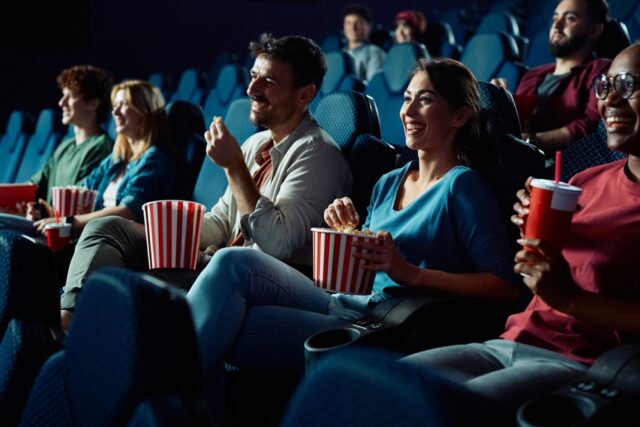
Most people watch movies as entertainment, but a small number of films function more like experiences you carry with you. They don’t just show stories — they teach you something about time, fear, power, love, mortality, or human behavior that’s difficult to absorb any other way. These movies matter not because they’re critically acclaimed, but because they expand your emotional and cultural range as a person. Skipping them doesn’t make you uncultured — it leaves entire modes of understanding untouched.
1. Jaws (1975)
Before this movie, Hollywood did not believe a single movie could dominate an entire season. Summer releases were treated as filler, and wide releases with heavy marketing were considered risky. Jaws shattered that model by proving that anticipation, mass rollout, and collective viewing could turn a film into an event. It didn’t just succeed — it rewired how studios release and promote movies.
Seeing it gives you firsthand exposure to the birth of the modern blockbuster. You understand why pacing, suspense, and shared cultural moments matter more than spectacle alone. It also teaches you how limitations can create innovation, since the famously malfunctioning shark forced Spielberg to invent a new language of suspense. Every summer movie you’ve ever seen exists because this one worked.
2. The Godfather (1972)
iStock
The Godfather redefined what cinematic power looks like. Prior crime films focused on action or morality; this one centered on inheritance, loyalty, and slow corruption. It treated organized crime as a family system rather than a spectacle, shifting audience attention from violence to consequence. That shift permanently changed how seriousness in film is communicated.
Watching it teaches you how power actually functions: quietly, relationally, and over time. You don’t just follow a plot — you observe transformation as it happens almost invisibly. Once you’ve seen it, simplistic portrayals of ambition and leadership feel childish. It gives you a more realistic understanding of how people justify what they become.
3. 2001: A Space Odyssey (1968)
iStock
When this premiered, audiences were baffled by its silence, slowness, and refusal to explain itself. At a time when science fiction relied on exposition and clear stakes, this film removed narration and forced viewers to sit with scale and uncertainty. It treated the audience as capable of contemplation rather than instruction.
Watching it requires patience and tolerance for ambiguity. You learn that not everything meaningful arrives with answers, and that cinema can operate more like philosophy than storytelling. The experience recalibrates your attention span and expectations. Without it, you miss an entire mode of thinking visually.
4. Schindler’s List (1993)
This film changed how mainstream audiences were allowed to encounter historical atrocity. Rather than dramatizing heroism or centering spectacle, it focused on systemic cruelty and small, devastating moments of humanity. The restraint was intentional, refusing emotional manipulation. It trusted viewers to sit with discomfort.
Watching it provides a sober understanding of how ordinary people exist within extraordinary evil. It teaches that moral action is often incremental and costly rather than grand. The film reshaped how historical trauma is depicted in popular cinema. Without it, many viewers would only know history through abstraction.
5. Citizen Kane (1941)
Citizen Kane introduced techniques that modern viewers now take for granted: non-linear storytelling, unreliable narration, and deep focus cinematography. At the time, these choices were radical. The film didn’t just tell a story — it questioned whether a life can ever be fully understood.
Seeing it teaches you skepticism toward simple narratives about success and legacy. You learn to pay attention to perspective and absence as much as presence. It permanently changes how you interpret biographies, both on screen and in real life. Kane teaches you that answers are often incomplete by design.
6. Do the Right Thing (1989)
Spike Lee’s film refused resolution at a time when Hollywood demanded moral clarity. It presented racial tension as something that accumulates through environment, heat, and daily friction rather than singular villains. The ending deliberately denies comfort, leaving responsibility with the viewer.
Watching it gives you a deeper understanding of how systemic pressure operates. You learn that injustice often escalates through normal interactions, not isolated events. The movie sharpened the language of social realism in American cinema. Without it, conversations about representation and conflict would be far less honest.
7. Psycho (1960)
Psycho permanently altered how audiences experience fear. By killing its apparent protagonist early, the film destroyed narrative safety and forced viewers into constant uncertainty. Hitchcock taught audiences that no one was protected by structure. Suspense became psychological rather than monstrous.
Seeing Psycho teaches you how expectation itself can be weaponized. You understand why horror relies more on anticipation than gore. The film reshaped editing, sound, and audience trust. Without it, modern thrillers wouldn’t function the way they do.
8. Taxi Driver (1976)
This film confronted loneliness without offering redemption. At a time when antiheroes were still romanticized, Taxi Driver refused to excuse or sanitize its protagonist. The city becomes an extension of isolation rather than a backdrop. Violence emerges from detachment, not drama.
Watching it gives you insight into how alienation curdles over time. You learn to recognize unreliable perspectives and moral distortions. The film influenced decades of character studies and cautionary narratives. Without it, psychological realism in cinema would be far thinner.
9. Pulp Fiction (1994)
Shutterstock
Pulp Fiction broke the assumption that movies had to move linearly to be engaging. By fragmenting time, it made structure part of the pleasure rather than an obstacle. Dialogue replaced plot as the main engine. Audiences were trusted to keep up.
Seeing it teaches you how form itself can carry meaning. You learn to notice rhythm, repetition, and contrast in storytelling. The film changed how independent cinema spoke to mass audiences. Without it, narrative experimentation would feel far riskier.
10. The Matrix (1999)
The Matrix combined philosophical inquiry with mainstream action in a way that made abstraction accessible. It visualized ideas about reality, control, and perception instead of explaining them. The film gave language and imagery to previously academic concepts.
Watching it provides a framework for questioning systems that present themselves as inevitable. You learn how ideology can feel natural while being constructed. Its influence on aesthetics, technology, and storytelling is still visible. Without it, a generation’s skepticism would lack imagery.
11. Eternal Sunshine of the Spotless Mind (2004)
This film challenged the idea that pain is something to be eliminated. By showing memory as emotional infrastructure, it reframed heartbreak as formative rather than defective. The non-linear structure mirrors how loss is actually experienced. Healing is not portrayed as erasure.
Seeing it gives you a more honest language for love and regret. You learn that growth often includes preservation of pain rather than its removal. The film changed how romance could be depicted without cynicism or fantasy. Without it, emotional realism would be poorer.
12. There Will Be Blood (2007)
This movie stripped ambition of justification. Success isn’t framed as redemption or progress, but as isolation intensified. Power accumulates without improving the human condition. The film refuses catharsis.
Watching it teaches you to question narratives that equate achievement with meaning. You learn how obsession narrows rather than fulfills. The film reshaped how capitalism and ambition are portrayed on screen. Without it, critiques of power would feel softer.
13. Moonlight (2016)
Moonlight redefined intimacy in cinema through restraint and fragmentation. Identity unfolds slowly, without exposition or spectacle. Silence, gesture, and proximity carry meaning. Masculinity is treated as vulnerable rather than performative.
Seeing it expands your understanding of emotional expression. You learn how much can be communicated without dialogue. The film changed expectations around representation and tenderness on screen. Without it, many stories would remain untold or flattened.
14. Before Sunrise (1995)
This film treats conversation as the main event. Two people connect without a guarantee of permanence, and the movie respects that impermanence. Nothing is resolved, and that is the point. Time becomes the emotional stake.
Watching it teaches you to value transient connections. You learn that meaning doesn’t require outcome. The film influenced an entire genre of relationship storytelling. Without it, small moments would feel unworthy of cinema.
15. Parasite (2019)
Parasite disguises social critique inside entertainment, allowing its message to land before viewers realize what’s happening. The architecture of the film mirrors economic hierarchy, making inequality spatial rather than abstract. Tone shifts are intentional destabilizations.
Seeing it sharpens your awareness of class as something lived, not discussed. You learn how the environment shapes behavior invisibly. The film reset expectations for global cinema’s reach and relevance. Without it, the relationship between genre and critique would feel narrower.
Danielle is a writer, editor, and copywriter with extensive experience writing about love, career and emotional patterns. She’s written for The Cut, Cosmopolitan, Men’s Health, Tinder, Bumble, WeWork, Taskrabbit, and others.
She draws on research as well as her own personal experience—the things she figured out in her thirties that she wishes she'd known in her twenties.
She particularly enjoys writing about relationship issues, leveling up in your career, and anything related to women navigating different social dynamics and life stages. When she's not writing, she's hunting for vintage finds or trying every coffee shop in a ten-mile radius. She lives in New York, NY.