
The viral refrigerator trend doesn’t feel important because it’s new or clever. It feels important because it’s familiar. Millions of people instantly recognize the behavior, the desire, and the relief embedded in these videos, even if they never remake one themselves. What the trend actually reveals isn’t something hidden or psychological, but something collective: how we’re adapting, performing, and coping in public view. The fridge has become a quiet mirror for how we live now.
1. We’ve Started Treating Order as a Moral Signal
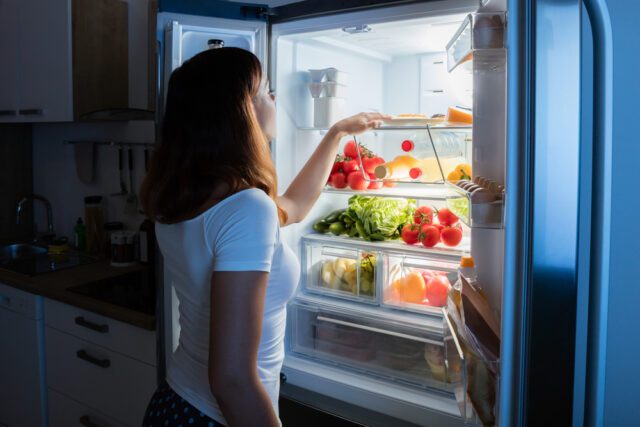
The refrigerator has become one of the clearest places to demonstrate that you are managing your life correctly. When people open a fridge on camera, they aren’t just showing food; they’re showing evidence of responsibility, foresight, and self-discipline. The visual order communicates competence without explanation. It works instantly, across cultures and platforms.
Researchers who study domestic imagery and lifestyle media have long noted that cleanliness and organization function as moral shorthand. Studies on visual culture show that tidy domestic spaces are routinely interpreted as signs of control and worth, even when they have no connection to character. The fridge compresses that logic into a single, legible image. It lets people signal “I’m okay” without saying it.
2. We Want Proof That Our Effort Goes Somewhere

Much of modern labor feels endless and invisible, especially the kind required to keep daily life functioning. Grocery planning, cooking, cleaning, and maintenance rarely produce a finished state. The refrigerator trend interrupts that cycle by creating a visible endpoint. The work finally looks complete.
This matters because people are exhausted by effort that leaves no trace. A fridge reset offers proof that time and energy resulted in something tangible. The video itself becomes a receipt. In a culture where so much work dissolves without recognition, that visibility is deeply appealing.
3. We’re Hungry for Tasks That Actually End

Most systems people operate inside no longer resolve cleanly. Work is ongoing, messages never stop, and responsibilities stack without closure. A refrigerator reset has a beginning, a middle, and an end that doesn’t reopen immediately. When the door closes, the task is finished.
Research on task completion shows that closed loops reduce mental load more effectively than ongoing responsibilities. Studies on cognitive stress demonstrate that unfinished tasks linger psychologically, even when they’re low priority. The fridge trend succeeds because it offers reliable completion. It lets people experience an ending in a culture that rarely provides one.
4. We’ve Normalized Performing Stability Instead of Explaining It

The refrigerator trend allows people to show stability without narrating their lives. There’s no backstory, confession, or justification required. The order speaks for itself. That silence is part of the appeal.
In an era saturated with self-disclosure, the ability to communicate “I’m managing” without explanation feels efficient and protective. The fridge becomes a stand-in for a life that appears functional, even if everything else feels complicated. Performance replaces narrative.
5. We’re Quietly Absorbing Class Signals Without Talking About Them

The aesthetics of viral fridges often include excess space, uniform containers, fresh produce, and abundance without crowding. These details communicate financial margin and security, even when the creator never mentions money. The calm comes from the absence of pressure.
Sociological research on consumption patterns shows that displays of order often function as class markers, especially when scarcity is invisible. Studies on domestic aesthetics note that spaciousness and uniformity are read as stability. The trend reveals how comfortable we’ve become in consuming class signals indirectly. The fridge lets people display security without naming it.
6. We’ve Turned Maintenance Into a Performance

The trend isn’t about cooking or eating; it’s about preparation, alignment, and upkeep. Food is managed rather than enjoyed. The performance centers on readiness, not pleasure. Maintenance becomes the main event.
This reflects how much of adult life is now devoted to sustaining systems rather than advancing goals. The fridge videos mirror that reality instead of resisting it. They don’t promise transformation. They promise continuity. That honesty resonates.
7. We’re Using Platforms to Reward Calm, Not Reality

Refrigerator videos perform well because they are predictable, slow, and non-confrontational. Platforms reward content that keeps viewers watching without provoking stress or conflict. Calm has become algorithmically valuable.
Media research has shown that predictable visual patterns increase viewer retention and reduce agitation. Studies on content engagement demonstrate that low-arousal imagery often outperforms emotionally charged material over time. The trend reveals how digital systems shape what kind of domestic life gets amplified. What survives is what soothes.
8. We Prefer Fixable Systems Over Meaningful Ones

If something goes wrong in a fridge, the consequences are limited and reversible. Items can be rearranged, replaced, or discarded without lasting damage. Effort reliably improves the outcome. That reliability is rare elsewhere.
This reveals how drawn we are to systems that respond proportionally to work. In contrast, mistakes in careers, relationships, or finances often feel permanent and disproportionate. The fridge offers a contained environment where control still works. That predictability feels safe.
9. We’re Avoiding Messy Realities on Purpose

Viral fridge videos rarely show leftovers, expired food, clutter, or improvisation. The messier parts of eating are edited out. What remains is frictionless order. That selectivity is not accidental.
The trend reveals how much people want relief from visual reminders of waste, chaos, and compromise. By excluding mess, the fridge becomes a space where reality feels negotiable. It offers a version of life without consequence accumulation. That fantasy is carefully curated.
10. We Want Domestic Content Without Emotional Exposure
Unlike cleaning or cooking content, refrigerator videos don’t require vulnerability. There’s no admission of struggle or failure. The creator often stays out of frame. The fridge absorbs all the attention.
This reflects a desire for connection without comparison. Viewers can engage without feeling judged or inadequate. The trend reveals how appealing emotional neutrality has become. Calm without intimacy feels manageable.
11. We’re More Comfortable Managing Objects Than Negotiating People

The refrigerator is a system that doesn’t push back. It doesn’t have moods, competing needs, or conflicting interpretations of reality. When something is out of place, it can be fixed without negotiation. That simplicity matters more than it seems.
This reveals how exhausting interpersonal complexity has become. Managing relationships, workplaces, and families now requires constant emotional calibration. The fridge offers a space where effort leads directly to outcome without misunderstanding. Choosing that kind of system isn’t avoidance—it’s relief.
12. We’ve Redefined Productivity as Maintenance, Not Progress

The fridge trend doesn’t promise advancement or transformation. Nothing is optimized beyond readiness. The goal is not improvement, but upkeep. Keeping things from falling apart has become the achievement.
This reveals a quiet shift in how people measure success. Progress feels uncertain and fragile, while maintenance feels attainable. The fridge becomes a place where holding the line counts as winning. That redefinition says a lot about the moment we’re living in.
13. We’re Practicing Control in Places That Can’t Punish Us

Controlling a refrigerator carries almost no downside. If you fail, the consequences are minor and private. There’s no reputational risk, financial fallout, or public judgment attached to rearranging groceries. Control feels safe here.
This reveals how punitive other systems have become. When mistakes elsewhere carry disproportionate consequences, people gravitate toward domains where control doesn’t backfire. The fridge becomes a low-risk environment for competence. It’s where control still feels benevolent.


